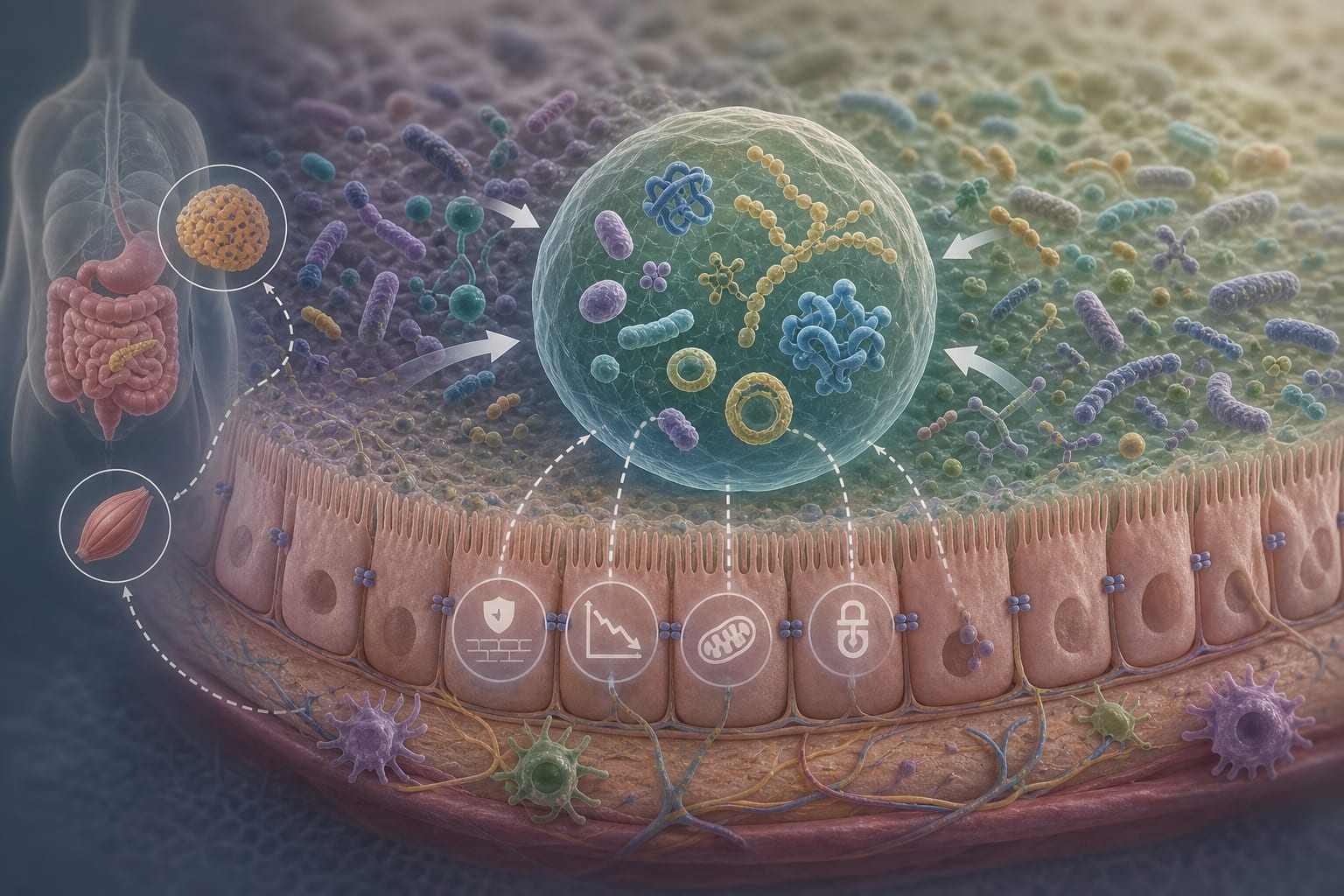
“Envbiotics” -- a novel framework for microbiota-targeted therapeutic strategies in type 2 diabetes mellitus
-
By
-
Wenxiao Wang
-
Long Xu
-
Ping Leng
-
Man Jiang
-
Xiaomin Xing
-
Mingchen Cao
-
Fanbo Jing
-
July 8, 2026
-
Clinical Scorecard: Envbiotics: An Innovative Approach to Microbiota-Directed Therapeutic Interventions for Type 2 Diabetes Mellitus
At a Glance
| Category | Detail |
|---|
| Condition | Type 2 Diabetes Mellitus |
| Key Mechanisms | Envbiotics optimize the intestinal microenvironment and regulate microbiota structure and function in a non-nutritional manner. |
| Target Population | Patients with Type 2 Diabetes Mellitus experiencing insulin resistance. |
| Care Setting | Research and clinical settings focusing on microbiota-targeted therapies. |
Key Highlights
- Envbiotics target the host to improve metabolism and health.
- Traditional microbiota interventions have limitations in efficacy and individual variability.
- Natural compounds like berberine and urolithin A demonstrate dual effects on host and microbiota.
Guideline-Based Recommendations
Diagnosis
- Assess gut microbiota composition in patients with Type 2 Diabetes Mellitus.
Management
- Consider microbiota-targeted therapies including Envbiotics for improving metabolic health.
Monitoring & Follow-up
- Monitor changes in gut microbiota and metabolic parameters in response to Envbiotics.
Risks
- Clinical translation of microbiota-targeted therapies faces challenges such as insufficient evidence and regulation.
Patient & Prescribing Data
Individuals diagnosed with Type 2 Diabetes Mellitus.
Envbiotics may offer new strategies for microbial-targeted interventions.
Clinical Best Practices
- Utilize prebiotics, synbiotics, and postbiotics as adjunct therapies.
- Evaluate the role of gut microbiota in insulin resistance and metabolic health.
Related Resources & Content