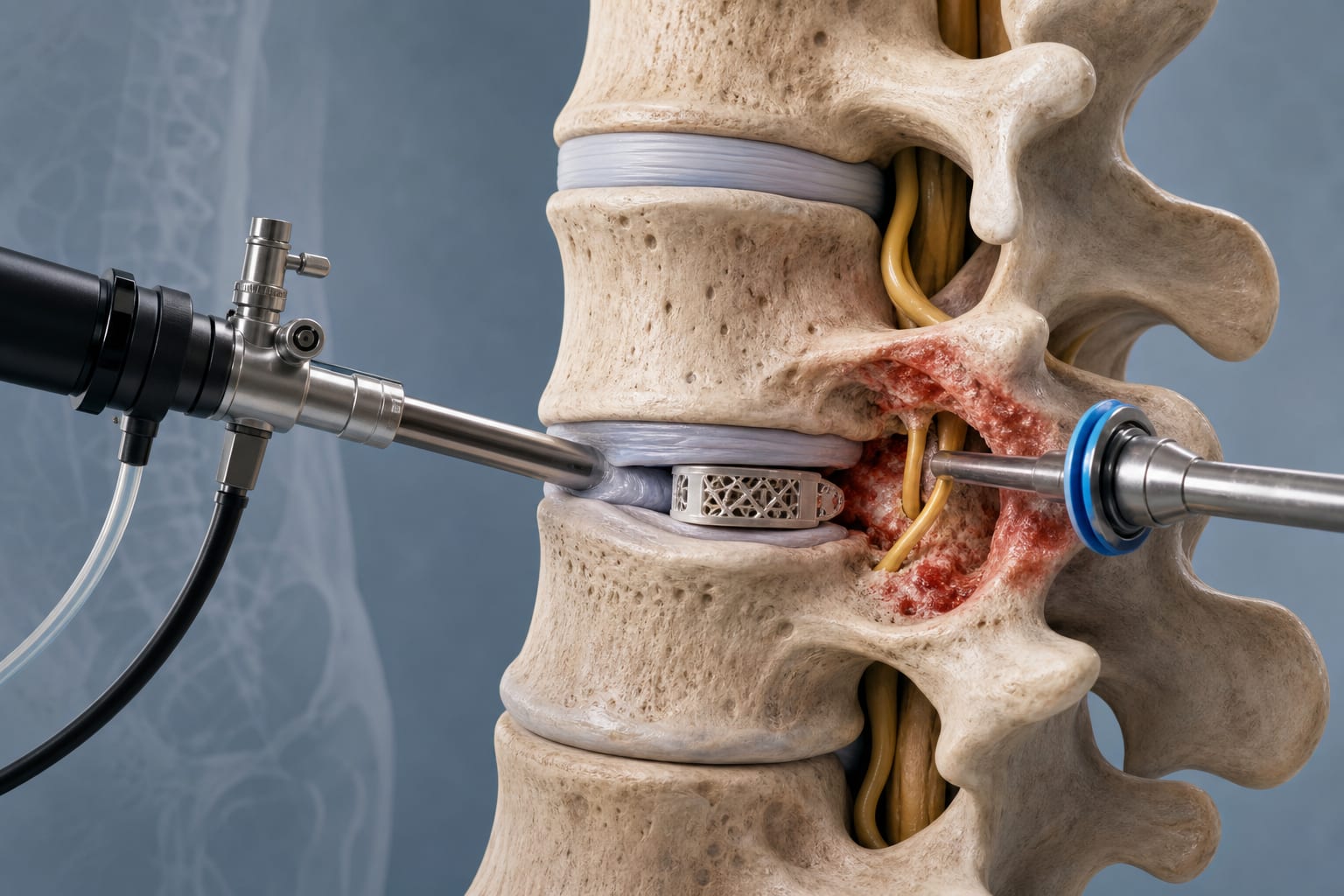
Evaluation of Unilateral Biportal Endoscopy versus Minimally Invasive Transforaminal Lumbar Interbody Fusion for Lumbar Spinal Brucellosis Treatment
By
Cao Rui
Yin Ming
June 1, 2026
Clinical Scorecard: Evaluation of Unilateral Biportal Endoscopy versus Minimally Invasive Transforaminal Lumbar Interbody Fusion for Lumbar Spinal Brucellosis Treatment
At a Glance
Category Detail
Condition Lumbar spinal brucellosis Key Mechanisms Surgical intervention for vertebral bone destruction and spinal instability Target Population Patients with lumbar spinal brucellosis requiring surgical treatment Care Setting Retrospective analysis in a surgical hospital setting
Key Highlights
UBE-TLIF showed shorter operative time and hospital stay compared to MIS-TLIF. Both surgical methods resulted in significant postoperative improvements in pain and functional outcomes. Complication rates were comparable between UBE-TLIF and MIS-TLIF. Guideline-Based Recommendations
Diagnosis
Diagnosis based on clinical presentation and imaging studies. Management
Surgical intervention indicated for patients with significant vertebral destruction and instability. Monitoring & Follow-up
Postoperative monitoring of inflammatory markers and functional recovery. Risks
Potential complications include dural tears and nerve root injuries. Patient & Prescribing Data
62 patients with lumbar spinal brucellosis
UBE-TLIF offers benefits of reduced trauma and enhanced early postoperative pain control.
Clinical Best Practices
Select surgical technique based on lesion localization and surgeon expertise. Monitor inflammatory markers postoperatively to assess recovery. Related Resources & Content