Precision medicine decision-making under pharmacogenomics in nursing: realizing value from limited evidence to scaled clinical pathways - Scorecard - MDSpire
Advertisement
Precision medicine decision-making under pharmacogenomics in nursing: realizing value from limited evidence to scaled clinical pathways
Clinical Scorecard: Enhancing Nursing Decision-Making in Precision Medicine Through Pharmacogenomics: Leveraging Limited Evidence for Comprehensive Clinical Pathways
At a Glance
Category
Detail
Condition
Pharmacogenomics in Psychiatry
Key Mechanisms
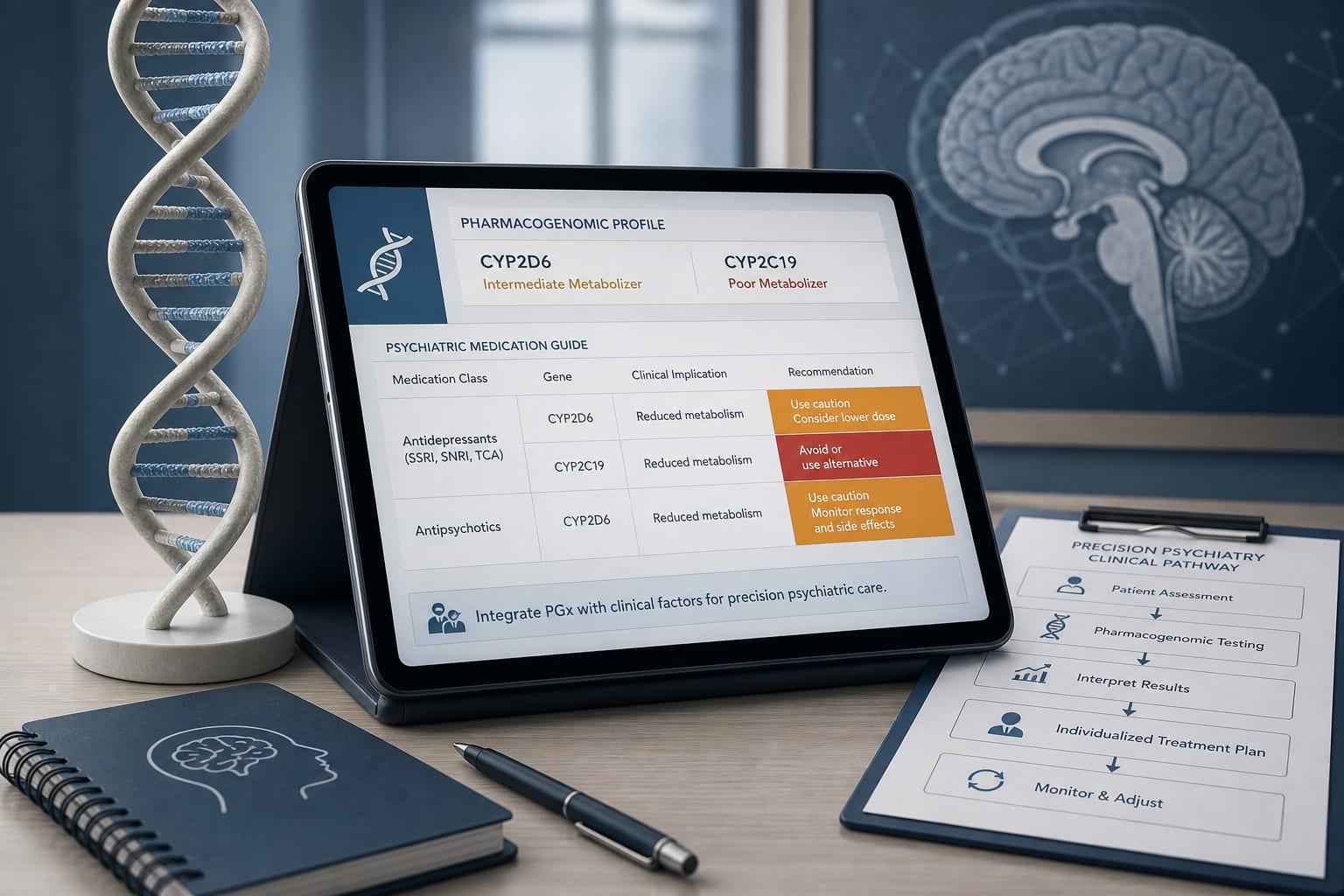
Reduction of drug-gene mismatches for antidepressants and antipsychotics metabolized by CYP2D6 and CYP2C19.
Target Population
Patients with psychiatric disorders, particularly those with prior treatment failure or complex polypharmacy.
Care Setting
Psychiatric care pathways integrating pharmacogenomic testing.
Key Highlights
Pharmacogenomics can reduce avoidable trial-and-error prescribing in psychiatry.
Modest improvements in treatment response observed in selected antidepressants and antipsychotics.
Routine testing for all psychiatric patients is not supported by current evidence.
Nurses play a critical role in medication management and patient education regarding PGx.
Implementation challenges include limited EHR integration and inconsistent clinician awareness.
Guideline-Based Recommendations
Diagnosis
Use PGx results to inform prescribing decisions for antidepressants and antipsychotics.
Management
Integrate PGx testing into routine psychiatric care pathways.
Monitoring & Follow-up
Nurses should monitor treatment response and adverse effects in patients receiving PGx-guided therapy.
Risks
Potential for adverse drug reactions and hospitalizations if PGx is not utilized.
Patient & Prescribing Data
Patients with severe mental illness and those experiencing treatment failure.
Pre-emptive PGx testing may reduce adverse drug reactions and improve clinical outcomes.
Clinical Best Practices
Facilitate patient education on the implications of PGx testing.
Ensure adherence support and structured monitoring for patients undergoing PGx-guided therapy.
Standardize PGx report interpretation and integrate findings into clinical workflows.