Development and validation of a machine learning model based on multi-source clinical data for predicting the risk of early neurological deterioration in patients with ischemic stroke - Scorecard - MDSpire
Conexiant’s news site is now MDSpire News. Learn more
Advertisement
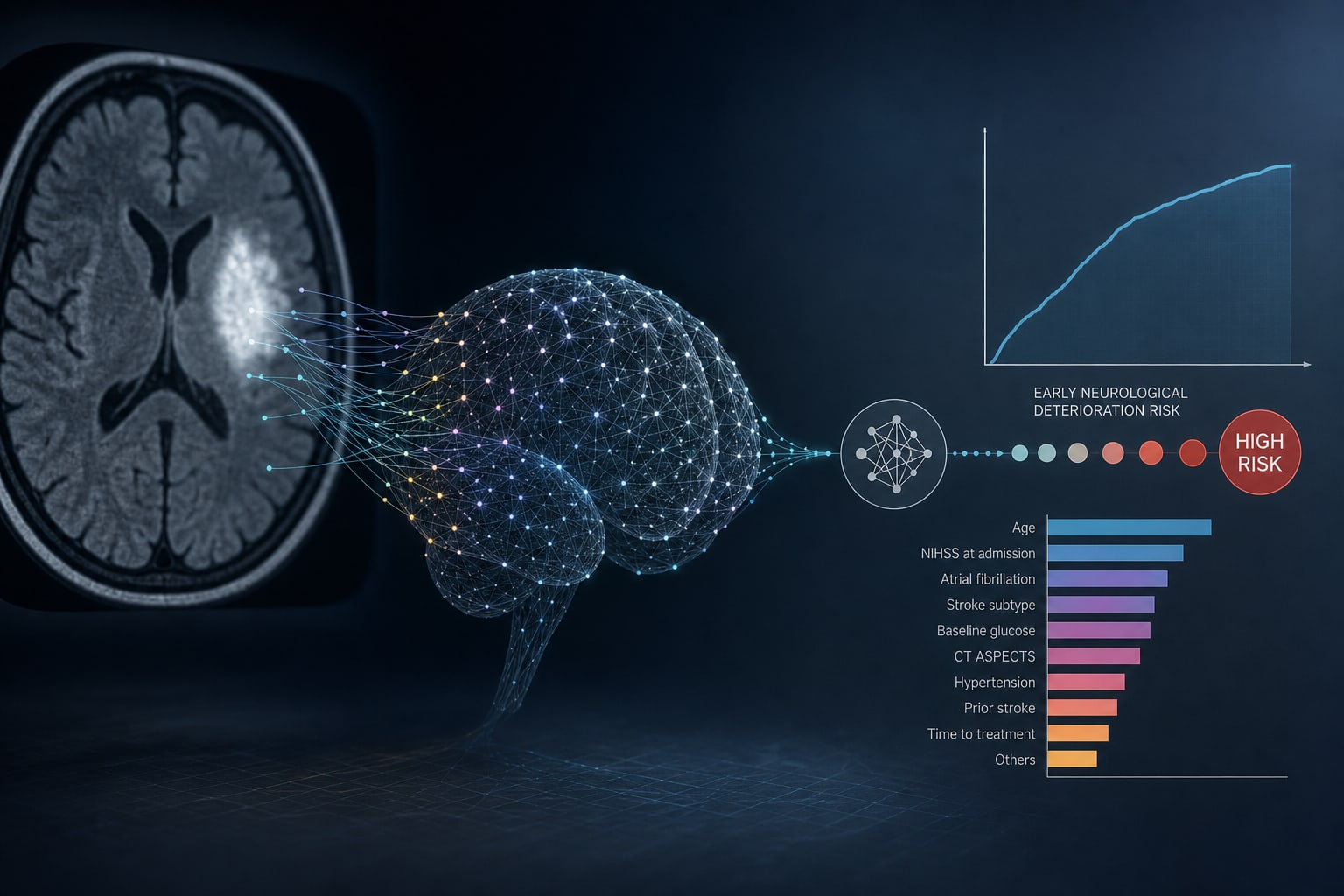
Creation and assessment of a machine learning framework utilizing diverse clinical data to forecast early neurological decline in individuals with ischemic stroke
Clinical Scorecard: Creation and assessment of a machine learning framework utilizing diverse clinical data to forecast early neurological decline in individuals with ischemic stroke
At a Glance
Category
Detail
Condition
Early Neurological Deterioration (END) following Acute Ischemic Stroke
Key Mechanisms
Machine learning algorithms predicting END risk based on clinical data
Target Population
Patients with acute ischemic stroke
Care Setting
Stroke center
Key Highlights
END occurred in 14.0% of patients studied.
Five principal predictors identified: ischemic stroke subtype, OCSP classification, age, atrial fibrillation history, previous stroke history.
Logistic regression model showed AUCs of 0.787 and 0.751 in development and validation cohorts, respectively.
Model demonstrated potential clinical utility through decision curve analysis.
An online tool for early risk stratification was developed.
Guideline-Based Recommendations
Diagnosis
Identify patients with acute ischemic stroke at high risk for END.
Management
Implement timely clinical management strategies based on END risk assessment.
Monitoring & Follow-up
Regularly assess neurological status within the first week post-stroke.
Risks
Increased mortality and long-term disability associated with END.
Patient & Prescribing Data
Adults aged 18 years and older with acute ischemic stroke.
Utilization of machine learning models to guide personalized interventions.
Clinical Best Practices
Incorporate routinely available clinical variables for END risk prediction.
Utilize machine learning for complex data analysis in clinical settings.
Ensure continuous monitoring of neurological status post-stroke.
Baptist Health will bring together leading physicians, researchers and healthcare professionals from South Florida and across the country for the 14th Annual Baptist Health Miami Neuroscience Symposium, taking place Nov. 4-6, 2026, at Hilton Miami Dadeland and virtually via Zoom.