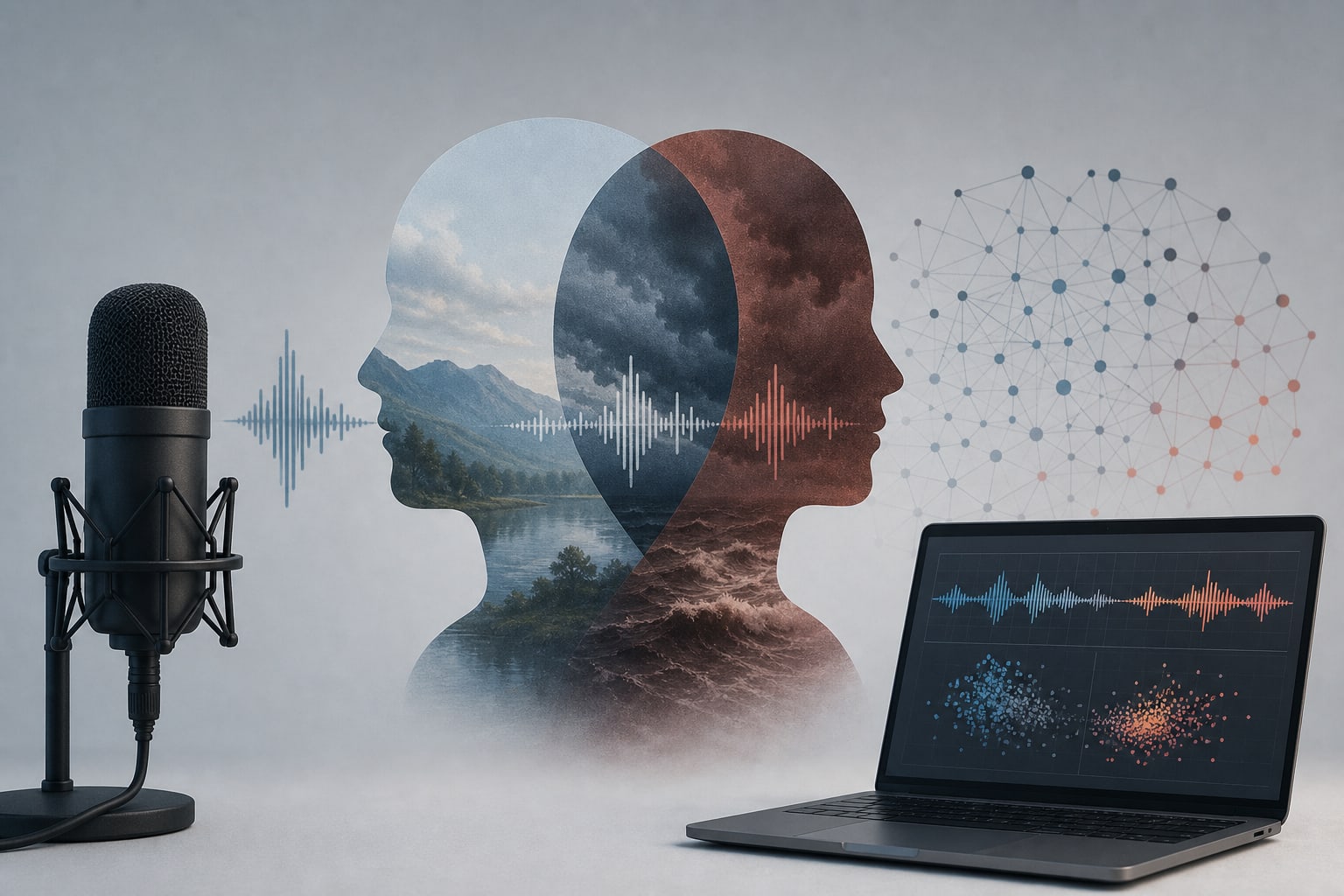
Screening anxiety via contrastive autobiographical recall
Clinical Scorecard: Assessing Anxiety Through Contrastive Personal Memory Recall
At a Glance
Category Detail
Condition Key Mechanisms Contrastive autobiographical recall framework using positive and negative personal memories to identify anxiety-related linguistic patterns. Target Population Care Setting
Key Highlights
Study involved 156 participants completing a spontaneous speech task. Anxiety status was defined using HAM-A scores, categorizing participants into anxious and non-anxious groups. Achieved 70% accuracy and 0.67 macro-F1 in detecting anxiety-related linguistic patterns. Guideline-Based Recommendations
Diagnosis
HAM-A labels should be interpreted as screening rather than diagnostic labels. Management
Timely identification and referral for effective treatments are recommended. Monitoring & Follow-up
Short spontaneous speech can provide a complementary signal for digital anxiety screening. Risks
Anxious-class sensitivity was moderate, indicating potential limitations in detection. Patient & Prescribing Data
Participants included both anxious (n = 55) and non-anxious (n = 101) individuals.
Clinical Best Practices
Utilize language-based screening as a low-burden approach in telehealth settings. Related Resources & Content