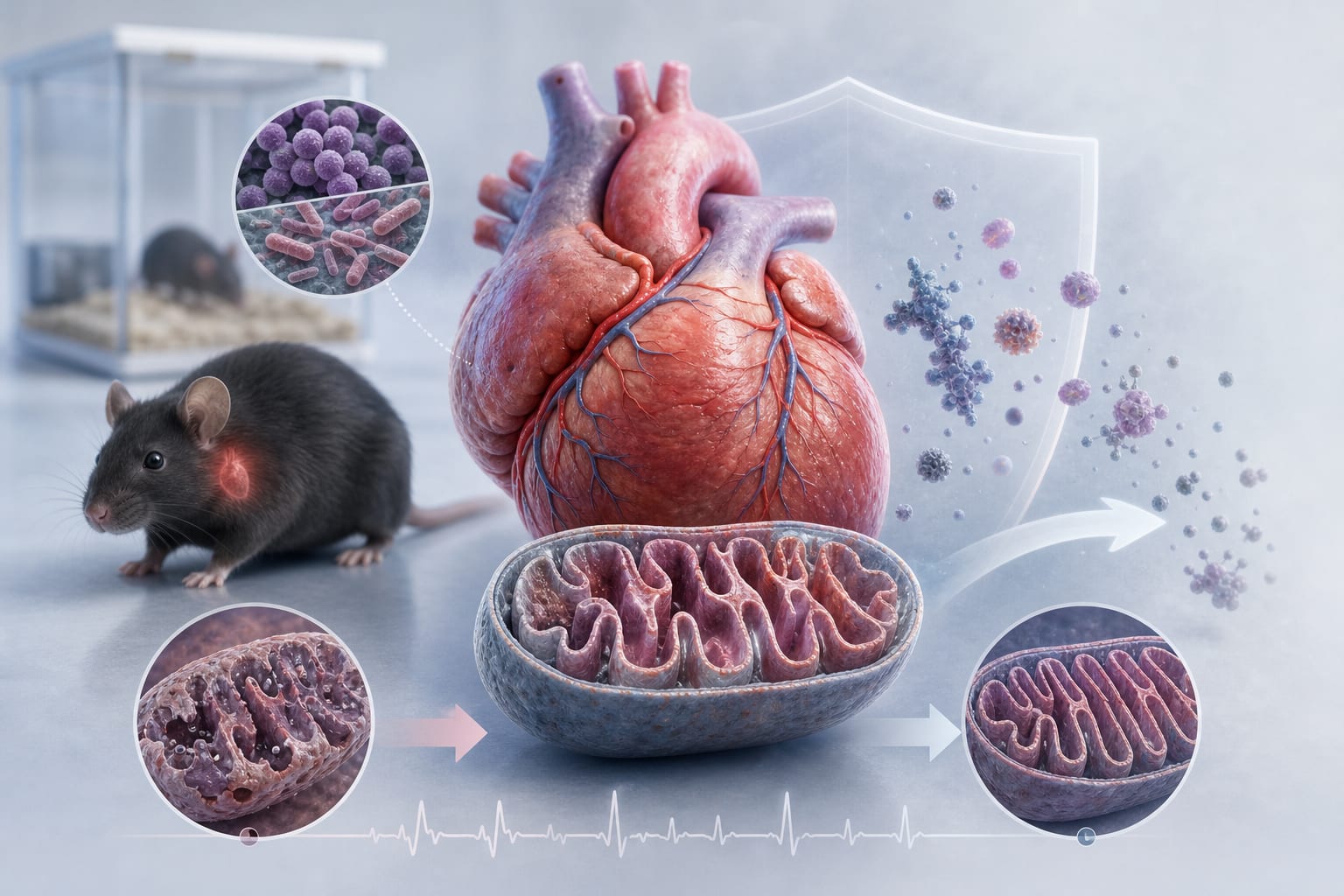
Xiangdan Injection Mitigates Cardiac Injury in Experimental Sepsis through Inflammatory Suppression and Mitochondrial Protection
-
By
-
Xu, Jingyu
-
March 23, 2026
-
Clinical Scorecard: Xiangdan Injection Reduces Cardiac Damage in Experimental Sepsis via Inflammatory Modulation and Mitochondrial Protection
At a Glance
| Category | Detail |
|---|
| Condition | Sepsis-induced myocardial injury (SIMI) |
| Key Mechanisms | Inflammatory modulation and mitochondrial protection |
| Target Population | Male C57BL/6 mice |
| Care Setting | Experimental research |
Key Highlights
- Xiangdan injection improves survival in sepsis models in a dose-dependent manner.
- At 5.0 mL/kg, Xiangdan injection achieved 100% survival in both Gram-positive and Gram-negative sepsis models.
- Significant reduction in inflammatory cytokines and cardiac injury biomarkers with Xiangdan treatment.
- Mitochondrial damage was markedly attenuated following high-dose Xiangdan treatment.
- Xiangdan injection demonstrates cardioprotective effects independent of the sepsis pathogen.
Guideline-Based Recommendations
Diagnosis
- Monitor for signs of myocardial injury in sepsis patients.
Management
- Consider Xiangdan injection as a potential therapeutic option for SIMI.
Monitoring & Follow-up
- Evaluate serum inflammatory cytokines and cardiac injury biomarkers.
Risks
- Monitor for potential adverse effects of Xiangdan injection.
Patient & Prescribing Data
Experimental animal model (C57BL/6 mice)
Xiangdan injection administered at doses of 2.0, 2.5, and 5.0 mL/kg showed significant cardioprotective effects.
Clinical Best Practices
- Utilize dose-dependent approaches when administering Xiangdan injection.
- Integrate monitoring of inflammatory markers and cardiac biomarkers in sepsis management.
Related Resources & Content