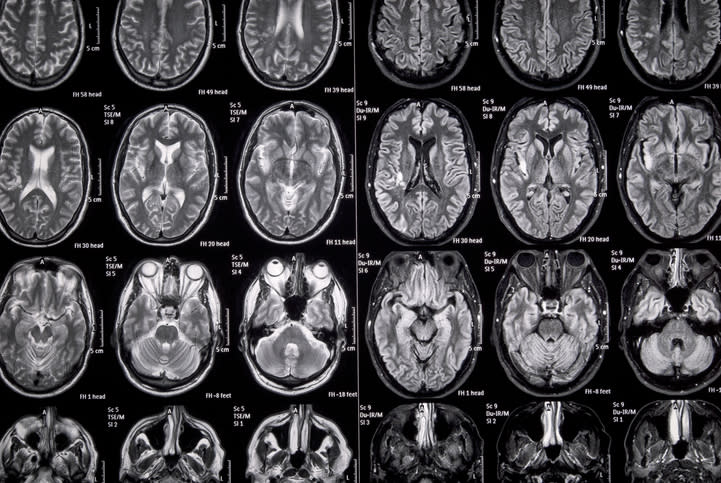
Artificial Intelligence–assisted Detection of Challenging Ischemic Stroke on Diffusion-weighted Imaging: A Reader Study
-
By
-
Jeong, Younbeom
-
Ryu, Wi-Sun
-
Kim, Beom Joon
-
Choi, Byung Se
-
Kim, Jae Hyoung
-
Sunwoo, Leonard
-
April 28, 2026
-
Clinical Scorecard: AI-Enhanced Identification of Complex Ischemic Stroke on Diffusion-Weighted MRI: An Evaluation of Reader Performance
At a Glance
| Category | Detail |
|---|
| Condition | Acute Ischemic Stroke (AIS) |
| Key Mechanisms | Artificial intelligence assistance in interpreting diffusion-weighted MRI. |
| Target Population | Patients undergoing diffusion-weighted imaging for suspected AIS. |
| Care Setting | Single-center, retrospective study. |
Key Highlights
- AI improved sensitivity from 74.6% to 90.6% in detecting AIS.
- Area under the curve (AUC) increased from 0.85 to 0.93 with AI assistance.
- AI identified 79.6% of false-negative stroke cases.
- Lesion segmentation accuracy improved from 0.523 to 0.742.
- Reader confidence increased with AI support in challenging cases.
Guideline-Based Recommendations
Diagnosis
- Utilize AI-assisted interpretation for enhanced detection of AIS on DWI.
Management
- Incorporate AI tools in clinical workflows for improved diagnostic accuracy.
Monitoring & Follow-up
- Regularly assess the performance of AI systems in clinical settings.
Risks
- Monitor for potential decrease in specificity when using AI assistance.
Patient & Prescribing Data
3,986 patients with suspected AIS, mean age 68 years.
AI assistance can significantly enhance diagnostic outcomes in acute settings.
Clinical Best Practices
- Implement AI tools to support radiologists in interpreting complex cases.
- Ensure continuous training and evaluation of AI systems in clinical practice.
Related Resources & Content