Hemoglobin glycation index and short-term mortality in sepsis: a retrospective cohort study with external validation - Scorecard - MDSpire

Hemoglobin glycation index and short-term mortality in sepsis: a retrospective cohort study with external validation

  • By

  • Qianping Zhang

  • Yan Zhang

  • Xuemeng Li

  • Xinyi Tian

  • Zhijun Meng

  • Jin Zhang

  • Jie Weng

  • Kaifan Lin

  • Bihuan Cheng

  • Yuqiang Gong

  • Ye Gao

  • July 8, 2026

  • 0 min

Share

Clinical Scorecard: The Association of Hemoglobin Glycation Index with Short-Term Mortality in Sepsis: A Retrospective Cohort Analysis with External Validation

At a Glance

CategoryDetail
ConditionSepsis
Key MechanismsHemoglobin glycation index (HGI) reflects interindividual variability in hemoglobin glycation beyond average glycemic exposure.
Target PopulationCritically ill patients with sepsis
Care SettingIntensive care unit (ICU)

Key Highlights

  • Higher HGI is associated with lower short-term mortality in sepsis.
  • 28-day mortality rates were 23.25% in the primary cohort.
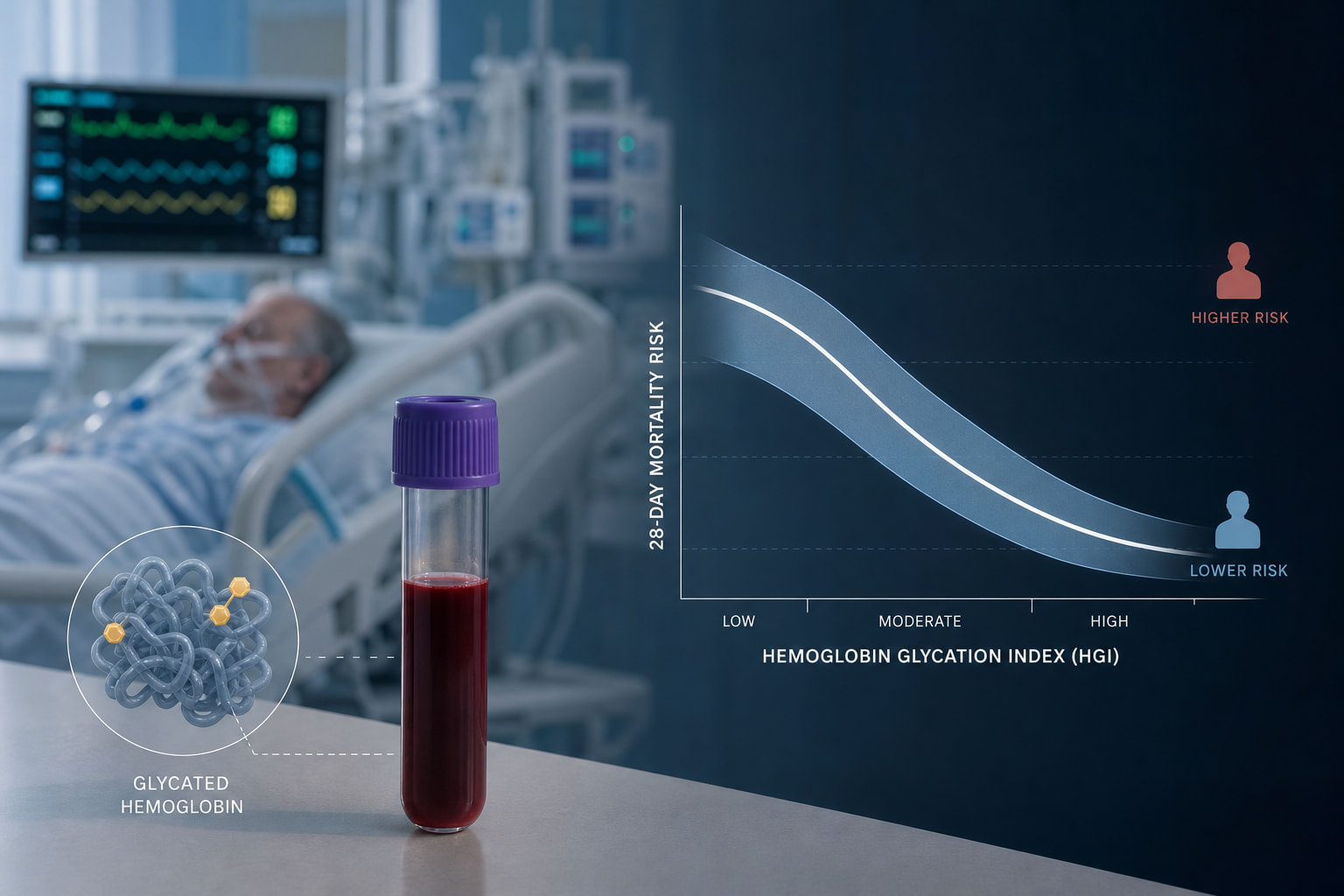
  • Non-survivors exhibited significantly lower HGI levels than survivors (p < 0.001).
  • Patients in the highest HGI quartile had a significantly lower risk of 28-day mortality (HR 0.70).
  • Findings were validated in an independent external cohort.

Guideline-Based Recommendations

Diagnosis

  • Sepsis identified according to Sepsis-3 criteria using SOFA score.

Management

  • Consider HGI as a prognostic indicator in critically ill patients with sepsis.

Monitoring & Follow-up

  • Monitor HGI levels to assess short-term mortality risk.

Risks

  • Increased mortality associated with lower HGI levels.

Patient & Prescribing Data

Adult ICU patients with sepsis.

HGI may provide prognostic information during the early phase of sepsis.

Clinical Best Practices

  • Utilize HGI alongside traditional glycemic metrics for risk stratification in sepsis.

Related Resources & Content

Original Source(s)

Related Content