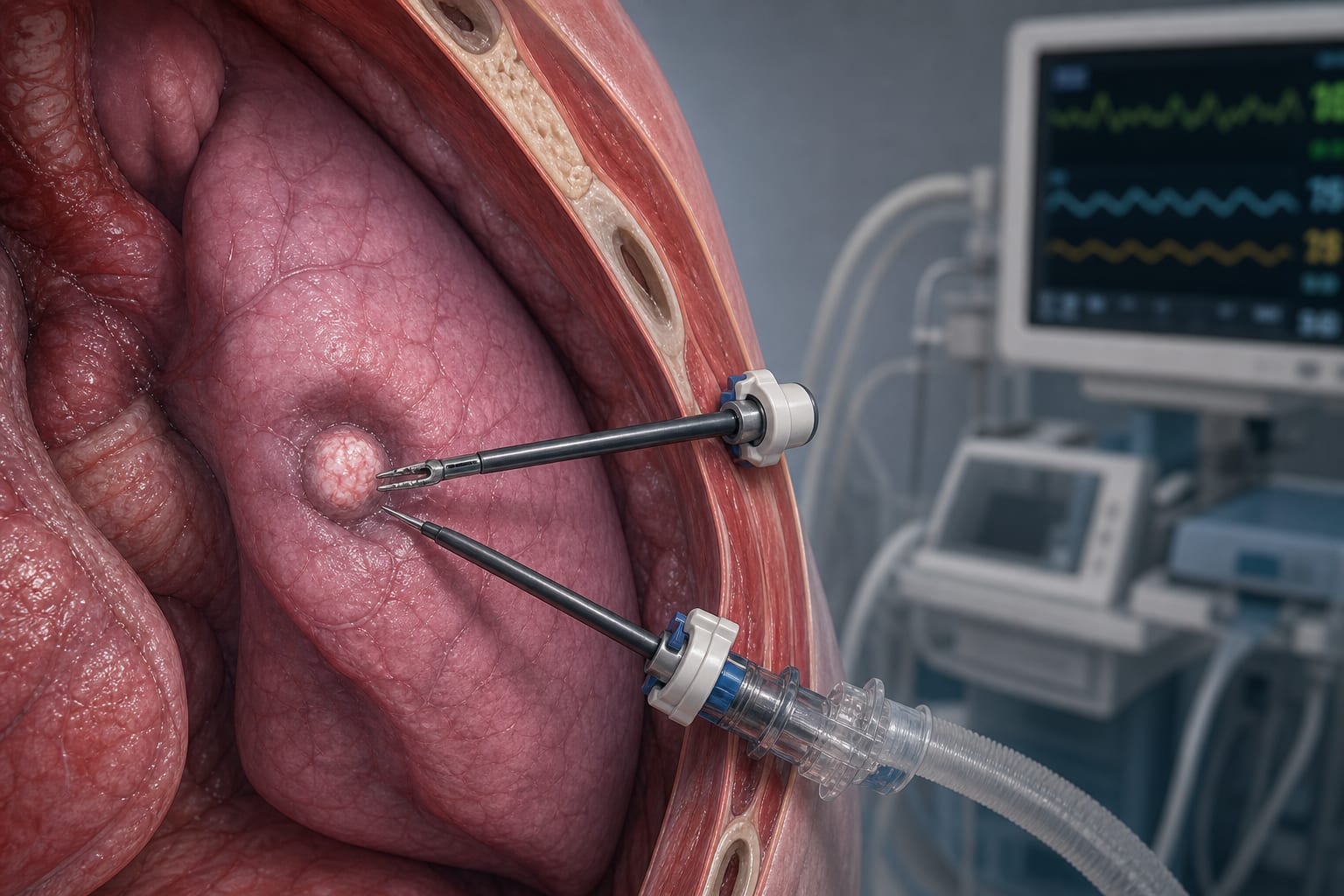
Tertiary neurosurgical department with neuro-intensive care unit postoperative management
Key Highlights
Brain metastases from melanoma, kidney carcinoma, and hepatocellular carcinoma carry increased risk of intracerebral hemorrhage.
Surgical removal of brain metastases is feasible and safe when coagulation parameters are normalized and anticoagulation is managed appropriately.
Preoperative imaging and laboratory evaluation are critical to assess hemorrhagic risk and guide perioperative management.
Guideline-Based Recommendations
Diagnosis
Use high-resolution brain MRI and cranial CT to identify brain metastases and associated hemorrhage.
Perform thoracic and abdominal CT to evaluate extracranial metastases and primary tumor control.
Conduct neuropathologic diagnosis including immunohistochemistry on resected tissue to determine primary cancer origin.
Management
Pause platelet aggregation inhibitors 7 days before surgery; unfractionated or low-molecular-weight heparin 1 day before; direct oral anticoagulants 2-3 days before; replace warfarin with heparin bridging.
Administer thromboprophylaxis with low-molecular-weight heparin or unfractionated heparin, pausing on day before and day of surgery.
Provide postoperative care in neuro-intensive care unit with close monitoring.
Monitoring & Follow-up
Evaluate coagulation parameters (aPTT, PT, INR, platelet count) immediately before and after surgery to ensure normalization.
Monitor hemoglobin and hematocrit levels perioperatively to detect bleeding complications.
Use postoperative cranial CT imaging to assess for hemorrhagic complications.
Risks
Increased perioperative hemorrhagic complications in BM from melanoma, kidney carcinoma, and hepatocellular carcinoma.
Exclusion of patients with trauma-related or cerebrovascular hemorrhages to isolate tumor-associated bleeding risk.
Patient & Prescribing Data
Patients with brain metastases undergoing complete surgical resection with normalized coagulation status
Careful cessation and bridging of anticoagulant and antiplatelet therapies reduce perioperative bleeding risk; thromboprophylaxis is maintained except on surgery day.
Clinical Best Practices
Individualized indication for neurosurgical intervention decided by interdisciplinary tumor board or emergency team.
Ensure complete tumor resection confirmed by surgical report to include patient in outcome assessments.
Exclude patients with incomplete resection, lymphoma, or hemorrhage due to trauma or vascular malformations to maintain study validity.
Use validated performance and prognosis scales (KPS, RPA, dsGPA) and comorbidity index (CCI) to stratify patient risk and outcomes.
by Laurèl Rauschenbach, Pia Kolbe, Adrian Engel, Yahya Ahmadipour, Marvin Darkwah Oppong, Alejandro N. Santos, Sied Kebir, Celia Dobersalske, Björn Scheffler, Cornelius Deuschl, Philipp Dammann, Karsten H. Wrede, Ulrich Sure, Ramazan Jabbarli