Clinical Scorecard: Evaluation of Magnetic Thermoradiotherapy in Preclinical A549 Models for Lung Cancer Treatment
At a Glance
Category
Detail
Condition
Key Mechanisms
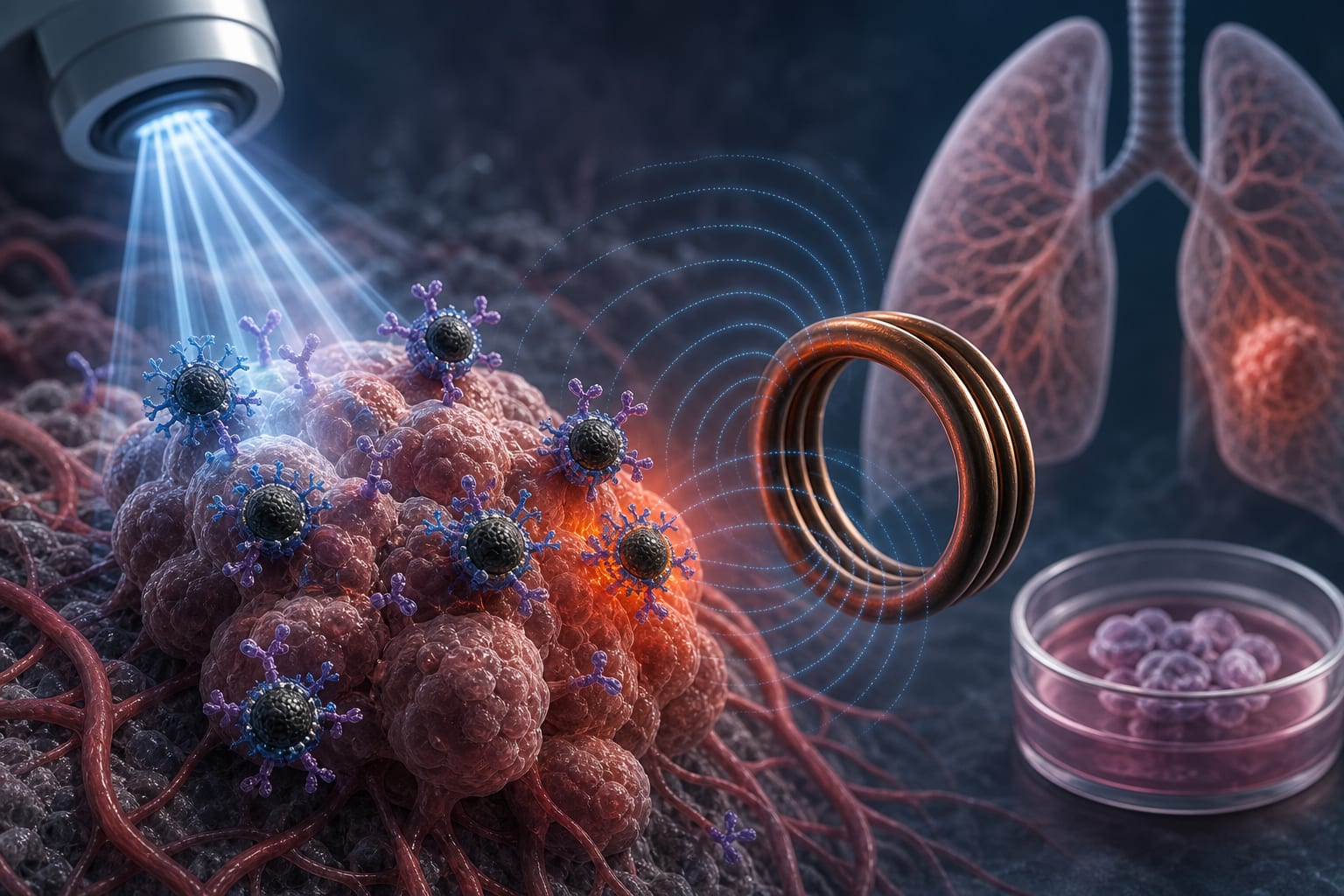
Combination of X-ray irradiation, magnetic fluid hyperthermia, and engineered magnetic nanoparticles to enhance treatment efficacy, specifically targeting the β3 subunit of αvβ3 integrin receptor.
Target Population
Care Setting
Key Highlights
Engineered Fe@C-PEI-IgG-GOX nanoparticles significantly reduced lung cancer cell viability.
Combination therapy improved therapeutic outcomes in A549 xenograft models.
Magnetic fluid hyperthermia enhances the effects of radiotherapy.
Targeting the β3 subunit of αvβ3 integrin receptor may improve treatment precision.
Study supports further preclinical optimization of multimodal lung cancer therapies.
Guideline-Based Recommendations
Diagnosis
Management
Employ stereotactic body radiotherapy (SBRT) for early-stage NSCLC, referencing current guidelines.
Use concurrent chemoradiotherapy for locally advanced NSCLC, with updated evidence.
Monitoring & Follow-up
Risks
Patient & Prescribing Data
Combination of radiotherapy with magnetic fluid hyperthermia and targeted nanoparticles may enhance treatment outcomes, but consider potential side effects.
Clinical Best Practices
Implement advanced irradiation techniques to minimize damage to healthy tissues, supported by recent studies.
Consider individualized treatment approaches based on tumor characteristics, referencing current research.
by Agnieszka Stawarska, Magdalena Bamburowicz-Klimkowska, Artur Kasprzak, Monika Ruzycka-Ayoush, Michal Bystrzejewski, Maria Wojewodzka, Michal Wieteska, Ireneusz P. Grudzinski