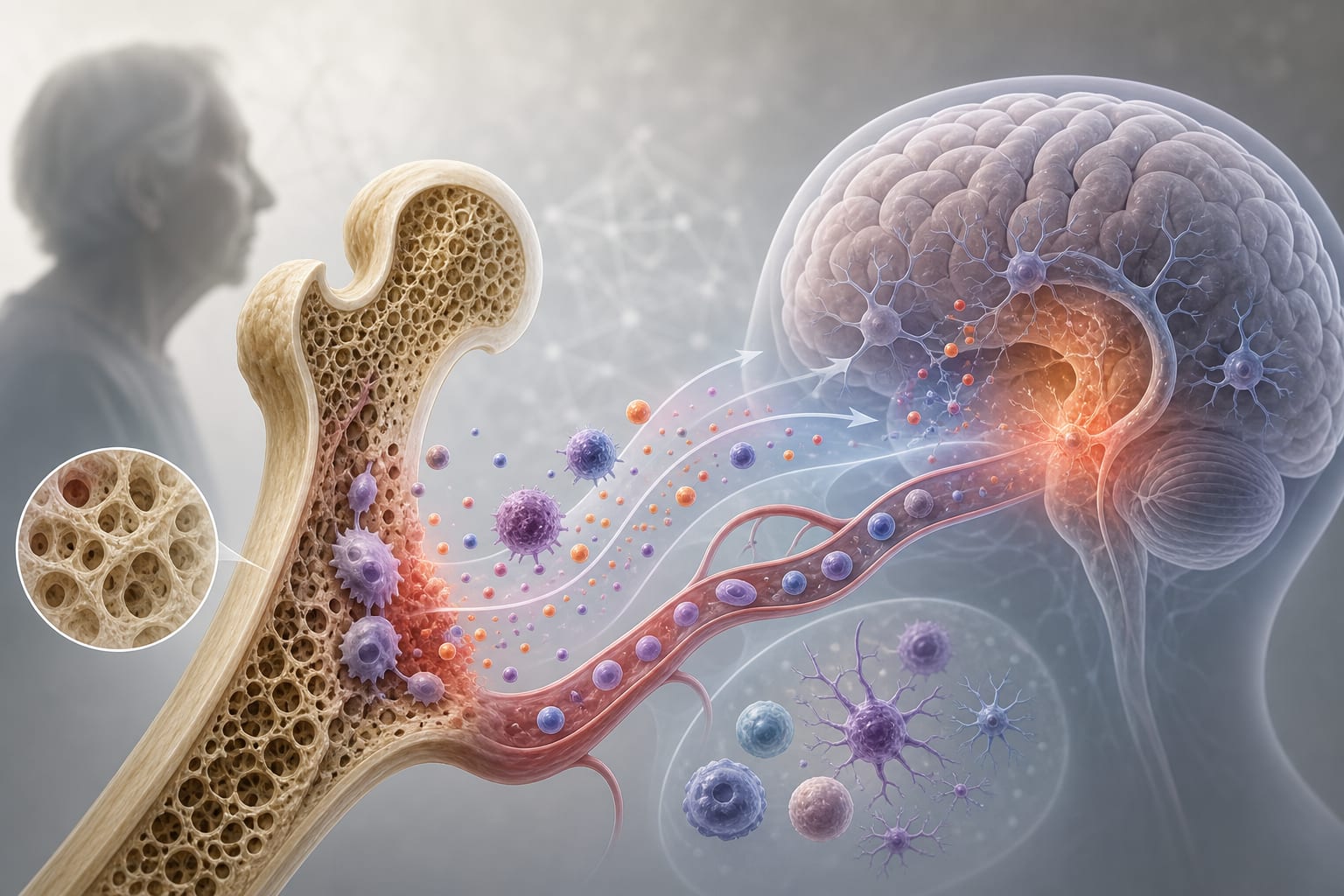
Osteoimmuno-brain axis: a bridge connecting osteoporosis and cognitive decline and its clinical significance in dementia and Alzheimer’s disease - Scorecard - MDSpire
Clinical Scorecard: The Osteoimmune-Brain Connection: Linking Osteoporosis with Cognitive Impairment and Its Clinical Implications for Dementia and Alzheimer’s Disease
At a Glance
Category
Detail
Condition
Osteoporosis and Cognitive Dysfunction
Key Mechanisms
Osteoimmune interactions influencing brain function through inflammation, cytokines, and bone-derived hormones.
Target Population
Elderly individuals, particularly those at risk for Alzheimer's disease.
Care Setting
Clinical research and geriatric care.
Key Highlights
Osteoporosis and Alzheimer's disease frequently co-occur in the elderly.
Shared pathophysiological pathways suggest a bidirectional link between the two conditions.
Bone-derived factors like osteocalcin and sclerostin influence brain function.
Chronic low-grade systemic inflammation is common in both osteoporosis and Alzheimer's disease.
Hormonal dysregulation, particularly involving estrogen and FSH, is a significant risk factor.
Guideline-Based Recommendations
Diagnosis
Consider screening for osteoporosis in patients diagnosed with Alzheimer's disease.
Management
Investigate potential therapeutic strategies targeting both osteoporosis and cognitive impairment.
Monitoring & Follow-up
Regularly assess bone health in patients with cognitive dysfunction.
Risks
Increased risk of osteoporotic fractures in patients with Alzheimer's disease.
Patient & Prescribing Data
Elderly patients with osteoporosis and/or cognitive impairment.
FSH blockade may offer a therapeutic strategy for managing both osteoporosis and cognitive decline.
Clinical Best Practices
Integrate assessment of bone health in cognitive impairment evaluations.
Monitor inflammatory markers in patients with osteoporosis and cognitive dysfunction.