Sex-Related Differences in Conduit Strategy and Early Outcomes After Sternum-Sparing On-Pump Multivessel CABG via Left Anterior Thoracotomy - Scorecard - MDSpire
Advertisement
Sex-Related Differences in Conduit Strategy and Early Outcomes After Sternum-Sparing On-Pump Multivessel CABG via Left Anterior Thoracotomy
Clinical Scorecard: Gender-Based Variations in Conduit Approaches and Initial Outcomes Following Sternum-Sparing On-Pump Multivessel CABG via Left Anterior Thoracotomy
At a Glance
Category
Detail
Condition
Coronary Artery Disease
Key Mechanisms
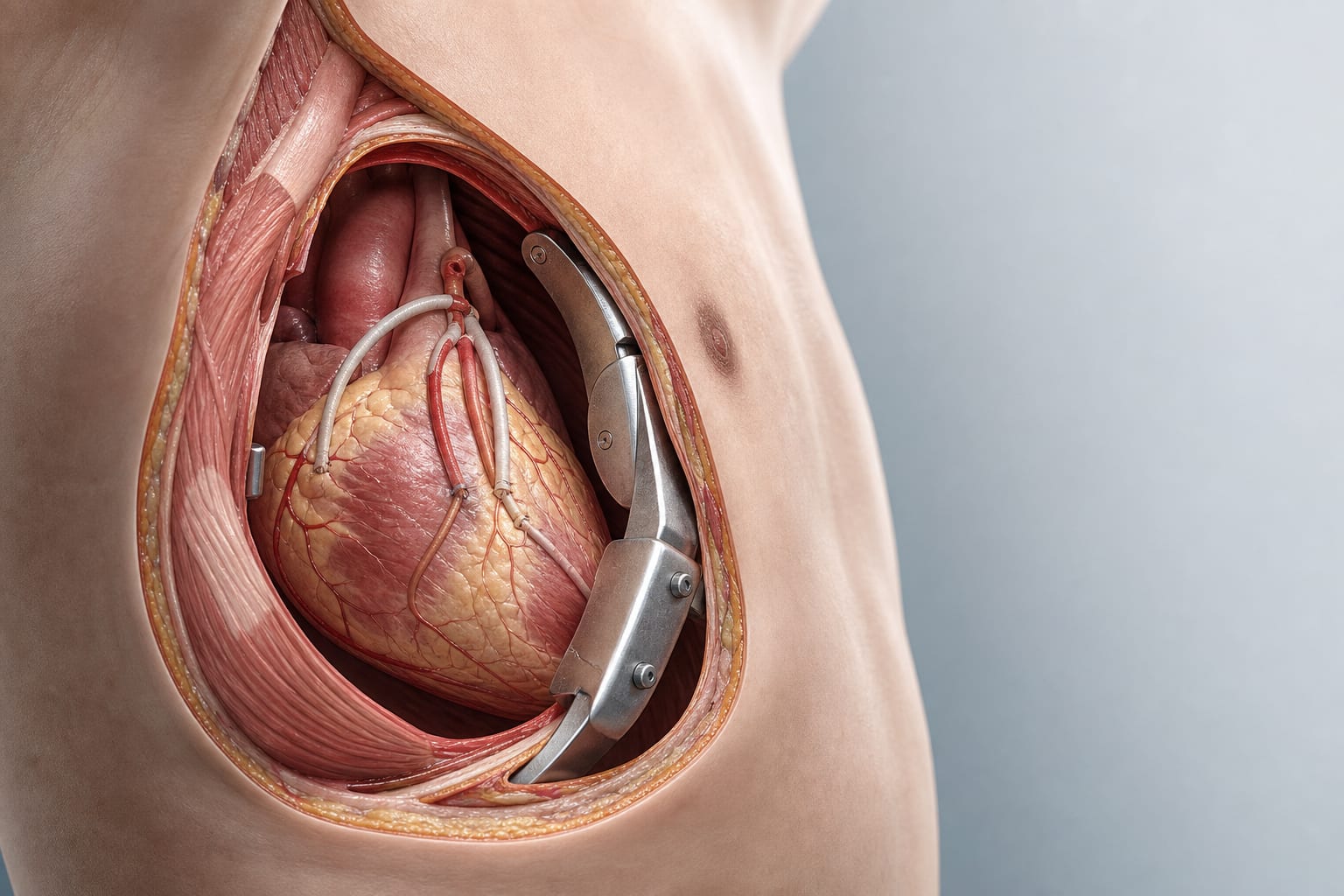
Sternum-sparing minimally invasive multivessel CABG via left anterior thoracotomy
Target Population
Patients undergoing non-emergency TCRAT, including 807 men and 138 women
Care Setting
Surgical intervention in a hospital setting
Key Highlights
Women were older and had a higher EuroSCORE II compared to men.
Diabetes mellitus was more prevalent in women.
Men received more total arterial grafting and radial artery use.
Operative times were longer in men, but in-hospital outcomes were similar between sexes.
Findings should be interpreted with caution due to observational design.
Guideline-Based Recommendations
Diagnosis
Evaluate baseline characteristics and risk profiles in patients undergoing CABG.
Management
Consider sex-related differences in conduit strategy and grafting approaches.
Monitoring & Follow-up
Monitor in-hospital outcomes including mortality, stroke, and MACCE.
Risks
Assess the impact of diabetes and age on surgical outcomes.
Patient & Prescribing Data
807 men and 138 women undergoing TCRAT.
Higher rates of total arterial grafting and radial artery use in men.
Clinical Best Practices
Utilize sternum-sparing techniques for suitable candidates.
Tailor surgical approaches based on patient demographics and comorbidities.