Targeting RAC1 in glioblastoma: prognostic value, immune landscape, and small molecule therapeutic potential
-
By
-
Qionghui Wu
-
Shanlin Chen
-
Xiaodong Xie
-
Xinli Feng
-
Zhenchang Zhang
-
Gang Su
-
June 18, 2026
-
Clinical Scorecard: Exploring the Role of RAC1 in Glioblastoma: Implications for Prognosis, Immune Environment, and Potential Small Molecule Therapies
At a Glance
| Category | Detail |
|---|
| Condition | Glioblastoma (GBM) |
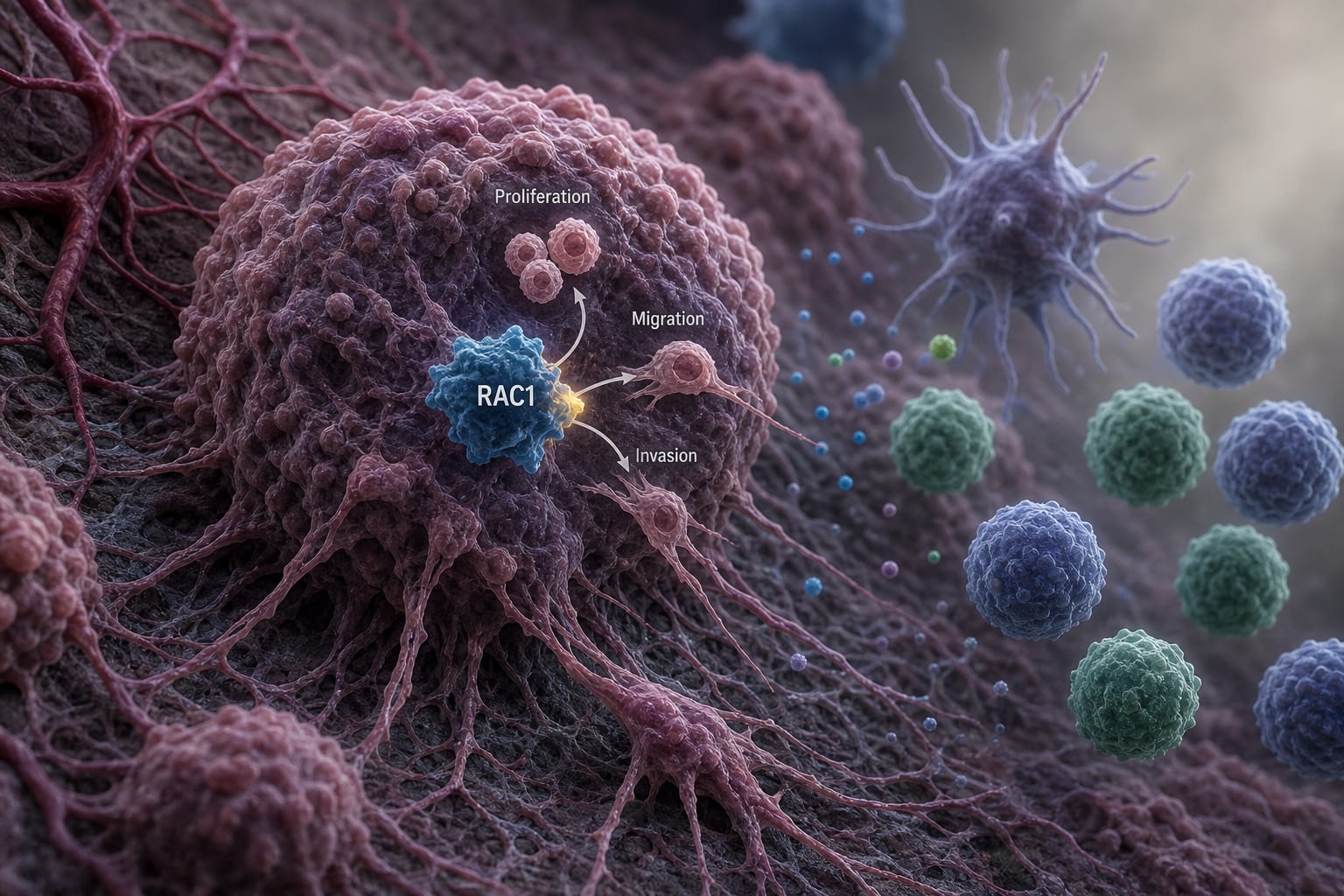
| Key Mechanisms | RAC1 involvement in cell motility, proliferation, migration, invasion, and immune microenvironment interactions. |
| Target Population | Patients with glioblastoma. |
| Care Setting | Oncology, specifically neuro-oncology. |
Key Highlights
- RAC1 is a key prognostic biomarker in GBM with HR = 2.61.
- RAC1 expression is associated with immune infiltration and therapeutic resistance.
- Palbociclib shows potential as a therapeutic agent targeting RAC1 in GBM.
- Single-cell RNA sequencing reveals distinct tumor cell states influenced by RAC1.
Guideline-Based Recommendations
Diagnosis
- Evaluate RAC1 expression for prognostic assessment in GBM.
Management
- Consider CDK4/6 inhibitors like Palbociclib for RAC1-high GBM patients.
Monitoring & Follow-up
- Monitor RAC1 expression levels to assess treatment response.
Risks
- RAC1-high tumors may exhibit resistance to immune checkpoint inhibitors.
Patient & Prescribing Data
Patients diagnosed with glioblastoma exhibiting high RAC1 expression.
RAC1-high patients may benefit more from targeted therapies rather than ICI monotherapy.
Clinical Best Practices
- Utilize single-cell RNA sequencing to understand tumor heterogeneity in GBM.
- Incorporate RAC1 expression analysis in treatment planning for GBM.
Related Resources & Content