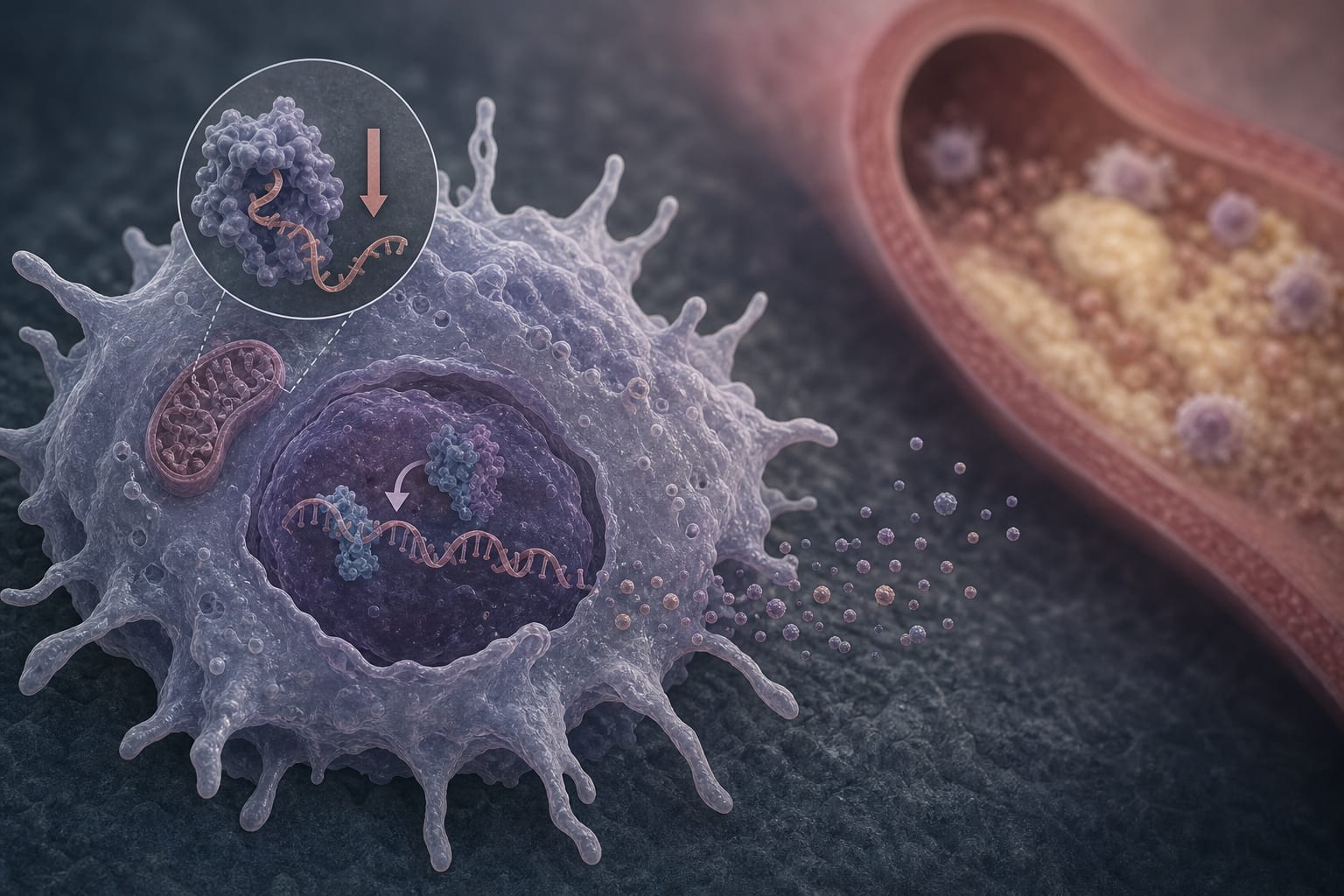
Clinical Scorecard: Decreased Expression of CARS2 Induces a Mild Pro-Inflammatory Profile in THP-1 Macrophages
At a Glance
Category
Detail
Condition
Coronary artery disease and potential broader inflammatory conditions
Key Mechanisms
CARS2 suppression leads to increased interferon signaling and a pro-inflammatory profile in macrophages, with implications for various inflammatory diseases.
Target Population
Care Setting
Key Highlights
CARS2 suppression is linked to a pro-inflammatory expression profile in THP-1 macrophages.
Increased expression of inflammatory cytokines observed with CARS2 knockdown.
Interferon-like response established in unpolarized THP-1 macrophages.
NF-ΚB activation is modestly diminished in CARS2-suppressed cells, suggesting altered inflammatory signaling.
Reduced CARS2 levels do not alter mitochondrial function or content.
Guideline-Based Recommendations
Diagnosis
Consider CARS2 expression levels in the context of coronary artery disease and other inflammatory conditions.
Management
Monitor inflammatory cytokine levels in patients with altered CARS2 expression and explore potential therapeutic interventions.
Monitoring & Follow-up
Assess interferon signaling pathways in macrophages and consider their role in patient outcomes.
Risks
CARS2 suppression may predispose individuals to a pro-inflammatory state, necessitating careful monitoring.
Patient & Prescribing Data
Individuals with coronary artery disease linked to CARS2 locus and other inflammatory conditions.
CARS2 may play a role in modulating inflammation in macrophages; consider potential therapeutic strategies targeting CARS2.
Clinical Best Practices
Utilize THP-1 macrophage models for studying inflammatory responses and their clinical implications.
Incorporate bioinformatic analyses to understand gene expression changes and their relevance to patient care.