Clinical Scorecard: Epidermal Resident Memory T Cells in Humans: Expanding the Understanding Beyond the Dermis
At a Glance
Category
Detail
Condition
Epidermal Resident Memory T Cells
Key Mechanisms
Epidermal TRM cells maintain immune homeostasis and interact with Langerhans cells.
Target Population
Humans with various skin conditions including HIV infection, vitiligo, and alopecia areata.
Care Setting
Immunological research and clinical studies involving human skin.
Key Highlights
The human epidermis harbors abundant populations of conventional and regulatory tissue-resident memory T cells.
Epidermal TRM cells are enriched for CD8+CD69+CD103+ populations and include specialized CD49a+ and CD101+ cytotoxic subsets.
Epidermal immune homeostasis is maintained through interactions among conventional TRM cells, regulatory TRM cells, Langerhans cells, and keratinocytes.
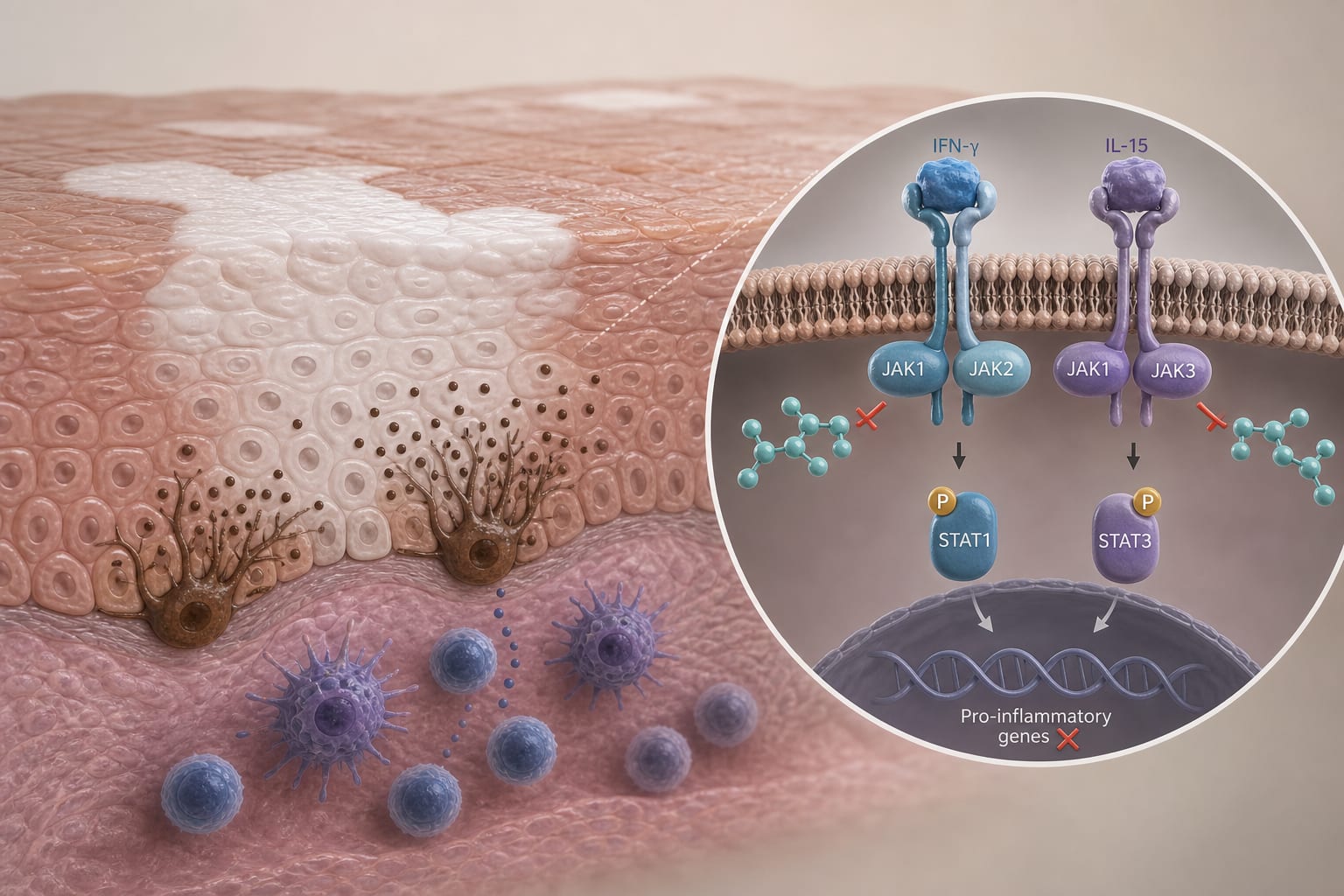
Epidermal TRM cells contribute to the pathogenesis of HIV infection, fixed drug eruption, vitiligo, and alopecia areata.
The epidermis should be regarded as an autonomous immunological compartment rather than merely a passive target of dermal inflammation.
Guideline-Based Recommendations
Diagnosis
Identification of TRM cells in epidermal tissues may aid in understanding skin-related diseases.
Management
Consider the role of epidermal TRM cells in the pathogenesis of skin diseases when developing treatment strategies.
Monitoring & Follow-up
Monitor the dynamics of TRM cells in patients with skin conditions for better management.
Risks
Potential for misinterpretation of epidermal immune responses due to traditional dermis-centric views.
Patient & Prescribing Data
Patients with skin diseases involving immune dysregulation.
Understanding the role of TRM cells may inform targeted therapies for skin conditions.
Clinical Best Practices
Recognize the epidermis as an active immunological compartment.
Investigate the interactions between TRM cells and other immune cells in the epidermis.
Utilize findings from human studies to inform clinical approaches to skin diseases.