Cancer-related microangiopathic hemolytic anemia (CR-MAHA) in a metastatic breast cancer patient with a germ-line ATM single nucleotide variant and an ESR1 fusion variant: insights from a case report on early diagnosis and improved outcomes - Scorecard - MDSpire

Cancer-related microangiopathic hemolytic anemia (CR-MAHA) in a metastatic breast cancer patient with a germ-line ATM single nucleotide variant and an ESR1 fusion variant: insights from a case report on early diagnosis and improved outcomes

  • By

  • Fengting Yan

  • Aimee Wu

  • Yufei Wang

  • Tanya Wahl

  • Zirui Wang

  • Cesar Gutierrez

  • Josiah Wagner

  • Alexa Dowdell

  • Alexandra Bartlett

  • Christopher Carney

  • Daniel Landis

  • Brian Piening

  • Henry Kaplan

  • July 7, 2026

  • 0 min

Share

Clinical Scorecard: Microangiopathic Hemolytic Anemia Associated with Cancer in a Patient with Metastatic Breast Cancer: A Case Study on Early Detection and Favorable Outcomes Linked to Germ-Line ATM and ESR1 Fusion Variants

At a Glance

CategoryDetail
ConditionCancer-related microangiopathic hemolytic anemia (CR-MAHA)
Key MechanismsDestruction of red blood cells due to microangiopathic changes associated with malignancies.
Target PopulationPatients with metastatic breast cancer and potential genetic predispositions.
Care SettingOncology and hematology clinical settings.

Key Highlights

  • CR-MAHA is a rare, life-threatening paraneoplastic syndrome.
  • Early recognition and treatment are crucial for improving prognosis.
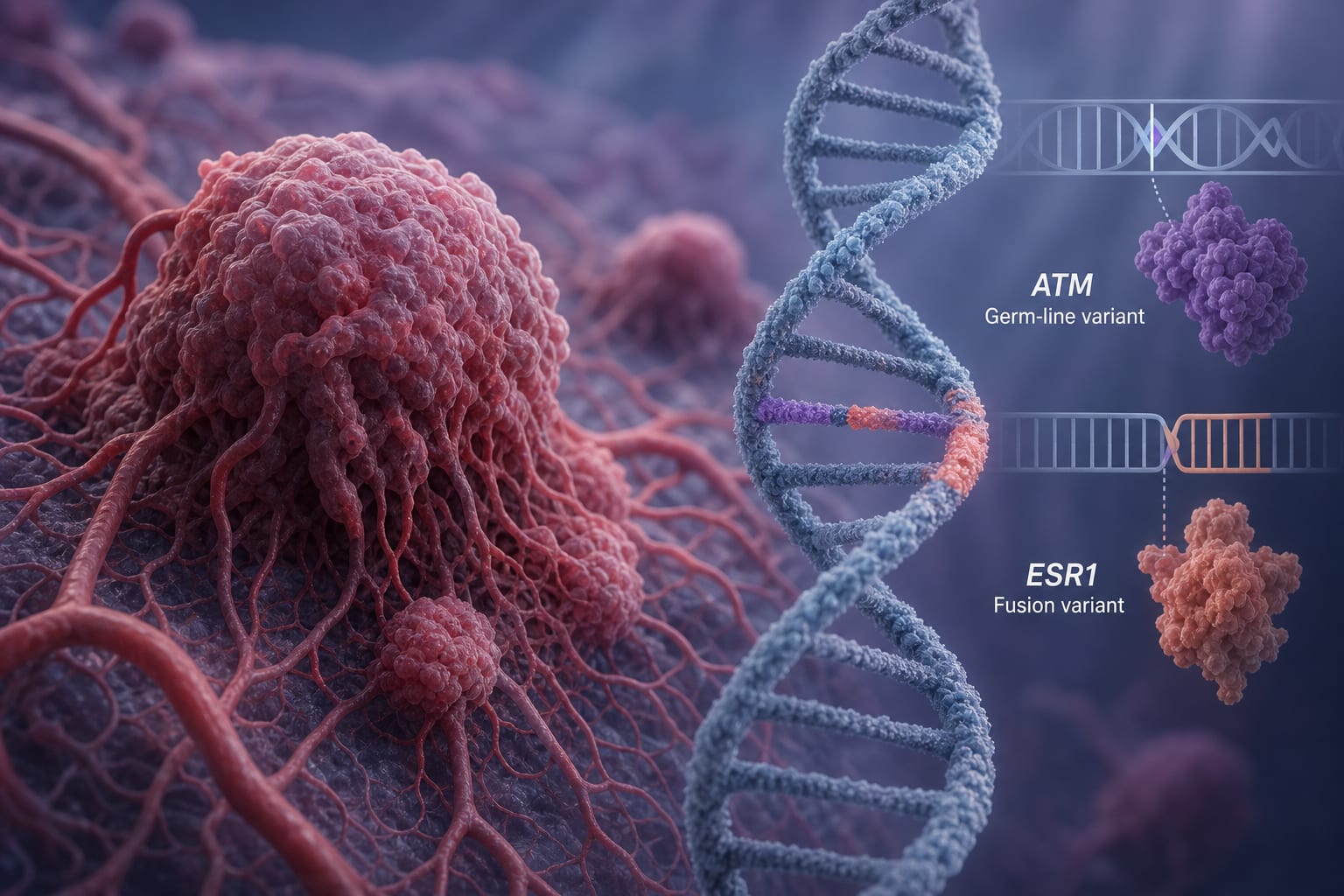
  • Genomic testing revealed germ-line ATM and ESR1 fusion variants.
  • The condition is often associated with gastric, breast, prostate, and lung cancers.
  • Management focuses on treating the underlying malignancy and supportive care.

Guideline-Based Recommendations

Diagnosis

  • High clinical suspicion in cancer patients presenting with hemolytic anemia and thrombocytopenia.
  • Peripheral blood smear to identify schistocytes.

Management

  • Initiate treatment for the underlying malignancy.
  • Supportive care including blood transfusions as needed.

Monitoring & Follow-up

  • Regular monitoring of hemoglobin levels, platelet counts, and bilirubin levels.

Risks

  • Poor prognosis if not recognized and treated early.

Patient & Prescribing Data

Patients with metastatic breast cancer and associated CR-MAHA.

Doxorubicin and cyclophosphamide were initiated within 48 hours of presentation.

Clinical Best Practices

  • Prompt identification and management of CR-MAHA in cancer patients.
  • Consider genetic testing for familial cancer syndromes.

Related Resources & Content

Original Source(s)

Related Content