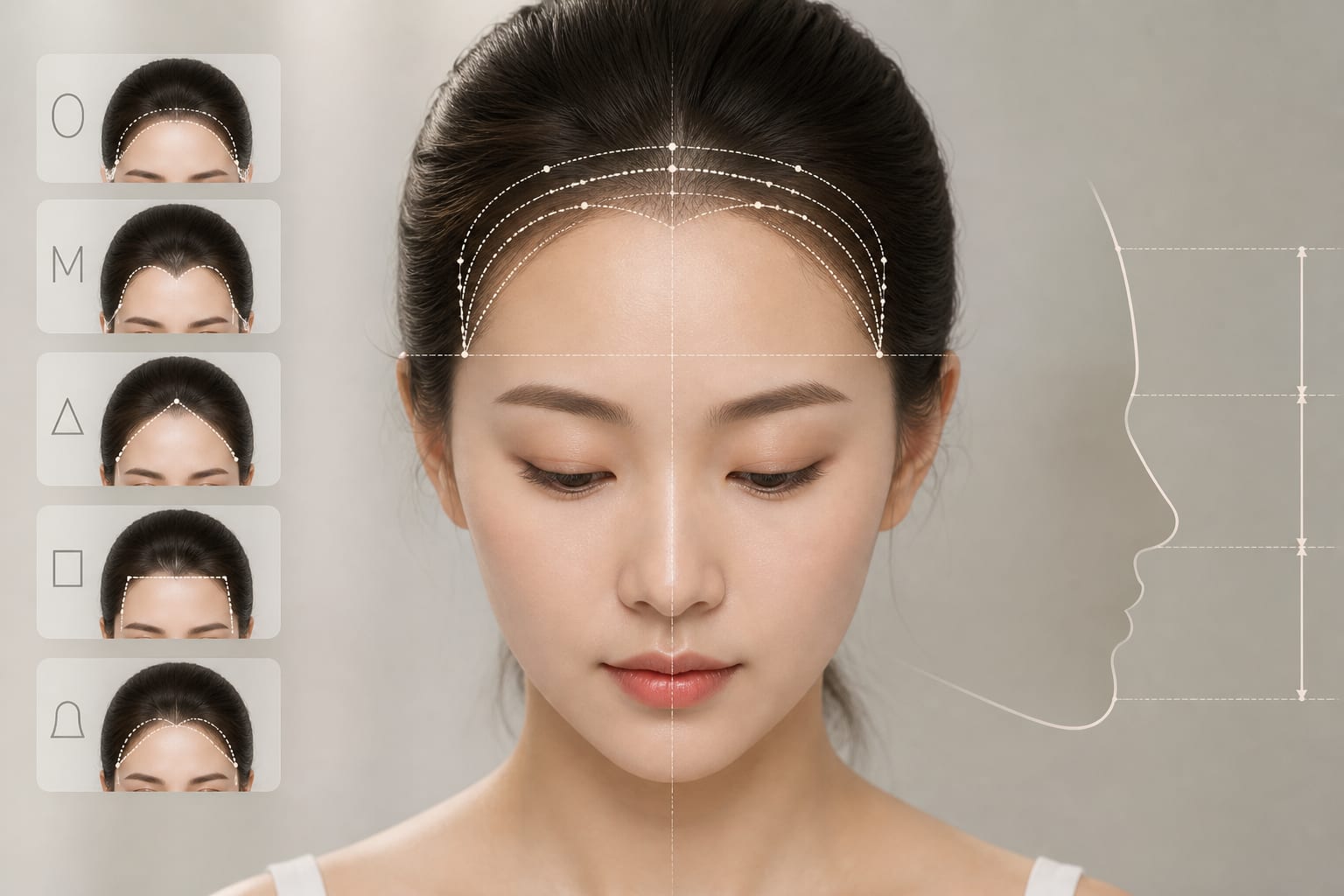
Establishing Optimal Anterior Hairline Shape and Hair Density Ratio Through Morphometric Evaluation in Chinese Women
-
By
-
Yiyi Zhang
-
Dadong Tang
-
Lanzhi Zhang
-
Jingping Wu
-
Fengrui Cheng
-
Hongbin Cheng
-
September 9, 2026
Clinical Scorecard: Establishing Optimal Anterior Hairline Shape and Hair Density Ratio Through Morphometric Evaluation in Chinese Women
At a Glance
| Category | Detail |
|---|
| Condition | Aesthetic preferences for anterior hairline contours |
| Key Mechanisms | Evaluation of hairline contour configurations and hair-bearing proportions |
| Target Population | Chinese women |
| Care Setting | Clinical aesthetic practices |
Key Highlights
- Round, triangular, and M-shaped hairline contours received higher aesthetic ratings.
- Preferred hair-bearing proportions were identified with a height ratio (HR) of 0.505 and width ratio (WR) of 0.373.
- Study involved 90 participants rating digitally modified images.
- Research aims to inform surgical hair transplantation and non-surgical interventions.
- Findings provide quantitative evidence for individualized aesthetic planning.
Guideline-Based Recommendations
Diagnosis
- Assess aesthetic preferences for hairline contours in female patients.
Management
- Utilize preferred hairline configurations in surgical and non-surgical interventions.
Monitoring & Follow-up
- Evaluate patient satisfaction with hairline aesthetics post-intervention.
Risks
- Consider psychological impacts of hair loss and aesthetic dissatisfaction.
Patient & Prescribing Data
Women seeking hair restoration or aesthetic enhancement.
Tailor interventions based on preferred hairline shapes and proportions.
Clinical Best Practices
- Incorporate patient aesthetic preferences into treatment planning.
- Utilize morphometric evaluations to guide hair restoration techniques.
Related Resources & Content