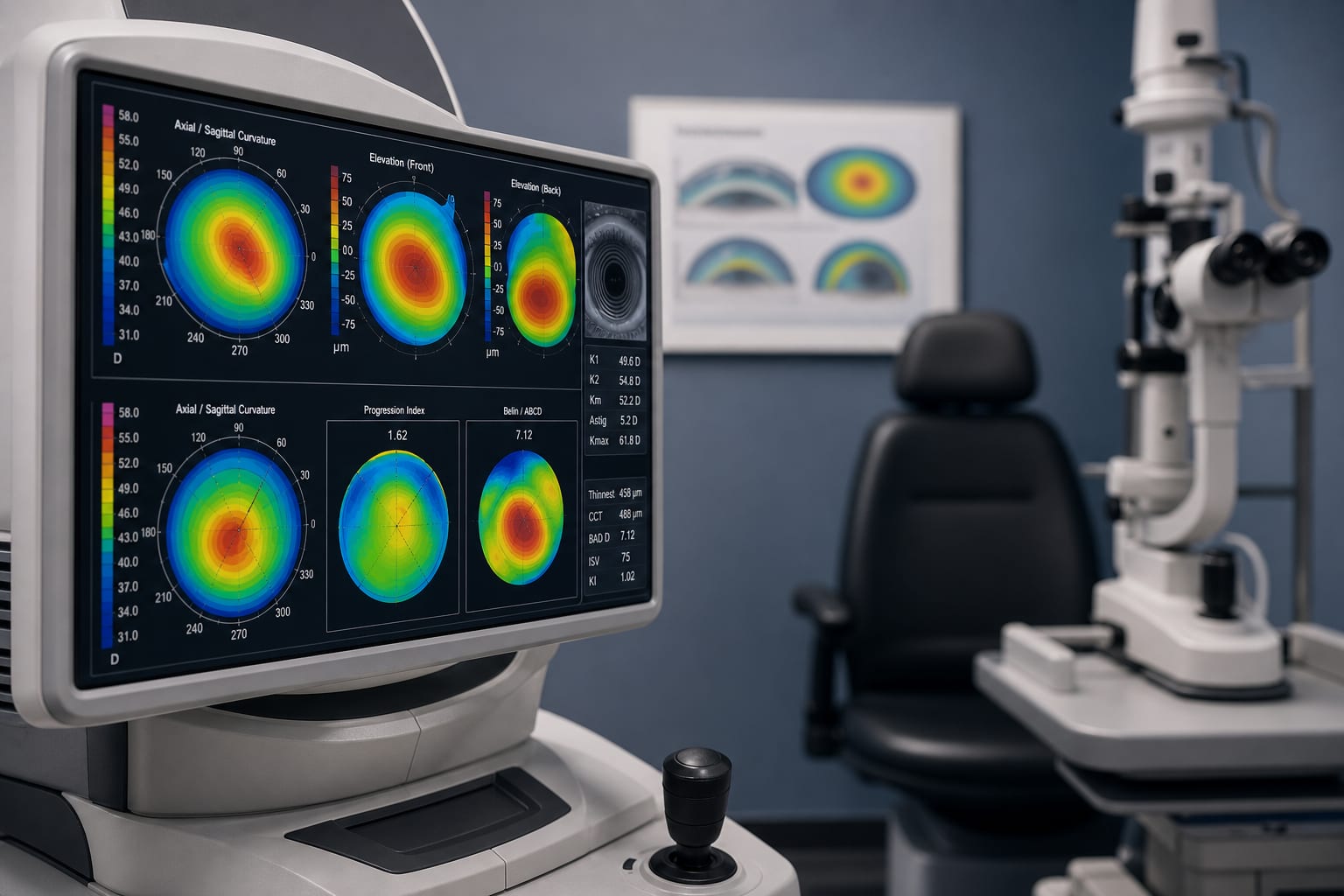
Advances in Keratoconus Management
Kendall Donaldson, MD, discusses how crosslinking innovation and collaborative care are improving outcomes for patients.
Clinical Scorecard: Advances in Keratoconus Management
At a Glance
| Category | Detail |
|---|
| Condition | Keratoconus |
| Key Mechanisms | Corneal crosslinking technology to halt disease progression. |
| Target Population | Patients with keratoconus, particularly those diagnosed at a younger age. |
| Care Setting | Ophthalmology clinics, including collaboration with optometrists. |
Key Highlights
- Introduction of epi-on crosslinking improves patient experience.
- Early detection and intervention prevent the need for corneal transplants.
- Collaboration between optometrists and ophthalmologists enhances patient care.
- Visual rehabilitation options are expanding post-crosslinking.
- Only 15-20% of eligible keratoconus patients currently receive crosslinking treatment.
Guideline-Based Recommendations
Diagnosis
- Early detection of keratoconus is critical for effective management.
Management
- Utilize corneal crosslinking to halt disease progression.
Monitoring & Follow-up
- Regular follow-ups to assess progression and treatment efficacy.
Risks
- Delayed diagnosis may lead to the need for full-thickness corneal transplants.
Patient & Prescribing Data
Keratoconus patients, particularly those at risk of progression.
Crosslinking can significantly improve outcomes and reduce the need for more invasive procedures.
Clinical Best Practices
- Encourage proactive screening for keratoconus in younger patients.
- Facilitate collaboration between optometrists and ophthalmologists.
- Implement new crosslinking techniques to enhance patient comfort and recovery.
Related Resources & Content