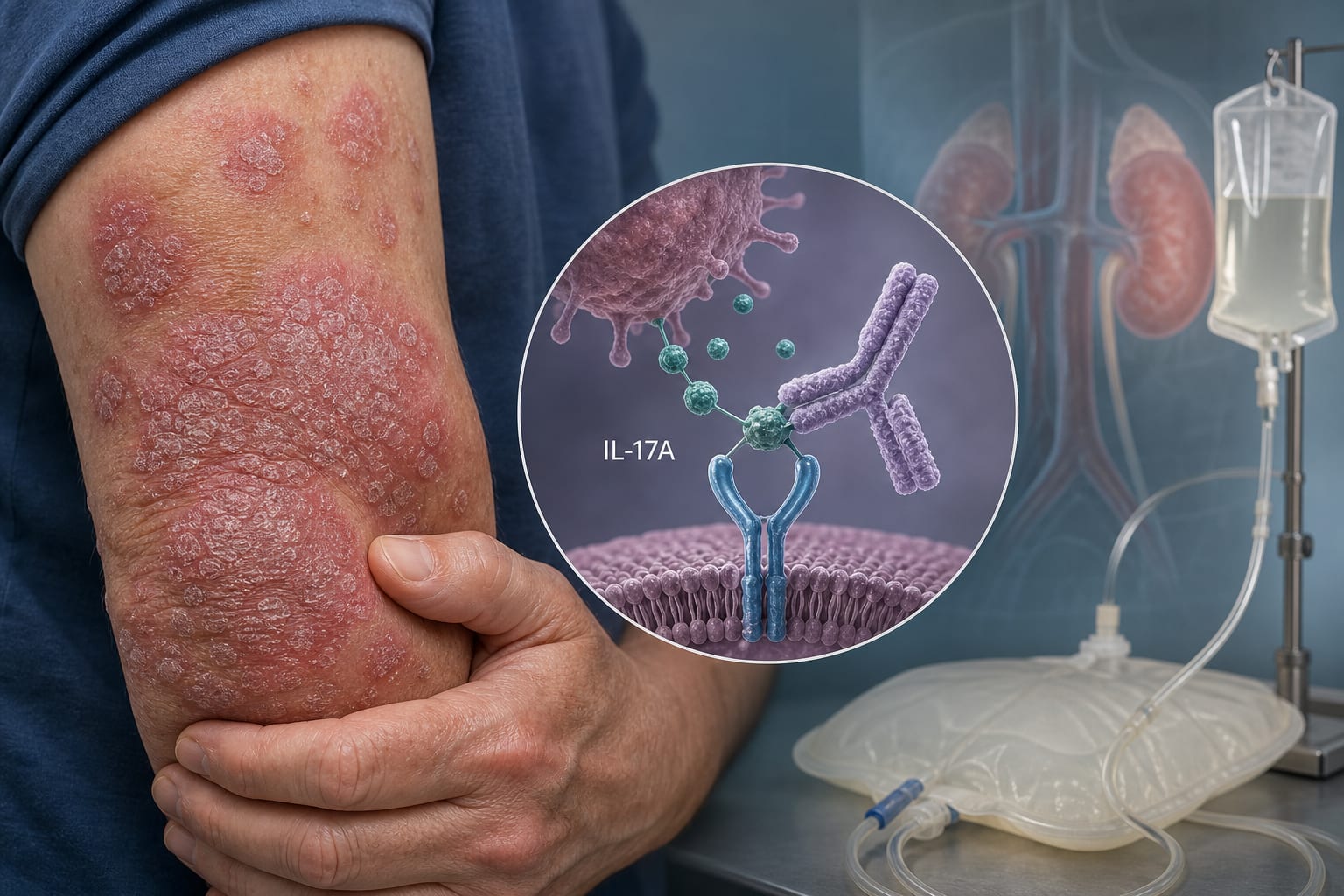
Case Study: Effective Management of Newly Developed Plaque Psoriasis with Secukinumab in a Patient Undergoing Peritoneal Dialysis
By
Junyan Fang
Ruolin Li
Yingxin Xie
Yingli Liu
July 8, 2026
Clinical Scorecard: Case Study: Effective Management of Newly Developed Plaque Psoriasis with Secukinumab in a Patient Undergoing Peritoneal Dialysis
At a Glance
Category Detail
Condition Plaque Psoriasis Key Mechanisms Immune-mediated inflammatory skin disorder involving IL-23/Th17 axis dysregulation. Target Population Patients undergoing peritoneal dialysis with severe psoriasis. Care Setting Clinical management of psoriasis in patients with chronic kidney disease.
Key Highlights
Secukinumab effectively treated severe plaque psoriasis in a patient on peritoneal dialysis. The patient achieved complete clearance of psoriatic lesions after 12 months of treatment. Initial management included intensified dialysis and topical corticosteroids, which were insufficient. Guideline-Based Recommendations
Diagnosis
Diagnosis of psoriasis confirmed through dermatological evaluation and PASI scoring. Management
Initiate secukinumab at 300 mg subcutaneously weekly for four weeks, followed by maintenance dosing. Monitoring & Follow-up
Monitor PASI scores and patient-reported outcomes for treatment efficacy. Risks
Consider potential adverse events and contraindications of systemic therapies in patients with renal impairment. Patient & Prescribing Data
61-year-old male with ESRD on peritoneal dialysis.
Secukinumab was well tolerated with significant improvement in psoriasis and no adverse events.
Clinical Best Practices
Consider biologic therapy for severe psoriasis in patients with renal impairment when conventional therapies are contraindicated. Regularly assess dialysis adequacy and its impact on psoriasis management. Related Resources & Content