Introducing the 2026 Focused Issue on Venous Disease: What excites us most about the future of this field
-
By
-
Heather L Gornik
-
Yogendra Kanthi
-
Robert D McBane, II
-
Ido Weinberg
-
Geoffrey D Barnes
-
Gregory Piazza
-
Suresh Vedantham
-
Raghu Kolluri
-
June 10, 2026
-
Clinical Scorecard: Announcing the 2026 Special Edition on Venous Disease: Our Enthusiasm for the Future of This Specialty
At a Glance
| Category | Detail |
|---|
| Condition | Venous Disease |
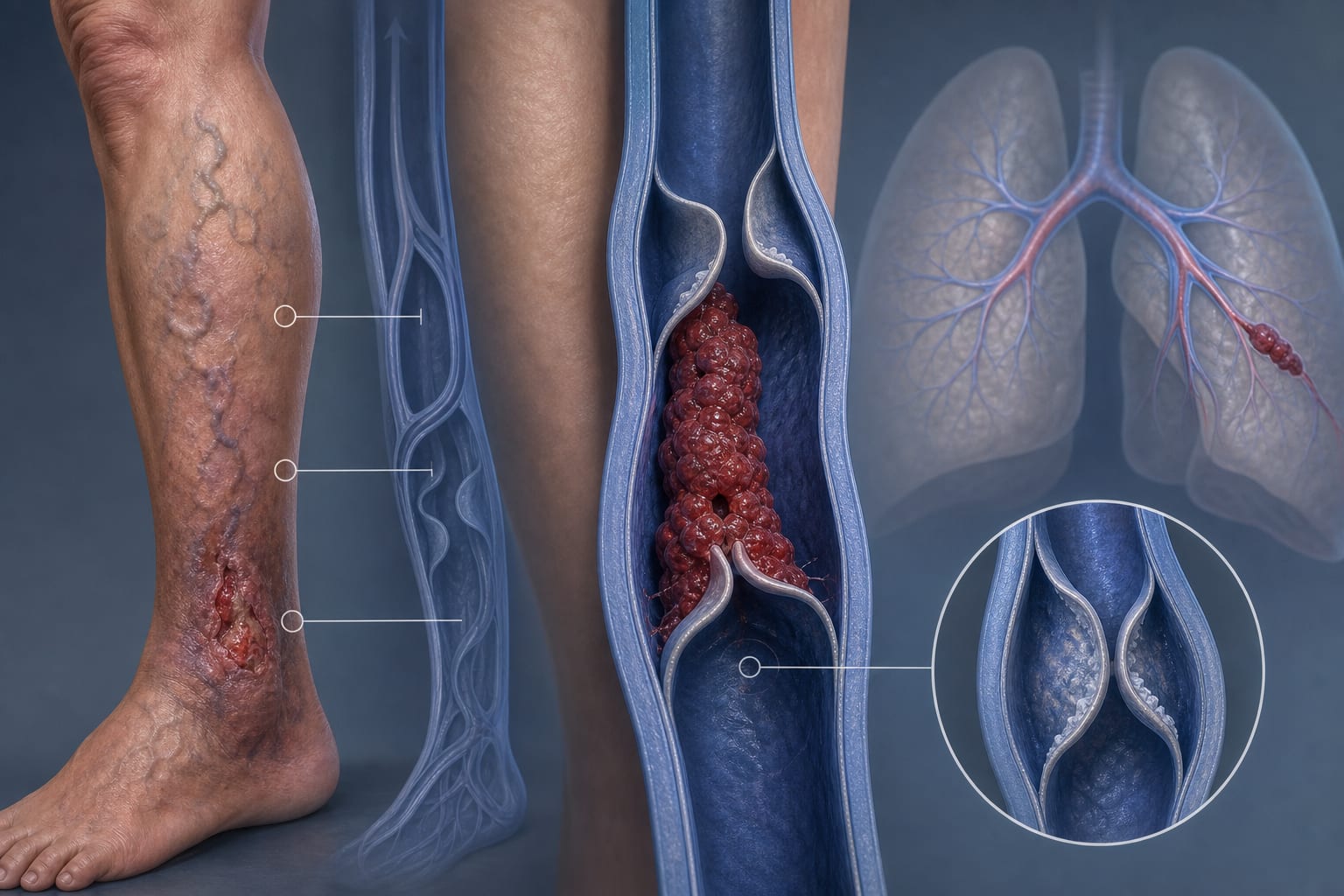
| Key Mechanisms | Inflammation, fibrosis, thrombosis, calf muscle pump function |
| Target Population | Patients with venous thromboembolism (VTE), chronic venous insufficiency, and related conditions |
| Care Setting | Vascular medicine |
Key Highlights
- Broadened scope of research on venous disease in the 2026 issue compared to 2015
- Emerging understanding of inflammation's role in venous pathology
- Calf muscle pump failure linked to major adverse cardiac events
- Innovations in medication and medical devices for venous disease
- Potential for point-of-care ultrasound (POCUS) to improve patient care
Guideline-Based Recommendations
Diagnosis
- Utilization of air plethysmography to assess calf pump function
- Point-of-care ultrasound (POCUS) for rapid diagnosis
Management
- Mechanism-based diagnostics and therapies targeting venous immune regulation
- Consideration of factor XI inhibitors and mechanical thrombectomy
Monitoring & Follow-up
- Monitoring calf pump function as part of comprehensive venous assessment
- Use of POCUS for DVT screening and monitoring
Risks
- Impaired calf pump function associated with increased all-cause mortality
- Limited data on the accuracy of POCUS compared to traditional methods
Patient & Prescribing Data
Patients with venous thromboembolism and chronic venous disease
Emerging therapies and devices are being developed to improve outcomes
Clinical Best Practices
- Standardization of provider training for POCUS
- Implementation of AI models to enhance ultrasound image acquisition and interpretation
- Conducting research studies to validate the use of POCUS in vascular care
Related Resources & Content