Paratuberculosis: a mucosal immunology perspective
By
Itzel Aguilar-Lopez
Laura Gomez
Antonio Facciuolo
June 30, 2026
Clinical Scorecard: Insights into Mucosal Immunology in Paratuberculosis
At a Glance
Category Detail
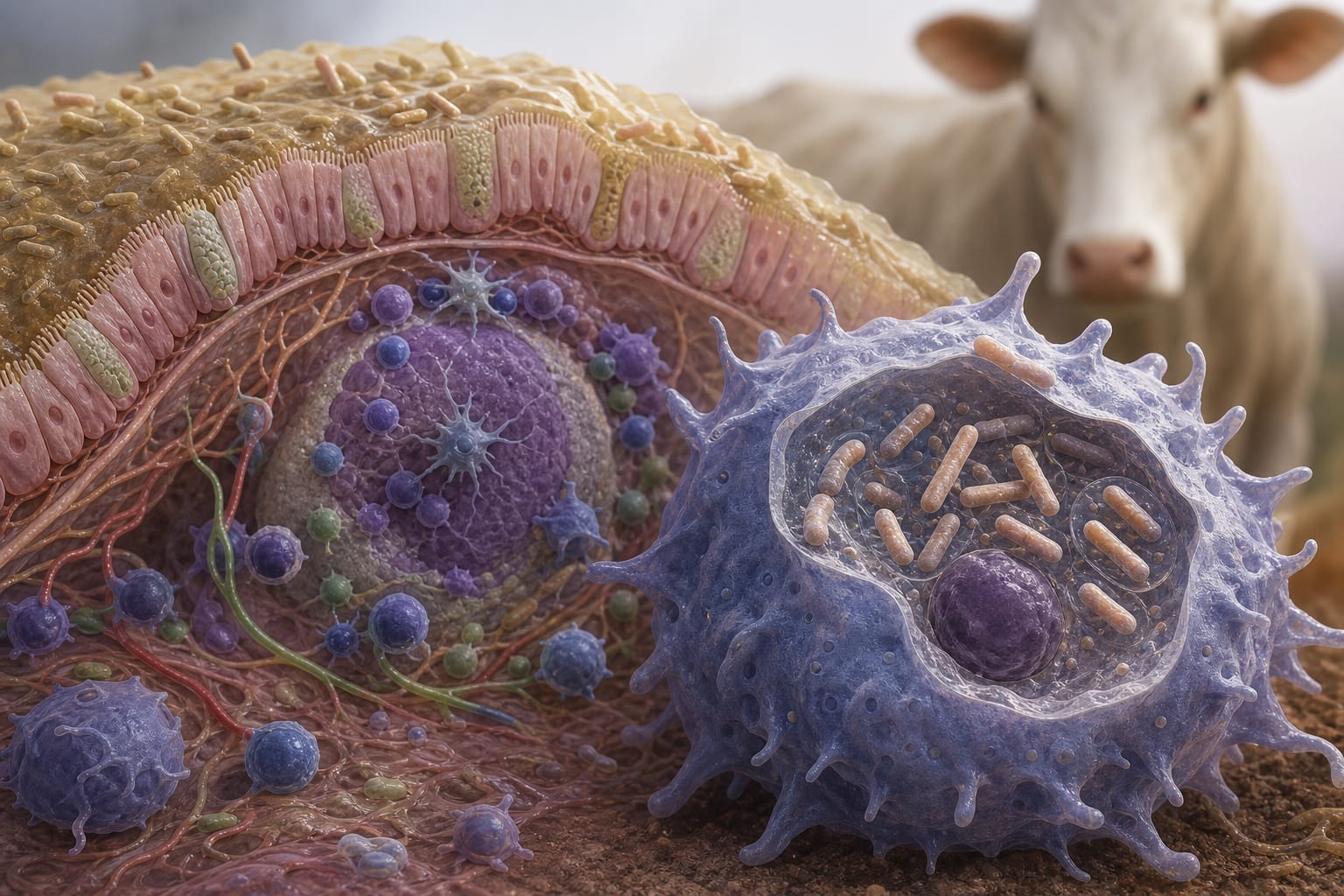
Condition Johne’s disease Key Mechanisms Persistence of Mycobacterium avium subsp. paratuberculosis (MAP) in intestinal macrophages and modulation of immune responses. Target Population Ruminants, particularly cattle and sheep. Care Setting Veterinary clinical practice and research.
Key Highlights
MAP infection leads to chronic enteric disease with significant economic impact. Infection occurs early in life, often asymptomatic for years. Current vaccines provide partial protection but highlight regional immune response differences. Mucosal immune responses are critical yet poorly understood. Research gaps exist in defining protective mechanisms against MAP. Guideline-Based Recommendations
Diagnosis
Limited diagnostic sensitivity complicates detection of MAP infection. Management
No effective treatment or vaccine currently exists for Johne’s disease. Monitoring & Follow-up
Monitor for asymptomatic shedding of MAP in feces and milk. Risks
Economic losses from reduced productivity and food safety concerns due to MAP resilience. Patient & Prescribing Data
Infected ruminants, particularly dairy cattle and sheep.
Current interventions focus on management rather than curative treatments.
Clinical Best Practices
Enhance understanding of mucosal immunity to improve vaccine development. Address knowledge gaps in host-MAP interactions to inform future research. Related Resources & Content