Effects of Tai Chi on pain, functional dysfunction, and sleep in patients with chronic nonspecific low back pain: a systematic review and meta-analysis - Scorecard - MDSpire
Advertisement
Effects of Tai Chi on pain, functional dysfunction, and sleep in patients with chronic nonspecific low back pain: a systematic review and meta-analysis
Clinical Scorecard: Impact of Tai Chi on Pain, Functional Impairment, and Sleep Quality in Individuals with Chronic Nonspecific Low Back Pain: A Systematic Review and Meta-Analysis
At a Glance
Category
Detail
Condition
Chronic nonspecific low back pain (CNLBP)
Key Mechanisms
Tai Chi integrates dynamic meditation, breathing techniques, and relaxation.
Target Population
Patients with chronic nonspecific low back pain (CNLBP)
Care Setting
Clinical rehabilitation
Key Highlights
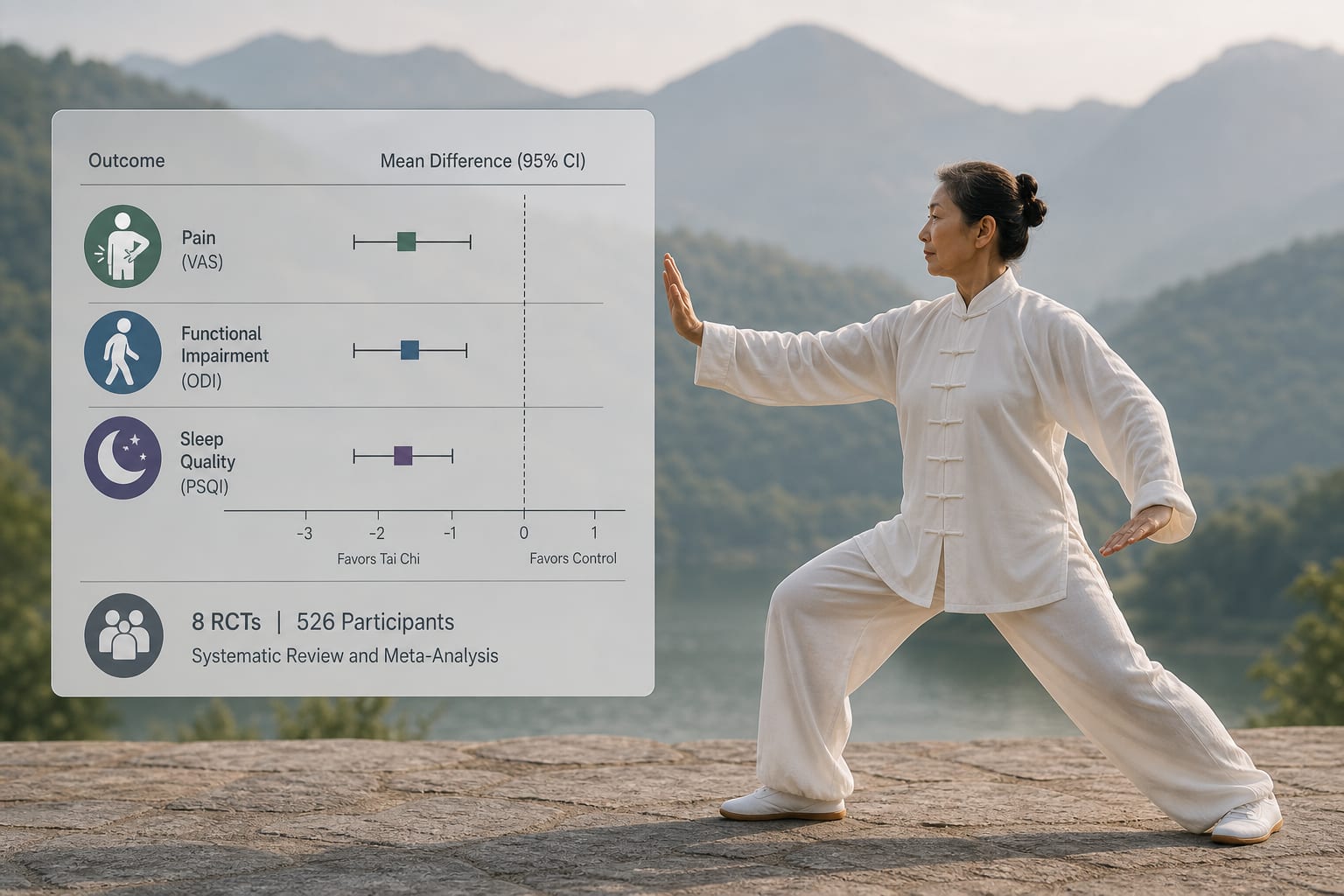
Tai Chi significantly reduced pain as measured by VAS and NRS scores.
Improvement in functional disability was noted with RMDQ scores.
No significant effect on sleep quality as measured by PSQI scores.
Tai Chi is a safe and feasible non-pharmacological rehabilitation approach.
Further high-quality RCTs are needed to confirm findings.
Guideline-Based Recommendations
Diagnosis
Chronic nonspecific low back pain is diagnosed when low back pain lasts more than 12 weeks without a specific pathological cause.
Management
Tai Chi can be considered as a non-pharmacological treatment option for CNLBP.
Monitoring & Follow-up
Monitor pain intensity and functional disability using validated scales such as VAS, NRS, and RMDQ.
Risks
Long-term medication use for CNLBP carries risks such as gastrointestinal, cardiovascular issues, and dependency.
Patient & Prescribing Data
Patients with chronic nonspecific low back pain (CNLBP)
Tai Chi may improve pain and functional outcomes but has insufficient evidence for sleep quality improvement.
Clinical Best Practices
Incorporate Tai Chi into rehabilitation programs for CNLBP.
Assess patient compliance and satisfaction with Tai Chi interventions.