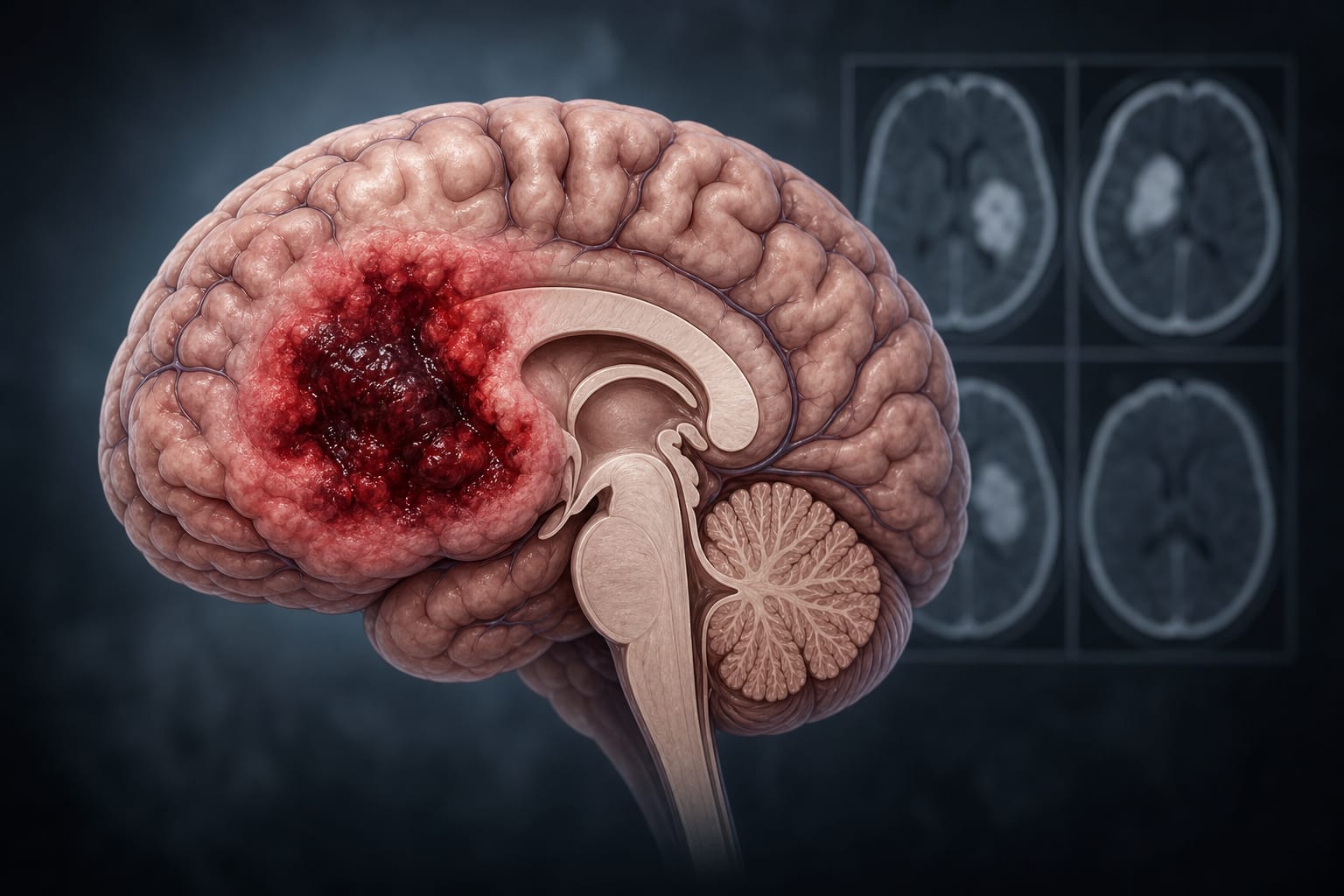
Impact of P2Y12 Inhibitors on Mortality Among Patients Admitted for Intracerebral Hemorrhage
By
Chen Jin
Ying Song
Brian Mac Grory
Jie-Lena Sun
Brooke Alhanti
Gregg C. Fonarow
Lee H. Schwamm
Kevin N. Sheth
Eric E. Smith
Steven R. Messé
Jeffrey L. Saver
Deepak L. Bhatt
Ying Xian
July 9, 2026
Clinical Scorecard: Impact of P2Y12 Inhibitors on Mortality Among Patients Admitted for Intracerebral Hemorrhage
At a Glance
Category Detail
Condition Intracerebral Hemorrhage (ICH) Key Mechanisms P2Y12 inhibitors (clopidogrel, prasugrel, ticagrelor) are used to manage ischemic events but are associated with bleeding complications. Target Population Patients presenting with nonanticoagulation-associated spontaneous ICH. Care Setting Clinical practice involving stroke management.
Key Highlights
P2Y12 inhibitors are linked to increased stroke severity and in-hospital mortality in ICH patients. Study utilized data from the AHA/ASA Get With The Guidelines–Stroke registry. Patients were stratified based on prior antiplatelet therapy: P2Y12 monotherapy, DAPT, aspirin monotherapy, or no therapy. Guideline-Based Recommendations
Diagnosis
Assess stroke severity using the National Institutes of Health Stroke Scale (NIHSS). Management
Consider the risks of P2Y12 inhibitors in patients with ICH. Monitoring & Follow-up
Monitor for in-hospital mortality and functional outcomes post-ICH. Risks
Intracerebral hemorrhage is a serious complication associated with P2Y12 inhibitors. Patient & Prescribing Data
Patients with a history of ischemic events receiving antiplatelet therapy.
Prior antiplatelet therapy documented within 7 days prior to hospital arrival.
Clinical Best Practices
Utilize standardized data collection for clinical care and quality improvement. Adjust for baseline demographic and clinical variables when assessing outcomes. Related Resources & Content