Clinical Scorecard: Integrating Radiology and Pathology: A Cross-Modal Learning Approach for Clinical Applications
At a Glance
Category
Detail
Condition
Breast cancer diagnosis
Key Mechanisms
Unified cross-modal framework combining mammography and histopathology using vision transformers, contrastive alignment, domain generalization, and causal test-time adaptation
Target Population
Patients undergoing breast cancer diagnostic evaluation
Care Setting
Clinical diagnostic imaging and pathology laboratories
Key Highlights
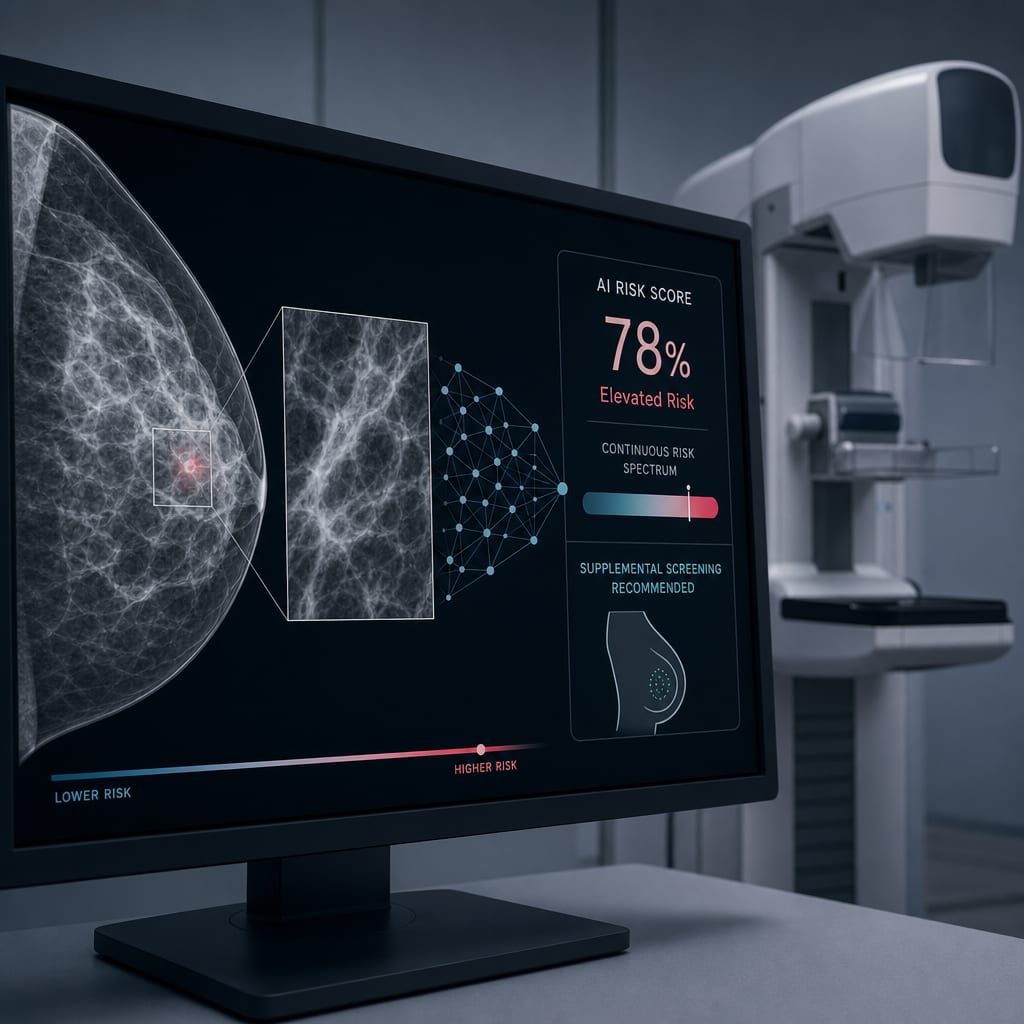
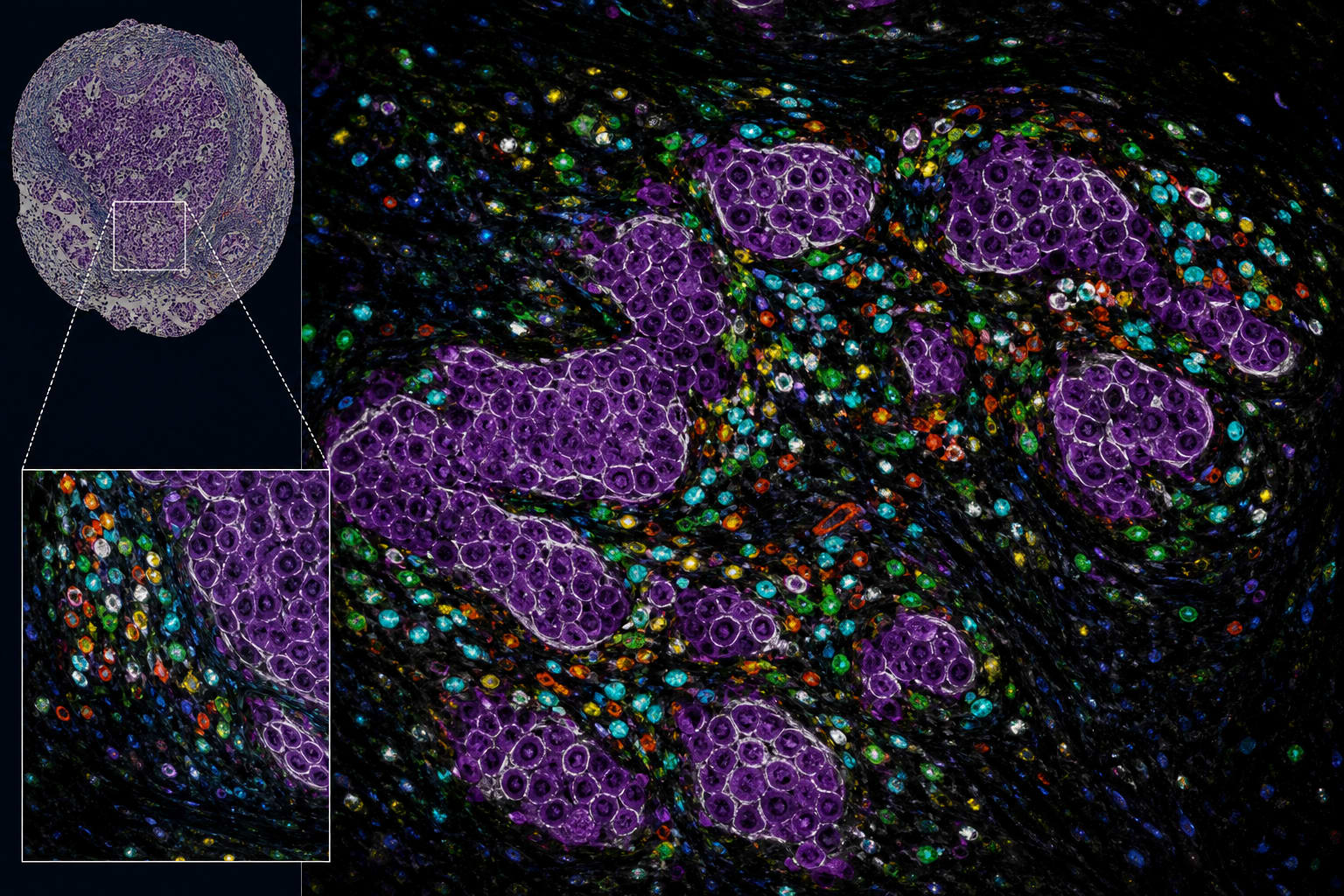
Cross-modal model integrates mammography and histopathology for improved breast cancer diagnosis.
Achieves high diagnostic performance with mean AUC of 0.90 and reduced domain gaps across multiple public datasets.
Generates reasoning-guided attention maps linking suspicious imaging regions with histopathological evidence to enhance interpretability.
Guideline-Based Recommendations
Diagnosis
Utilize multimodal AI frameworks that combine mammographic and histopathological data for comprehensive breast cancer assessment.
Apply weakly supervised patient-level contrastive alignment to learn cross-modal correspondences without requiring pixel-level annotations.
Management
Incorporate domain generalization techniques such as MixStyle augmentation and invariant risk minimization to improve model robustness across institutions.
Employ causal test-time adaptation strategies to maintain diagnostic accuracy in unseen target domains.
Monitoring & Follow-up
Use reasoning-guided attention maps to monitor model predictions and ensure alignment with clinically meaningful features for transparency and trust.
Risks
Be aware of potential domain shifts between institutions; apply domain generalization and adaptation methods to mitigate performance degradation.
Patient & Prescribing Data
Breast cancer patients undergoing mammography and histopathology evaluation
The integrated AI framework supports diagnostic decision-making by jointly addressing classification, lesion localization, and pathological grading with enhanced cross-institutional generalizability.
Clinical Best Practices
Normalize mammography images to standardized intensity ranges and apply stain normalization to histopathology images for consistent input data.
Perform cross-modal pairing at the patient level to ensure accurate correspondence between imaging and pathology data.
Leverage open-source implementations and publicly available datasets to validate and reproduce diagnostic AI models.
Set random seeds and document training parameters to ensure reproducibility of AI model development.