Prognostic significance of interstitial fibrosis and tubular atrophy in biopsy-proven diabetic kidney disease: a single-center retrospective cohort study - Scorecard - MDSpire
Advertisement
Prognostic significance of interstitial fibrosis and tubular atrophy in biopsy-proven diabetic kidney disease: a single-center retrospective cohort study
Clinical Scorecard: Prognostic Role of Interstitial Fibrosis and Tubular Atrophy in Biopsy-Confirmed Diabetic Kidney Disease: Insights from a Retrospective Cohort Study at a Single Center
At a Glance
Category
Detail
Condition
Diabetic Kidney Disease
Key Mechanisms
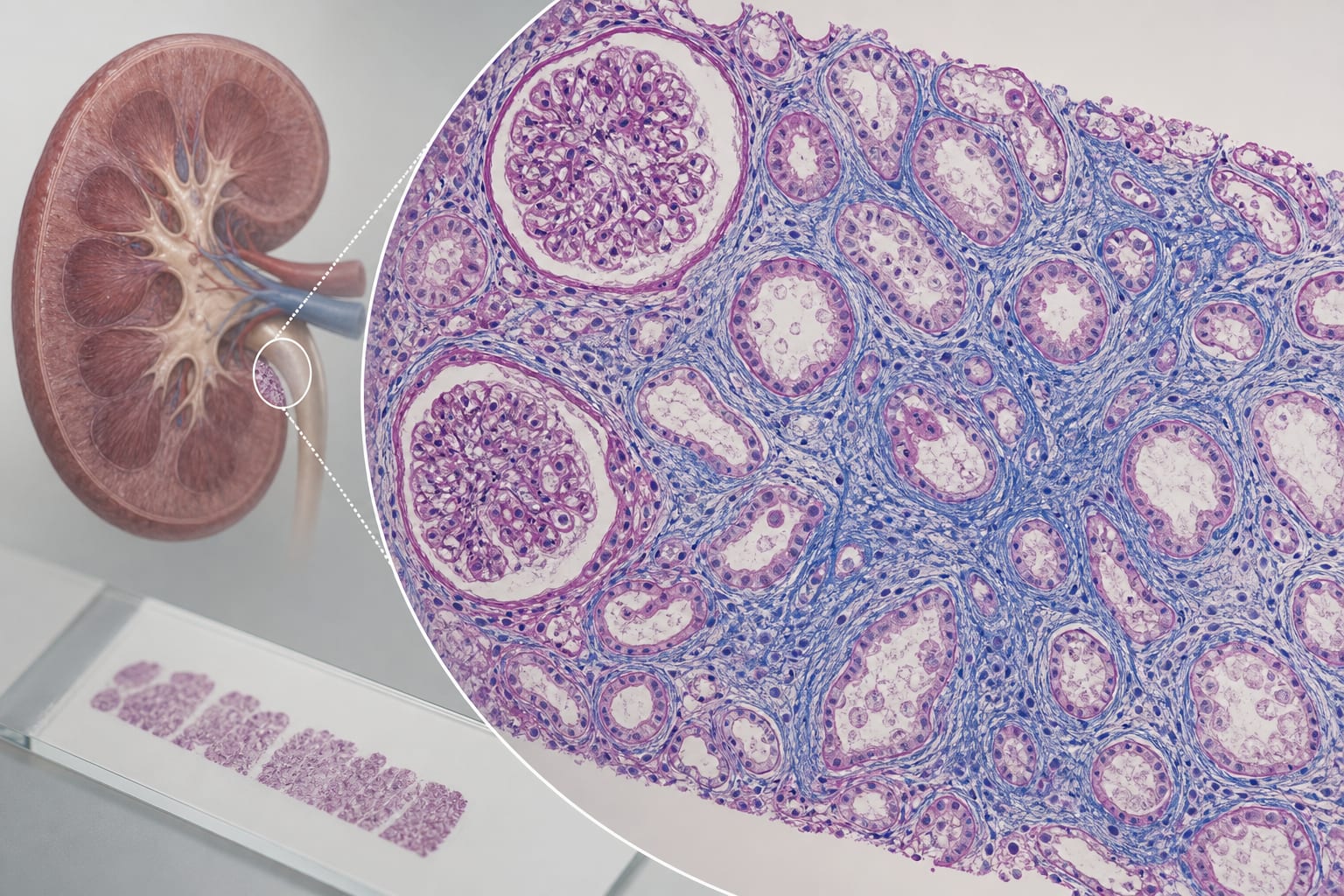
Interstitial fibrosis and tubular atrophy (IFTA) as a prognostic factor
Target Population
Patients with type 2 diabetes and biopsy-confirmed diabetic kidney disease
Care Setting
Retrospective cohort study
Key Highlights
IFTA score 2/3 is associated with higher risk of kidney-related outcomes (HR 3.96)
24-hour proteinuria increase correlates with poor kidney outcomes (HR 1.52)
Lower serum calcium levels are linked to worse kidney survival (HR 0.140)
Significant difference in kidney survival between IFTA scores 1 and 2/3 (log-rank P = 0.0056)
Study followed 164 patients for a median of 38 months
Guideline-Based Recommendations
Diagnosis
Biopsy-proven diabetic kidney disease diagnosed according to the Renal Pathology Society classification
Management
Monitor IFTA scores and proteinuria in patients with diabetic kidney disease
Monitoring & Follow-up
Regular assessment of serum calcium and eGFR in patients with DKD
Risks
Higher IFTA scores and proteinuria increase the risk of kidney replacement therapy or kidney-related death
Patient & Prescribing Data
Adults with type 2 diabetes and biopsy-confirmed DKD
Focus on managing proteinuria and monitoring IFTA scores for better kidney outcomes
Clinical Best Practices
Utilize LASSO Cox regression for identifying predictors of kidney outcomes
Conduct regular follow-ups for patients with biopsy-proven DKD
Incorporate serum calcium levels in the assessment of kidney health