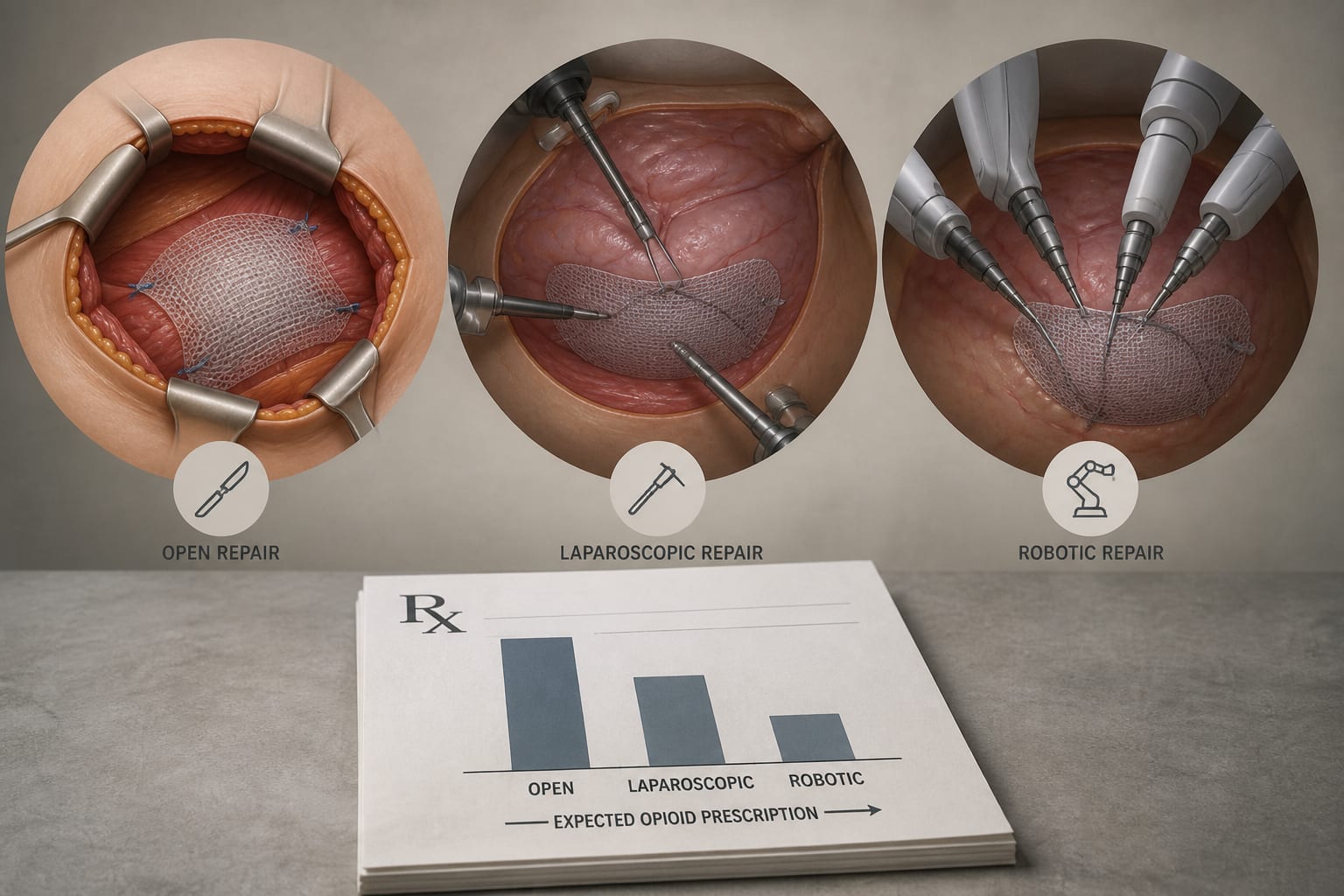
Impact of Surgical Technique on Opioid Prescription Patterns Following Outpatient Ventral Hernia Repair
-
By
-
John K. Ewing
-
Sullivan A. Ayuso
-
Gediwon Milky
-
Hannah Bossie
-
Heather Atchison
-
I-Fan Shih
-
B. Todd Heniford
-
August 28, 2026
Clinical Scorecard: Impact of Surgical Technique on Opioid Prescription Patterns Following Outpatient Ventral Hernia Repair
At a Glance
| Category | Detail |
|---|
| Condition | Ventral Hernia Repair |
| Key Mechanisms | Opioid prescription patterns influenced by surgical technique and postoperative pain management strategies. |
| Target Population | Opioid-naïve adults undergoing outpatient anterior abdominal hernia repair. |
| Care Setting | Outpatient surgical settings. |
Key Highlights
- Prolonged opioid use post-surgery is linked to serious adverse effects.
- Over 610,000 ventral hernia repairs are performed annually in the U.S.
- Multimodal nonopioid analgesia can reduce opioid use post-surgery.
- Robotic surgery may reduce long-term opioid use compared to laparoscopic or open repair.
- Initial opioid prescriptions often exceed actual consumption.
Guideline-Based Recommendations
Diagnosis
- Evaluate opioid-naïve adults undergoing outpatient ventral hernia repair.
Management
- Implement multimodal nonopioid analgesia and regional anesthesia approaches.
Monitoring & Follow-up
- Assess opioid prescription fills at multiple postoperative intervals.
Risks
- Monitor for new persistent opioid use, which occurs in 1.7–6.5% of adults post-surgery.
Patient & Prescribing Data
Adults aged 18 and older with no prior opioid use.
Prescription patterns vary by surgical approach and hernia type.
Clinical Best Practices
- Utilize evidence-based prescribing practices to align prescriptions with actual consumption.
- Consider the surgical approach's impact on postoperative pain management.
Related Resources & Content