Tumor safety of biologic agents and targeted therapies in immune-mediated inflammatory arthritides - Scorecard - MDSpire

Tumor safety of biologic agents and targeted therapies in immune-mediated inflammatory arthritides

  • By

  • Sheng-Guang Li

  • Yadan Zou

  • Ji Li

  • Lina Zhang

  • Jing Zhang

  • Ting Long

  • Ruohan Yu

  • Yanfeng Zhang

  • June 4, 2026

  • 0 min

Share

Clinical Scorecard: Safety of Biologic and Targeted Therapies in Relation to Tumor Risk in Immune-Mediated Inflammatory Arthritis

At a Glance

CategoryDetail
Condition
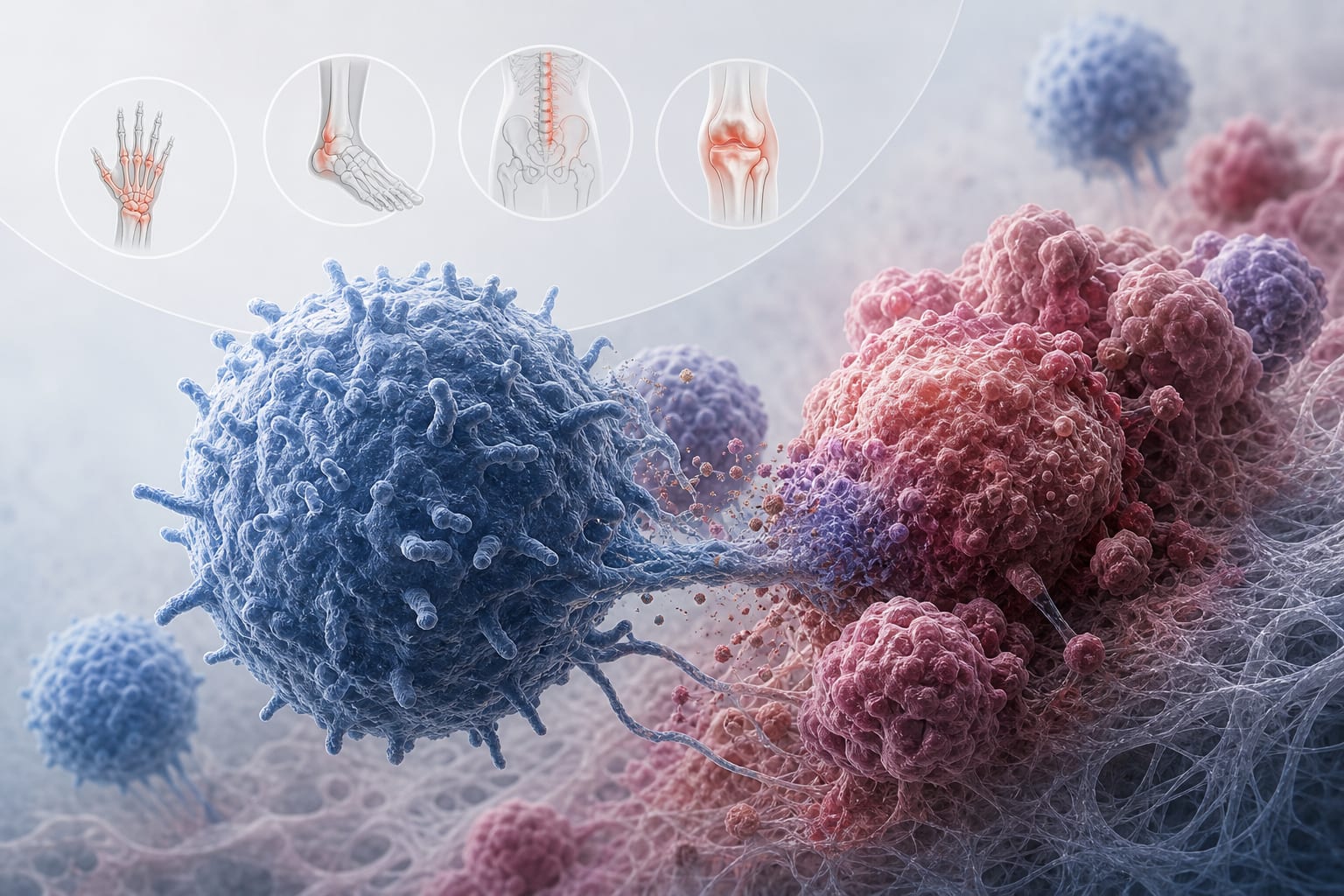
Key MechanismsChronic inflammation, immune modulation, and tumor risk interplay, highlighting the dual role of inflammation in promoting and inhibiting tumorigenesis.
Target Population
Care Setting

Key Highlights

  • Patients with IMIA have increased cancer susceptibility due to persistent inflammation and other risk factors.
  • Biologic therapies generally show reassuring safety profiles regarding overall malignancy.
  • Non-melanoma skin cancer is a notable treatment-associated risk, especially with TNF inhibitors.
  • JAK inhibitors require caution in specific risk-enriched populations.
  • EULAR guidelines recommend individualized treatment decisions post-cancer remission.
  • Individualized treatment decisions are crucial for patients with a history of cancer.

Guideline-Based Recommendations

Diagnosis

  • Assess cancer risk factors including age, smoking, and prior malignancy.

Management

  • Individualize therapy selection based on patient-specific factors and prior cancer history.

Monitoring & Follow-up

  • Regularly evaluate for malignancy in patients receiving immunomodulatory therapies.
  • Monitor specific cancer types associated with different therapies.

Risks

  • Increased risk of lymphoma and lung cancer in patients with rheumatoid arthritis.

Patient & Prescribing Data

Biologic therapies may reduce inflammation-driven oncogenic pressure but also affect antitumor immune surveillance, necessitating careful consideration.

Clinical Best Practices

  • Balance inflammatory control with oncologic vulnerability in treatment decisions.
  • Consider cumulative inflammatory burden when evaluating malignancy risk.
  • Ongoing risk assessment should be part of treatment management.

Related Resources & Content

Original Source(s)

Related Content