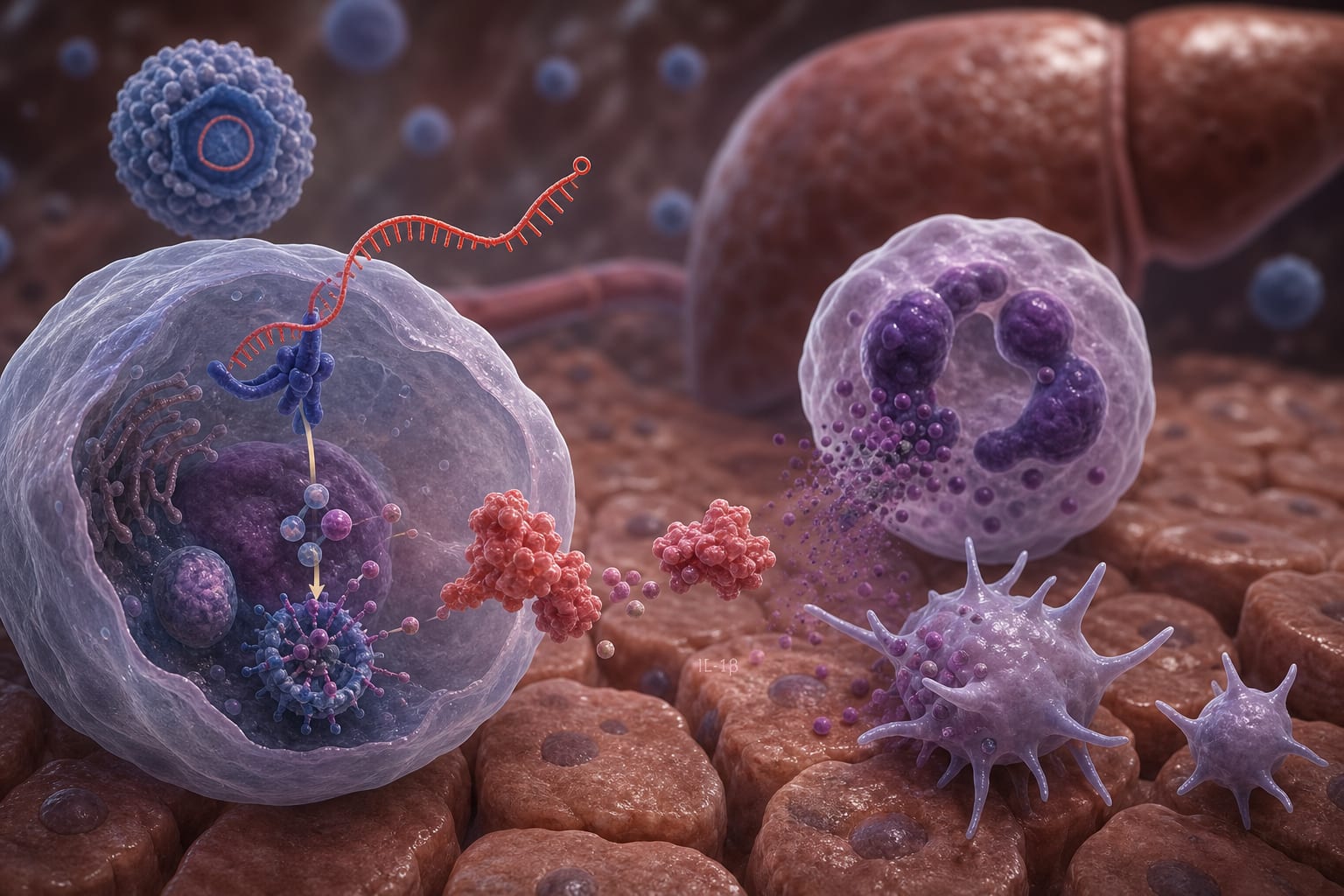
HBV pgRNA induces chronic inflammation in an IL-1β-dependent manner
Clinical Scorecard: HBV pregenomic RNA triggers chronic inflammation through an IL-1β-mediated pathway
At a Glance
Category Detail
Condition Chronic Hepatitis B (CHB) Key Mechanisms Activation of platelets and neutrophils leading to IL-1β overexpression and chronic inflammation. Target Population Patients with chronic hepatitis B receiving nucleoside analogs. Care Setting Clinical research and treatment monitoring for chronic hepatitis B.
Key Highlights
18.1% of patients in the study were positive for HBV pgRNA. Platelet activation and neutrophil degranulation pathways were identified as key mechanisms. IL-1β was overexpressed in neutrophils of patients with CHB. The study involved transcriptomic analysis of patients with and without HBV pgRNA. Platelet–neutrophil interactions contribute to a proinflammatory phenotype. Guideline-Based Recommendations
Diagnosis
Assess HBV pgRNA levels as a marker of HBV transcriptional activity. Management
Monitor patients under treatment with nucleoside analogs for viral load and biochemical markers. Monitoring & Follow-up
Regular surveillance for disease progression and complications such as cirrhosis and HCC. Risks
Increased risk of cirrhosis (30% incidence over 20 years) and HCC (2%-5% per year for cirrhotic patients). Patient & Prescribing Data
Patients with chronic hepatitis B receiving nucleoside analogs.
Close monitoring of immune response and inflammatory markers is essential.
Clinical Best Practices
Utilize bioinformatic tools for transcriptomic analysis in CHB patients. Evaluate the role of innate immunity in the progression of chronic hepatitis B. Consider the implications of platelet and neutrophil interactions in liver inflammation. Related Resources & Content