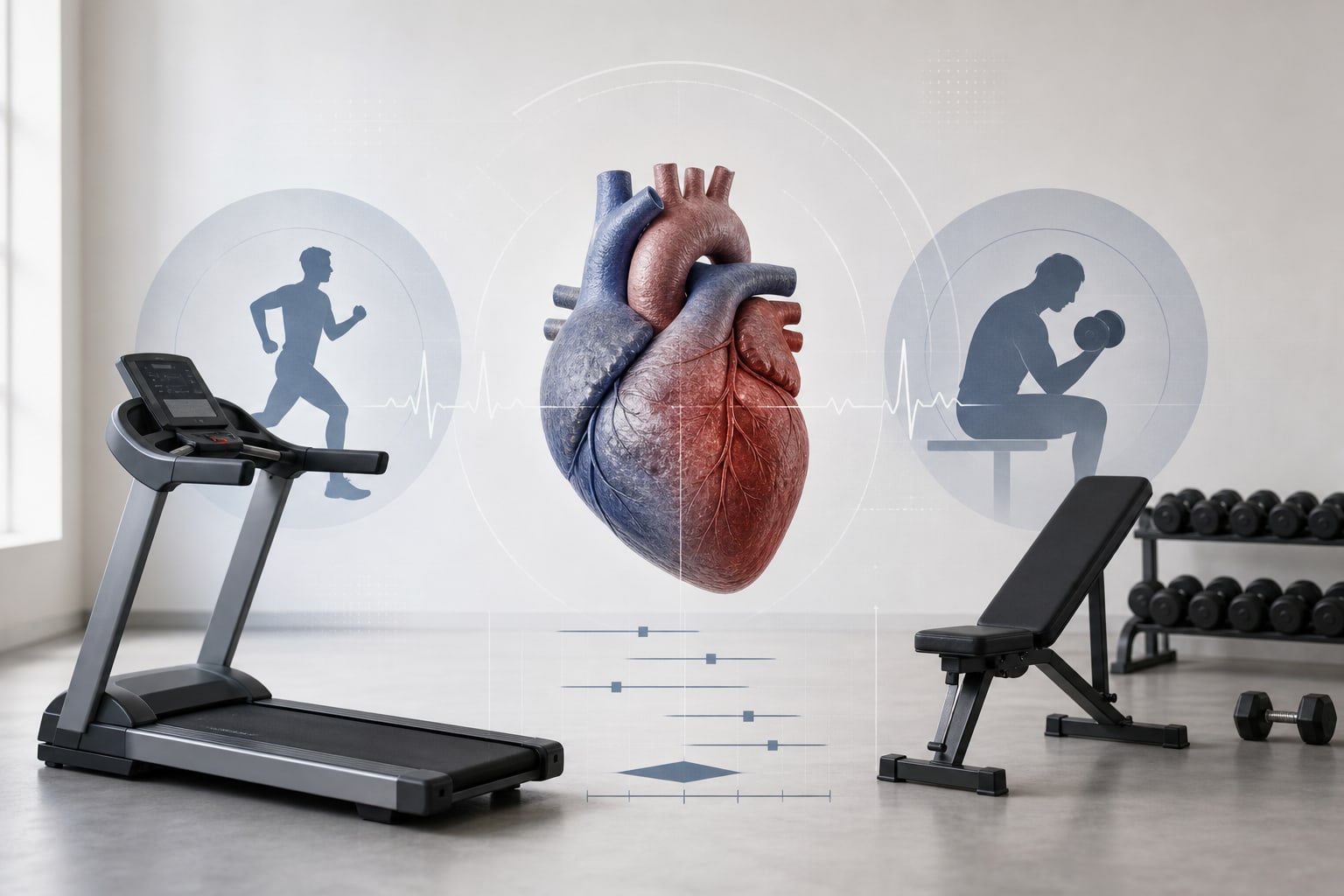
The effects of combined endurance and resistance exercise training in heart failure: a meta-analysis
-
By
-
Shun Hu
-
Yue Xu
-
June 23, 2026
-
Clinical Scorecard: Impact of Integrated Endurance and Resistance Training on Heart Failure: A Meta-Analytical Review
At a Glance
| Category | Detail |
|---|
| Condition | Heart Failure |
| Key Mechanisms | Combined endurance and resistance exercise training improves cardiopulmonary function and quality of life. |
| Target Population | Patients clinically diagnosed with heart failure. |
| Care Setting | Clinical management of heart failure rehabilitation. |
Key Highlights
- Significant improvement in peak oxygen consumption (MD = 4.36, P = 0.001).
- Quality of life improved (MD = -9.32, P = 0.02).
- Enhanced performance on the six-minute walk test (MD = 53.76, P < 0.0001).
- No significant differences in sleep parameters or depression levels.
- Findings were stable and reliable with low publication bias.
Guideline-Based Recommendations
Diagnosis
- Patients should be clinically diagnosed with heart failure according to European Society of Cardiology criteria.
Management
- Implement combined endurance and resistance exercise training as part of cardiac rehabilitation.
Monitoring & Follow-up
- Monitor improvements in peak VO2, quality of life, and exercise tolerance.
Risks
- Consider risks of adverse effects from long-term pharmacological therapy.
Patient & Prescribing Data
Patients with heart failure.
Exercise rehabilitation is an effective non-pharmaceutical intervention for improving functional status.
Clinical Best Practices
- Integrate aerobic and resistance exercise in rehabilitation programs.
- Utilize scientifically prescribed moderate-intensity exercise.
Related Resources & Content