Comparative outcomes of transcranial craniotomy and endoscopic endonasal surgery for craniopharyngioma: a single-center retrospective cohort study - Scorecard - MDSpire

Comparative outcomes of transcranial craniotomy and endoscopic endonasal surgery for craniopharyngioma: a single-center retrospective cohort study

  • By

  • Lei Zhang

  • Ben Li Li

  • Shuo Wei

  • Fa An Miao

  • Hong Fu Chen

  • Yue Chao Fan

  • Pei Zhi Ji

  • Hui Zhang

  • June 24, 2026

  • 0 min

Share

Clinical Scorecard: Outcomes of Endoscopic Endonasal Surgery Versus Transcranial Craniotomy for Craniopharyngioma: A Retrospective Cohort Analysis from a Single Institution

At a Glance

CategoryDetail
ConditionCraniopharyngioma
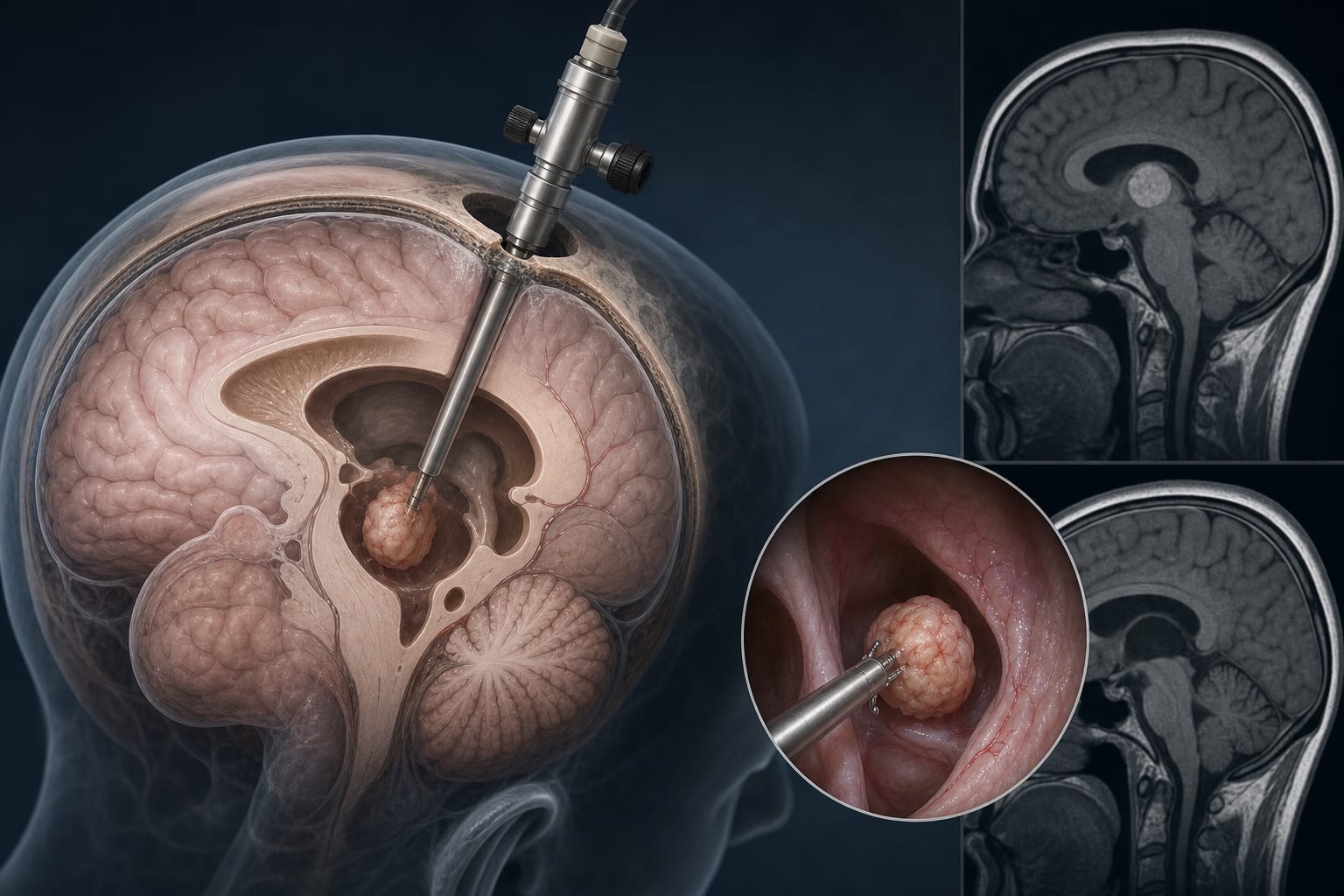
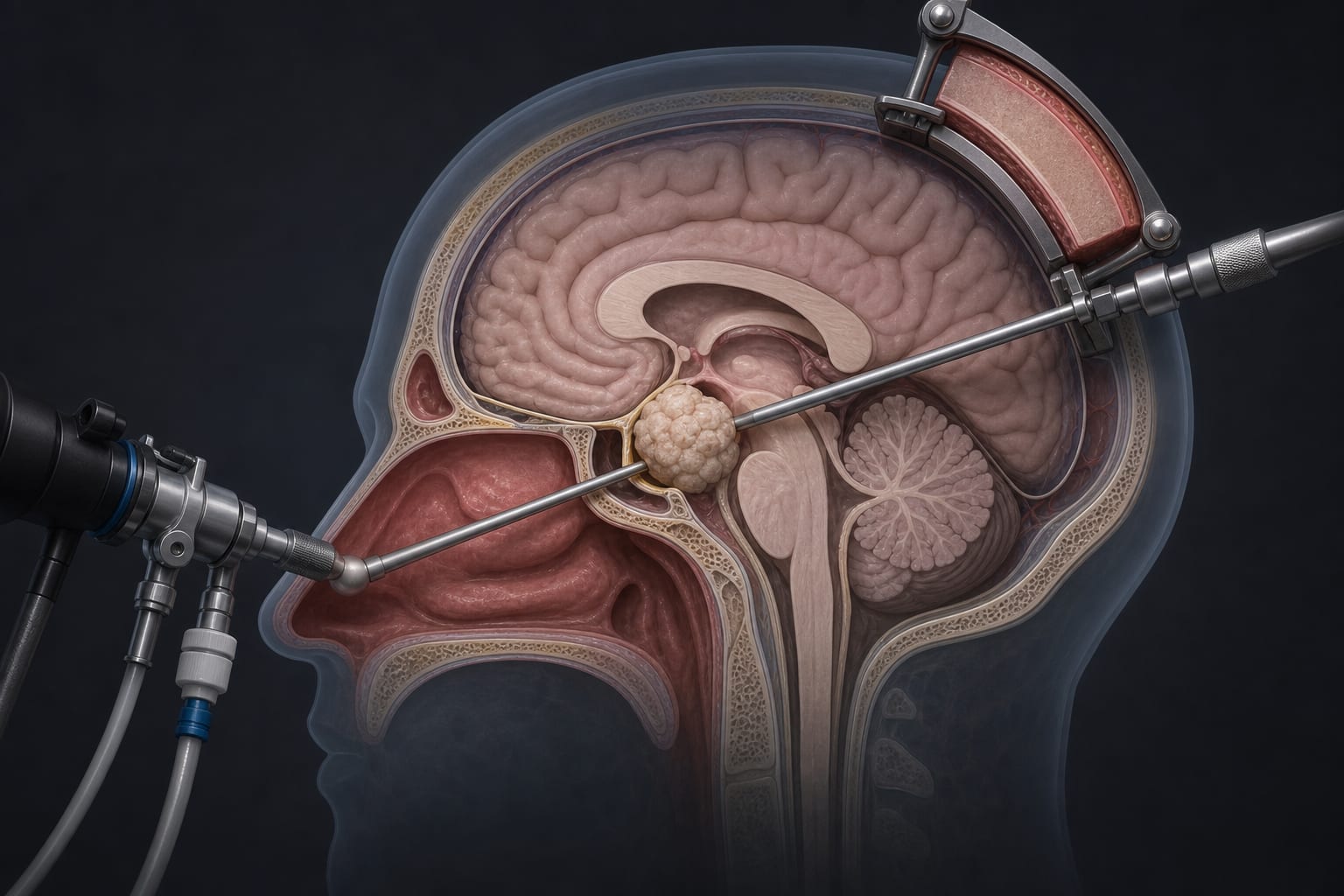
Key MechanismsComparison of surgical approaches: Endoscopic endonasal approach (EEA) vs. transcranial craniotomy (TCA)
Target PopulationPatients undergoing primary craniopharyngioma resection
Care SettingSingle-center retrospective cohort study

Key Highlights

  • EEA achieved a higher gross total resection (GTR) rate (82.4% vs. 45.5%)
  • Shorter hospital stay for EEA patients (16.19 days vs. 18.76 days)
  • Improvement in headache/ICP-related symptoms at 6 months: 90.9% EEA vs. 76.5% TCA
  • Lower rates of endocrine complications with EEA, including transient diabetes insipidus (20.6% vs. 45.5%)
  • Recurrence/progression at last follow-up: 8.8% EEA vs. 21.2% TCA

Guideline-Based Recommendations

Diagnosis

  • Histopathological confirmation of craniopharyngioma required

Management

  • Primary surgical resection via EEA or TCA based on anatomical considerations

Monitoring & Follow-up

  • Clinical and radiological follow-up of at least 6 months post-surgery

Risks

  • Potential for neurological and hypothalamic injury with transcranial approaches

Patient & Prescribing Data

Patients with pathologically confirmed craniopharyngioma undergoing primary resection

Surgical corridor selection is anatomy-driven; EEA may offer advantages in specific cases

Clinical Best Practices

  • Detailed preoperative anatomical classification is essential for surgical planning
  • Consideration of endocrine and visual outcomes in evaluating surgical approaches

Related Resources & Content

Original Source(s)

Related Content