The glucose-6-phosphatase system in cancer: from endoplasmic reticulum glucose-6-phosphate flux to stemness, immune escape, and therapeutic vulnerability - Scorecard - MDSpire
Advertisement
The glucose-6-phosphatase system in cancer: from endoplasmic reticulum glucose-6-phosphate flux to stemness, immune escape, and therapeutic vulnerability
Clinical Scorecard: The Role of the Glucose-6-Phosphatase System in Cancer: Implications for Endoplasmic Reticulum Glucose-6-Phosphate Dynamics, Stem Cell Properties, Immune Evasion, and Treatment Sensitivity
At a Glance
Category
Detail
Condition
Cancer
Key Mechanisms
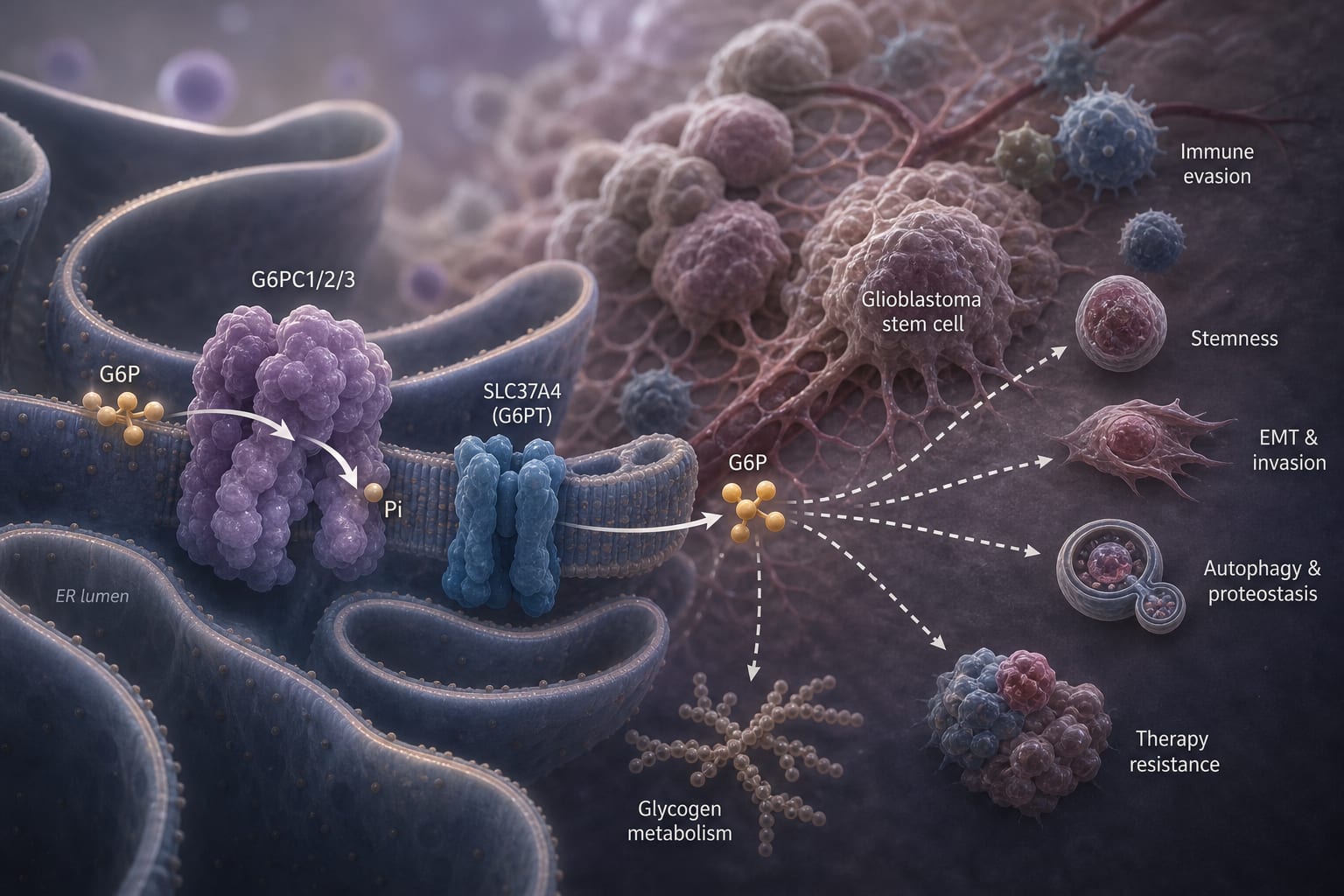
Regulation of intracellular glucose-6-phosphate partitioning, redox control, calcium homeostasis, protein quality control, glycogen metabolism, autophagy, epithelial-mesenchymal transition, stemness, immune evasion, and therapy resistance.
Target Population
Patients with various non-gluconeogenic cancers.
Care Setting
Oncology
Key Highlights
G6Pase system components are emerging as biomarkers and therapeutic targets in cancer.
Elevated G6Pase activity is associated with aggressive cancer phenotypes.
G6P handling in the endoplasmic reticulum influences tumor behavior.
Pharmacological interference with G6P transporters affects glioma cell survival and migration.
The G6Pase system operates as a metabolic rheostat in cancer cells.
Guideline-Based Recommendations
Diagnosis
Consider G6Pase system components as potential biomarkers in cancer.
Management
Investigate therapeutic targeting of the G6Pase system in preclinical settings.
Monitoring & Follow-up
Monitor G6Pase system activity as a potential indicator of tumor aggressiveness.
Risks
Loss of G6PC or SLC37A4 function may lead to metabolic disruptions.
Patient & Prescribing Data
Patients with cancers exhibiting altered G6P metabolism.
Therapeutic opportunities targeting the G6Pase system are largely preclinical.
Clinical Best Practices
Evaluate the role of G6Pase system in tumor metabolism during cancer treatment planning.
Consider the implications of G6P dynamics in the context of cancer stem cell properties.