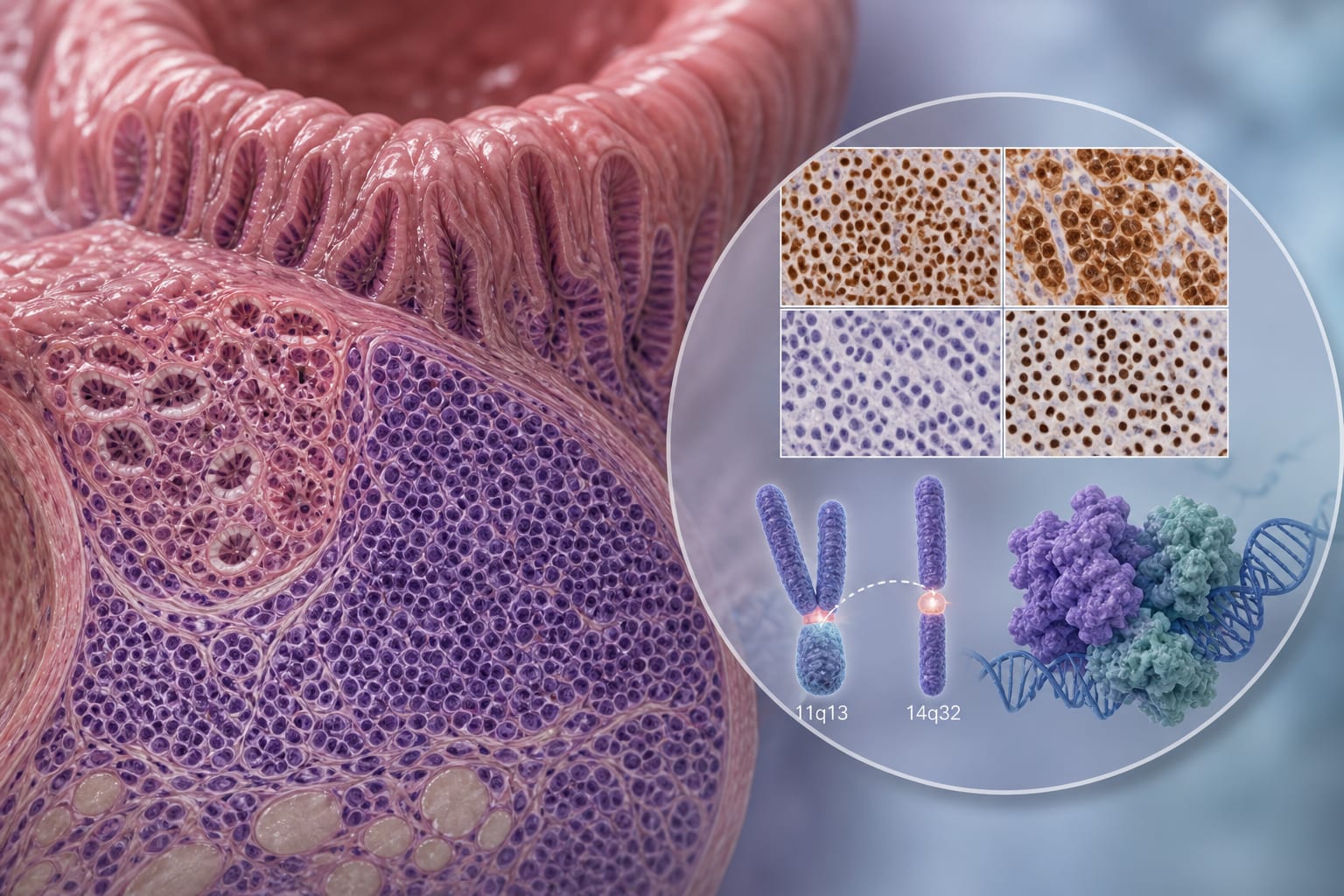
Case Report: Occult mantle cell lymphoma in a synchronous rectal collision tumor with adenocarcinoma: retrospective reclassification and multispecimen molecular profiling - Scorecard - MDSpire
Conexiant’s news site is now MDSpire News. Learn more
Advertisement
Retrospective Analysis of a Rare Collision Tumor: Mantle Cell Lymphoma Coexisting with Rectal Adenocarcinoma and Molecular Profiling of Multiple Specimens
Clinical Scorecard: Retrospective Analysis of a Rare Collision Tumor: Mantle Cell Lymphoma Coexisting with Rectal Adenocarcinoma and Molecular Profiling of Multiple Specimens
At a Glance
Category
Detail
Condition
Collision Tumor: Mantle Cell Lymphoma and Rectal Adenocarcinoma
Key Mechanisms
Molecular characterization revealing TP53 alterations and APC truncation in adenocarcinoma.
Target Population
Patients with synchronous rectal adenocarcinoma and mantle cell lymphoma.
Care Setting
Oncology and surgical pathology.
Key Highlights
Rare occurrence of synchronous rectal adenocarcinoma and mantle cell lymphoma.
Molecular profiling revealed shared TP53 mutations and distinct NOTCH2 alterations.
Retrospective analysis of surgical specimens can uncover hidden malignancies.
Patient treated with bendamustine, rituximab, and zanubrutinib, remaining in remission.
Guideline-Based Recommendations
Diagnosis
Consider molecular profiling in cases of unexpected lymphadenopathy post-cancer treatment.
Management
Utilize targeted therapies such as bendamustine and rituximab for mantle cell lymphoma.
Monitoring & Follow-up
Regular follow-up imaging and clinical assessment for recurrence of lymphoma.
Risks
Potential for misdiagnosis of lymphoma in the presence of predominant adenocarcinoma.
Patient & Prescribing Data
Older adults with colorectal cancer and incidental lymphoma.
Combination therapy with bendamustine and rituximab followed by maintenance therapy.
Clinical Best Practices
Conduct thorough pathological reviews of surgical specimens for incidental findings.
Implement molecular profiling for comprehensive understanding of tumor biology.
An updated clinical practice guideline from the American Society for Radiation Oncology substantially expands and modernizes recommendations for the use of radiation therapy in pancreatic cancer.