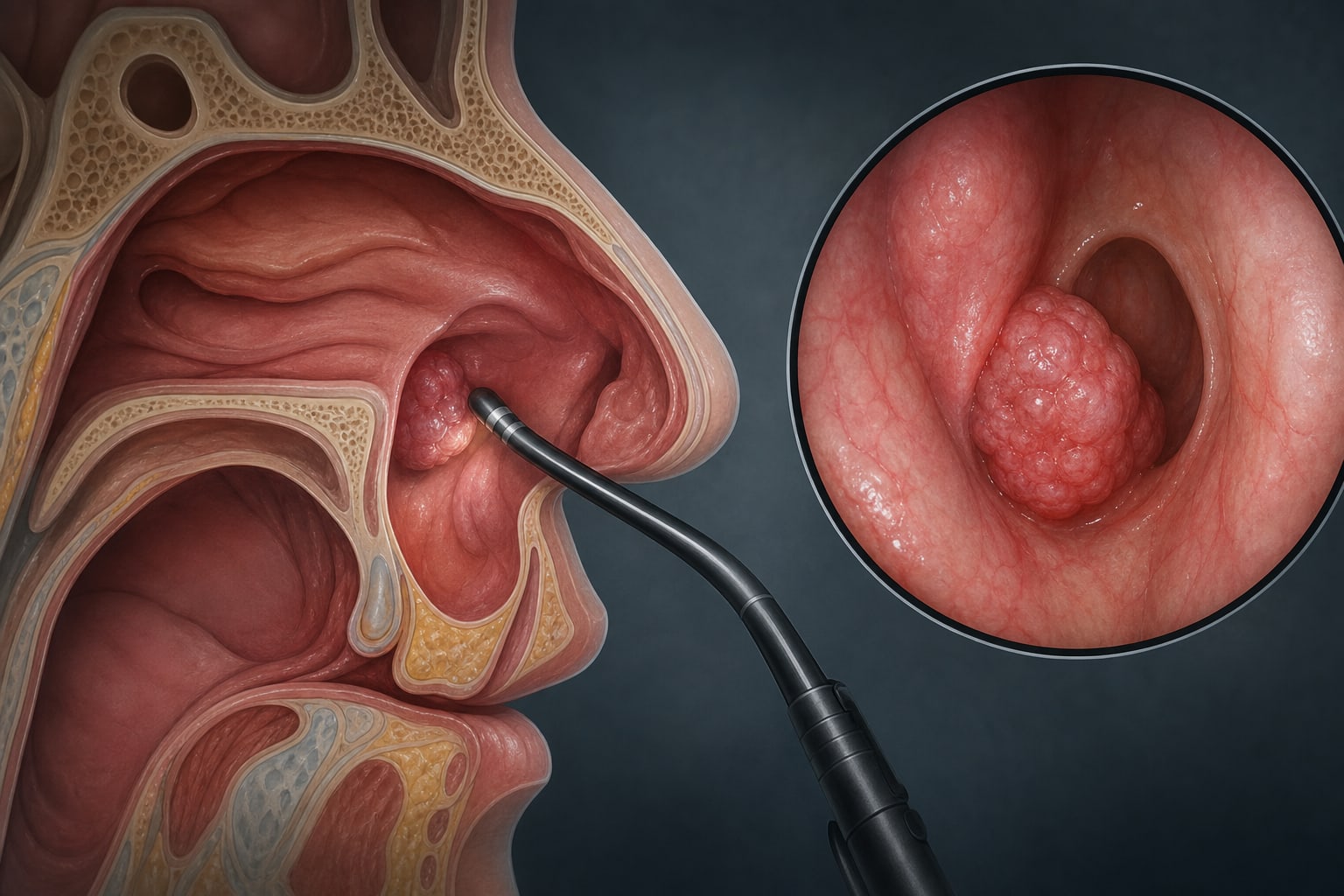
Case Report: Aural Fullness Due to Reactive Lymphoid Hyperplasia at the Eustachian Tube Orifice
-
By
-
Lingping Ding
-
Qi Wu
-
Zhaoli Meng
-
June 25, 2026
Clinical Scorecard: Case Report: Aural Fullness Due to Reactive Lymphoid Hyperplasia at the Eustachian Tube Orifice
At a Glance
| Category | Detail |
|---|
| Condition | Reactive Lymphoid Hyperplasia |
| Key Mechanisms | Benign immune-mediated response to chronic inflammation or stimulation. |
| Target Population | Adults presenting with aural fullness and hearing loss. |
| Care Setting | Clinical evaluation and surgical management of lesions at the eustachian tube orifice. |
Key Highlights
- Rare occurrence of benign lymphoid hyperplasia at the eustachian tube orifice.
- Initial misdiagnosis as otitis media with effusion due to overlapping symptoms.
- Histopathological confirmation of benign lymphoid hyperplasia post-surgery.
- Significant improvement in symptoms following navigated endoscopic resection.
- Importance of comprehensive evaluation to avoid misdiagnosis.
Guideline-Based Recommendations
Diagnosis
- Histopathology and immunohistochemistry are essential for definitive diagnosis.
Management
- Navigated endoscopic resection is recommended for symptomatic lesions.
Monitoring & Follow-up
- Follow-up with endoscopy and MRI if new clinical complaints arise.
Risks
- Risk of misdiagnosis leading to overtreatment of benign lesions.
Patient & Prescribing Data
58-year-old male with persistent aural fullness and hearing loss.
Postoperative improvement in symptoms with complete resolution of aural fullness and tinnitus.
Clinical Best Practices
- Consider differential diagnosis for eustachian tube dysfunction symptoms.
- Utilize imaging and endoscopic evaluation for suspected lesions.
- Ensure histopathological confirmation before concluding malignancy.
Related Resources & Content