Reflections on Lumenis Accelerate from Laura Periman, MD
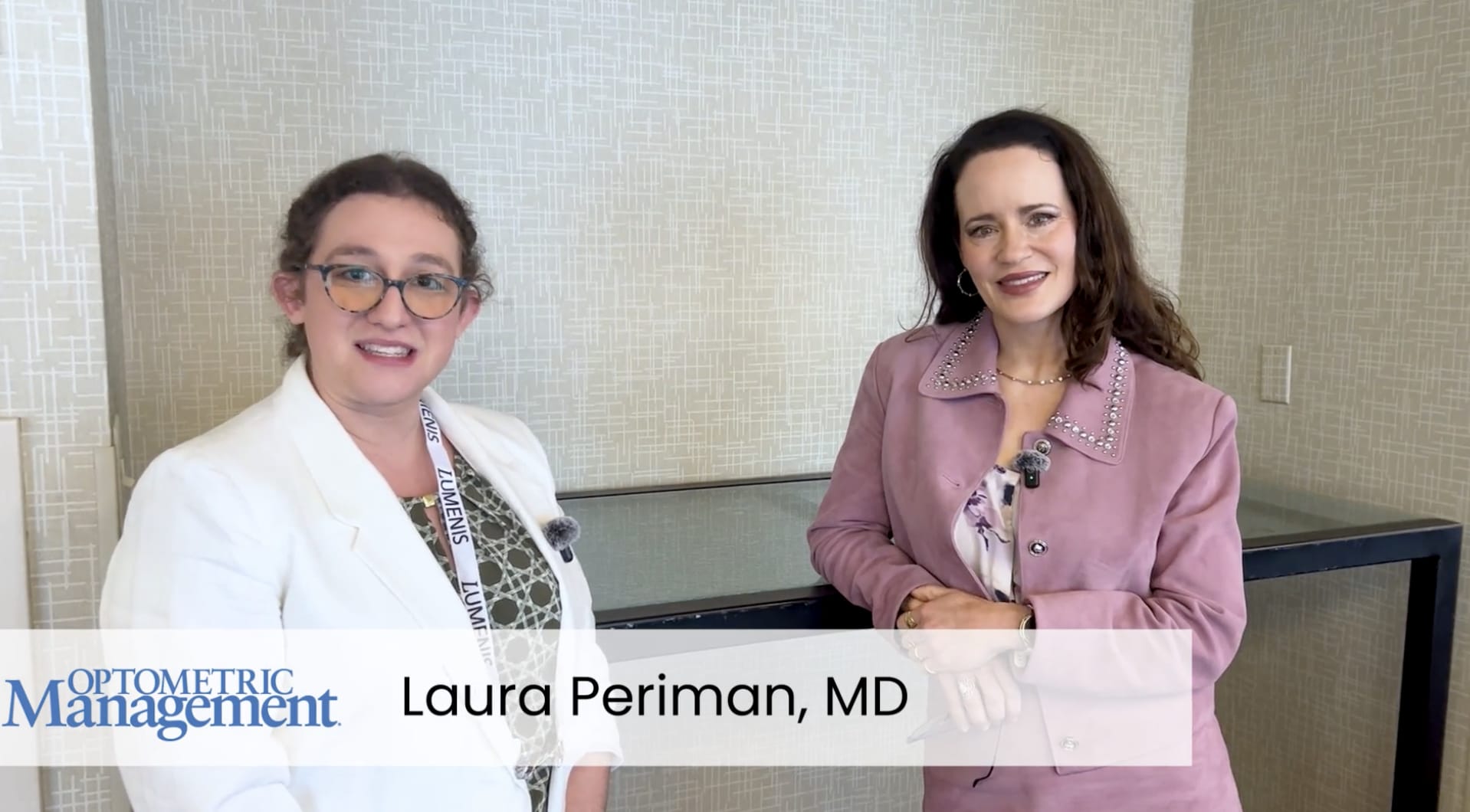
Optometric Management caught up with Laura Periman, MD, at the Lumenis Accelerate Owner’s Summit in Chicago on August 28 to discuss what attendees could take away from the event, both in clinical pearls and workflows and in practice management lessons.
Clinical Scorecard: Reflections on Lumenis Accelerate from Laura Periman, MD
At a Glance
Category Detail
Condition Dry Eye Disease Management Key Mechanisms OptiLift technology utilizes radiofrequency and dynamic muscle stimulation to address lid laxity and obicularis muscle dysfunction. Target Population Patients with dry eye disease, particularly those with lid laxity issues. Care Setting Optometric practices
Key Highlights
High attendance of doctors interested in advanced dry eye disease management. OptiLift technology targets lid laxity and incomplete blinking. 60% of dry eye patients may have lid laxity issues. OptiLift can be used in conjunction with OptiLight technology. Guideline-Based Recommendations
Diagnosis
Assess for lid laxity and obicularis muscle dysfunction in dry eye patients. Management
Utilize OptiLift technology to improve lid function and address anatomical issues. Monitoring & Follow-up
Quantify improvements in incomplete blinking and lid function post-treatment. Risks
Consider the capital investment and patient acceptance when acquiring new technology. Patient & Prescribing Data
Patients with dry eye disease and associated lid laxity.
Patients already treated for inflammation and MGD can benefit from additional OptiLift treatment.
Clinical Best Practices
Combine OptiLight and OptiLift technologies for comprehensive dry eye management. Educate patients on the benefits of addressing both inflammation and anatomical issues. Related Resources & Content