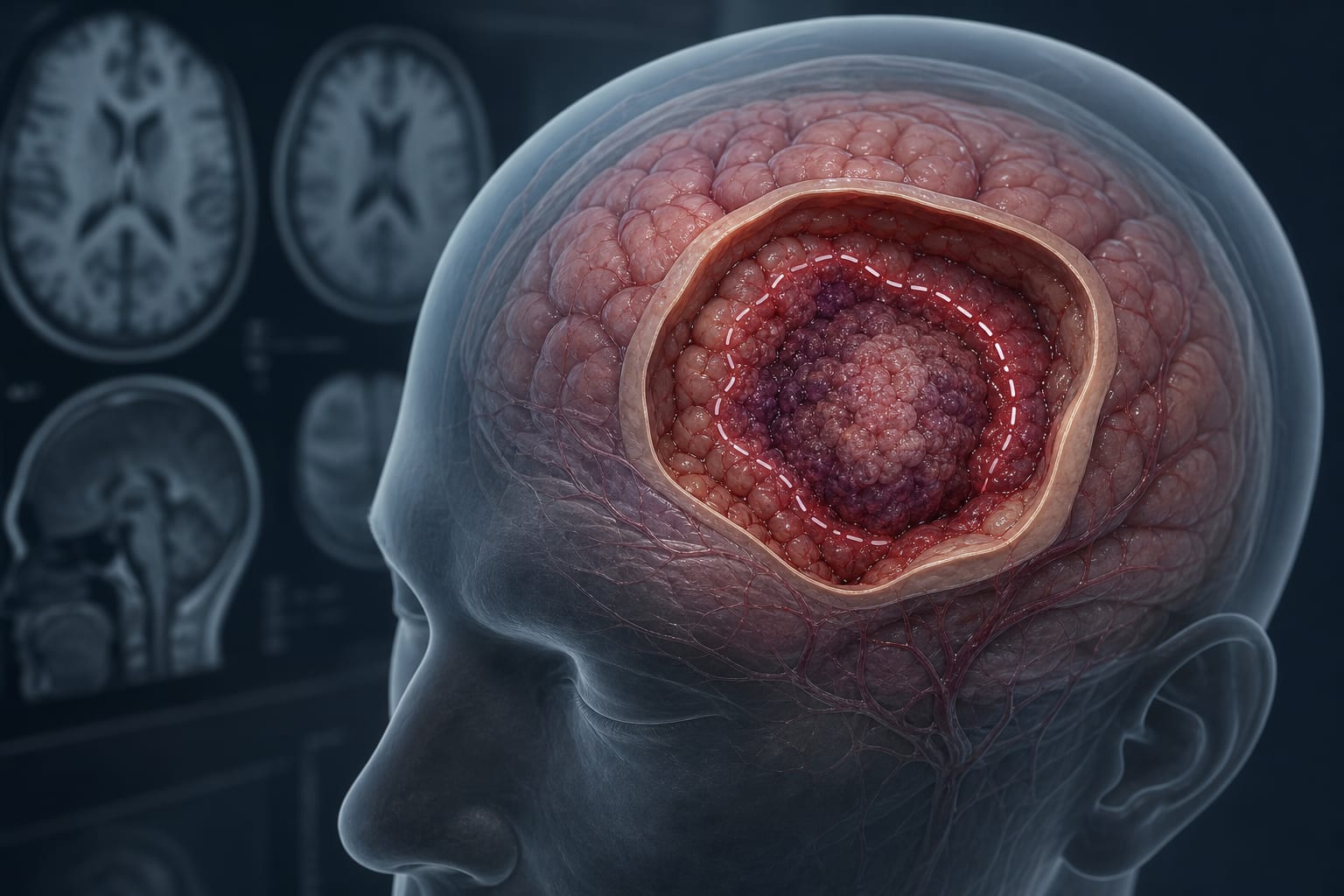
What happens to conservatively managed chronic subdural haematoma
By
Jack Read
Ellie Edlmann
June 7, 2025
Clinical Scorecard: Outcomes of Conservative Management in Chronic Subdural Hematoma Cases
At a Glance
Category Detail
Condition Chronic subdural hematoma (CSDH), accumulation of blood and fluid between dura and arachnoid Key Mechanisms Brain shrinkage causing enlarged CSF spaces, bleeding leading to hypodense, isodense, or hyperdense collections Target Population Predominantly elderly patients, often frail, with increasing incidence due to aging and anticoagulant use Care Setting Neurosurgical tertiary care center with CT imaging for diagnosis; management includes surgical and conservative approaches
Key Highlights
CSDH incidence is rising, projected to increase by 50% by 2040, especially in oldest patients Conservative management ('watch-and-wait') is common for asymptomatic, mild symptoms, or unfit surgical candidates with a reported 66% success rate Surgical management carries risks including infection, seizures, pneumocephalus, neurological deficits, and 9–14% recurrence Guideline-Based Recommendations
Diagnosis
Use CT head scan as primary diagnostic tool identifying hypodense crescent-shaped collections Consider differential diagnosis with subdural effusion or hygroma when hypodense Assess haematoma density (hypodense, isodense, hyperdense, mixed) and size Management
Surgical evacuation recommended for sizeable symptomatic CSDH Conservative management (watch-and-wait) for asymptomatic, mild symptoms, or patients unfit for surgery Adjunctive pharmacotherapies (corticosteroids, TXA, ACE inhibitors, atorvastatin) have limited or no proven benefit Monitoring & Follow-up
Observation and symptomatic care during conservative management without routine follow-up imaging Monitor for progression of symptoms or haematoma size to reconsider surgical intervention Risks
Surgery risks include infection, seizures, pneumocephalus, new neurological deficits, and recurrence (9–14%) Corticosteroids may reduce recurrence but increase adverse effects and worsen outcomes Patient & Prescribing Data
Elderly patients with CSDH, including frail individuals with comorbidities and those on anticoagulants
Conservative management without adjunctive pharmacotherapy is common; pharmacological agents lack strong evidence for benefit
Clinical Best Practices
Use Rockwood Clinical Frailty Scale to assess patient frailty; CFS ≥6 indicates higher frailty Base treatment decisions on symptom severity, haematoma size, and patient fitness for surgery Employ CT imaging characteristics including haematoma density, size, and midline shift to guide management Recognize that smaller, incidental CSDHs are increasingly diagnosed due to widespread CT use Consider conservative management as a valid approach in selected patients with close clinical observation References