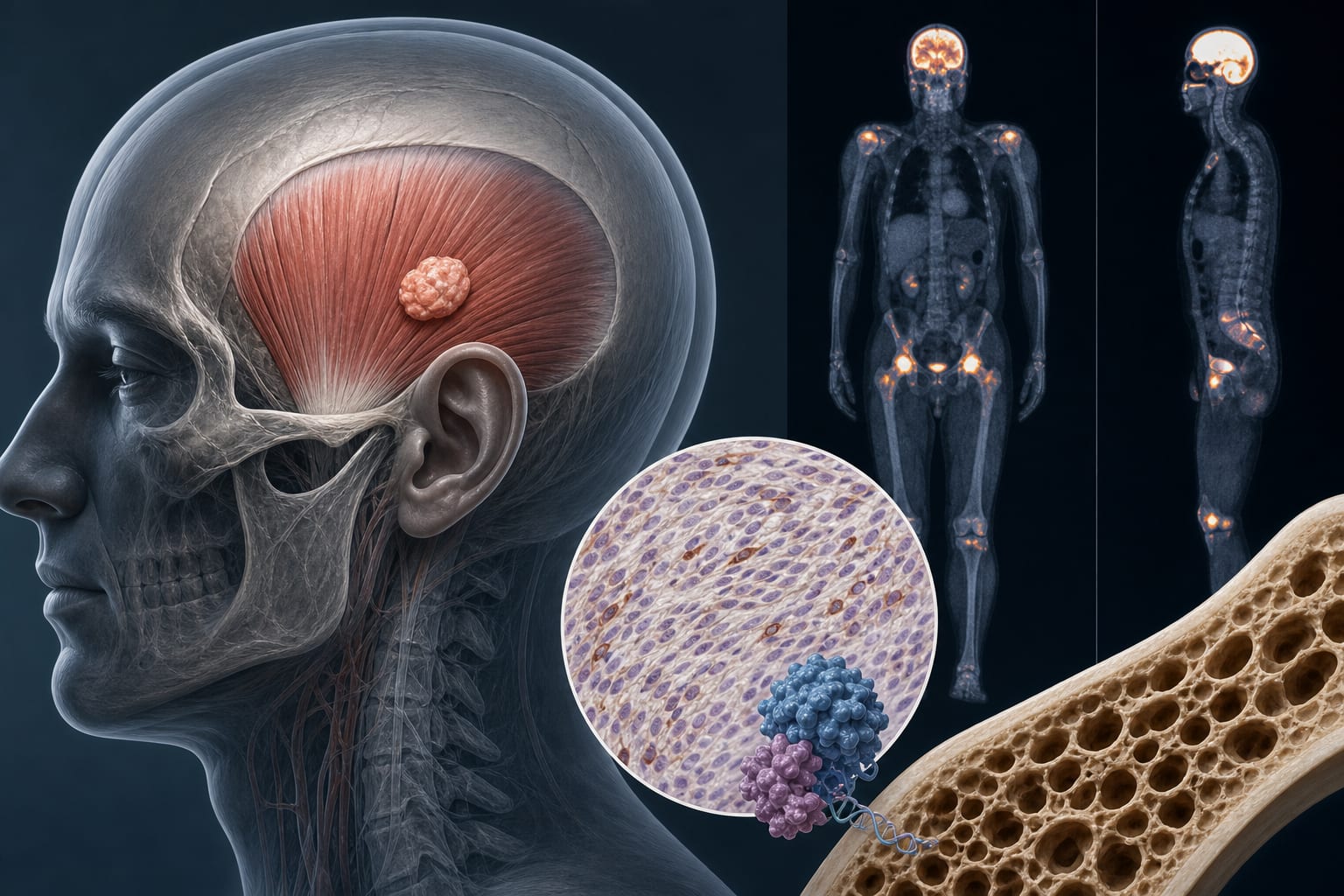
Clinical Scorecard: Bone Quality Deterioration Linked to Inflammation in HIV Patients with Inadequate Immune Response: A Cross-sectional Study
At a Glance
Category
Detail
Condition
Bone quality deterioration in people with HIV (PWH) exhibiting inadequate immune response despite antiretroviral treatment
Key Mechanisms
Increased systemic inflammation and lower vitamin D levels contribute to decreased bone material strength independent of bone mineral density
Target Population
People with HIV classified as immunological nonresponders (INRs) with CD4+ T-cell counts <500 despite effective ART
Care Setting
Infectious Diseases Department, specialized HIV care centers
Key Highlights
INRs have significantly lower bone material strength index measured by in vivo microindentation compared to immunological responders (IRs), despite similar bone mineral density.
Higher levels of high-sensitive C-reactive protein and lower 25-(OH)-vitamin D3 are observed in INRs, correlating negatively with bone quality.
INR status is an independent predictor of decreased bone quality after adjusting for conventional risk factors.
Guideline-Based Recommendations
Diagnosis
Assess bone quality in PWH, especially INRs, using in vivo microindentation alongside conventional BMD measurements.
Evaluate inflammatory markers such as high-sensitive C-reactive protein and vitamin D levels to identify contributors to bone deterioration.
Management
Optimize antiretroviral therapy adherence to maintain viral suppression.
Consider interventions targeting inflammation and vitamin D deficiency to potentially improve bone quality in INRs.
Exclude other causes of bone metabolism disorders before attributing bone quality changes to HIV-related immune response.
Monitoring & Follow-up
Regular monitoring of bone quality and turnover markers in INRs to detect early deterioration.
Periodic assessment of inflammatory status and vitamin D levels to guide adjunctive therapies.
Risks
INRs are at increased risk of bone fragility and fractures due to compromised bone quality despite normal BMD.
Chronic inflammation in INRs may exacerbate bone deterioration independent of traditional osteoporosis risk factors.
Patient & Prescribing Data
People with HIV on stable ART for over 2 years, stratified by immune response status (INRs vs IRs).
ART regimens included integrase strand transfer inhibitors combined with tenofovir alafenamide fumarate-emtricitabine or lamivudine-abacavir; none received vitamin D supplementation or drugs affecting bone metabolism during the study.
Clinical Best Practices
Use matched cohort designs controlling for age, sex, BMI, and ART to evaluate bone health differences in PWH subgroups.
Incorporate minimally invasive in vivo microindentation to complement BMD for comprehensive bone quality assessment.
Address systemic inflammation and vitamin D deficiency as modifiable factors in managing bone health among INRs.
Exclude confounding conditions affecting bone metabolism when assessing bone quality in PWH.