Bladder metastasis from gastric cancer presenting as acute post-renal obstruction during immunotherapy: a case report
-
By
-
Jiaojiao Hou
-
Xiaolei Yin
-
Lili Mi
-
Xin Han
-
Ning Li
-
Fei Yin
-
June 30, 2026
-
Clinical Scorecard: Acute Post-Renal Obstruction Due to Bladder Metastasis from Gastric Cancer During Immunotherapy: A Case Study
At a Glance
| Category | Detail |
|---|
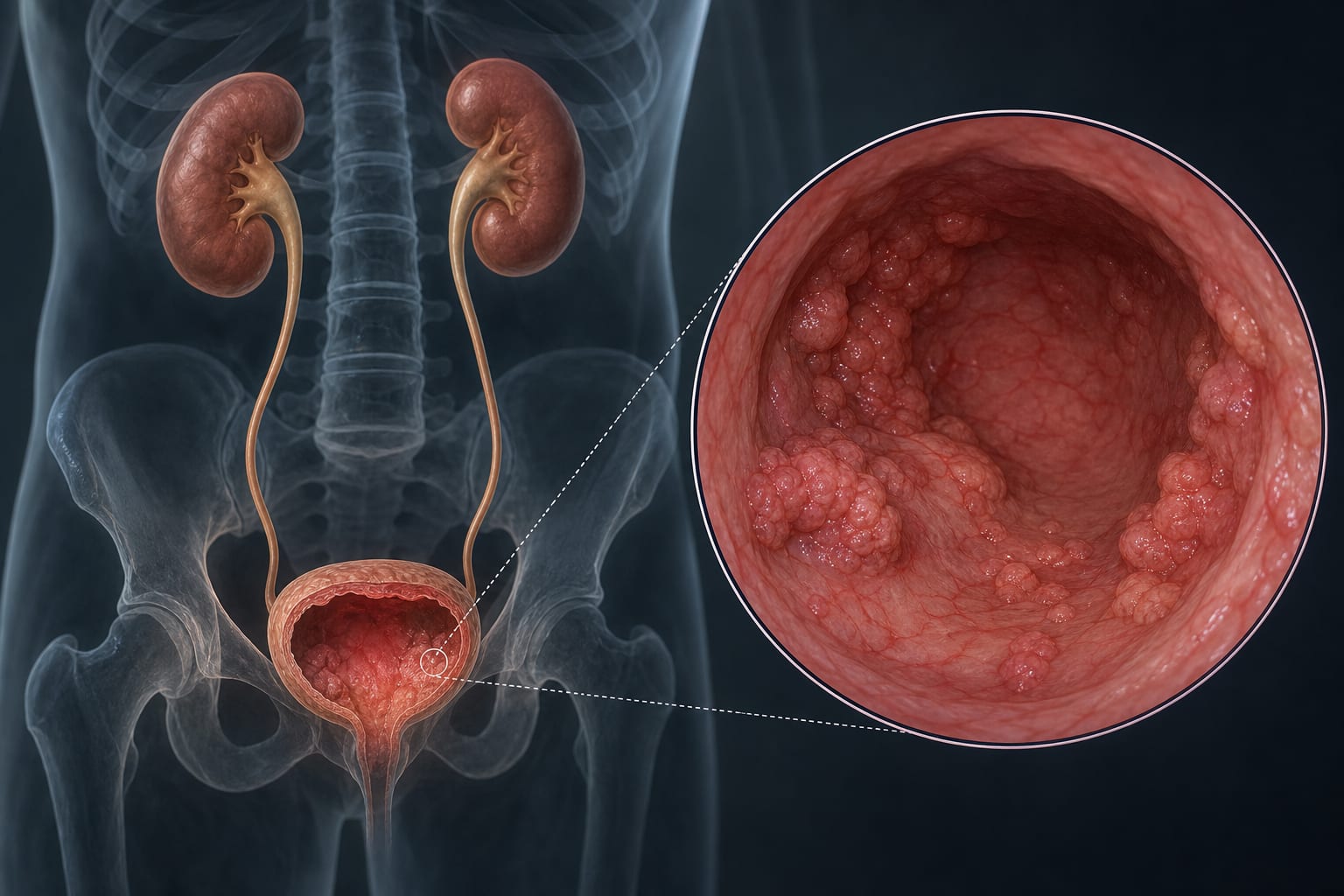
| Condition | Bladder metastasis from gastric cancer |
| Key Mechanisms | Metastatic spread leading to obstructive uropathy and acute kidney injury |
| Target Population | Patients with advanced gastric cancer undergoing immunotherapy |
| Care Setting | Oncology and urology clinical settings |
Key Highlights
- Bladder metastasis from gastric cancer is rare and can be misdiagnosed during immunotherapy.
- Acute kidney injury and obstructive uropathy can occur despite stable primary gastric lesions.
- Cystoscopy and targeted biopsy are critical for distinguishing metastatic disease from immunotherapy-related toxicity.
- The patient experienced rapid disease progression despite initial treatment response.
- Histopathological examination confirmed the bladder lesion as metastatic poorly differentiated adenocarcinoma.
Guideline-Based Recommendations
Diagnosis
- Early cystoscopy and biopsy in patients with new urinary symptoms during immunotherapy.
Management
- Consideration of urinary diversion techniques such as nephrostomy in cases of obstructive uropathy.
Monitoring & Follow-up
- Regular assessment of renal function and tumor markers in patients receiving immunotherapy.
Risks
- Delayed diagnosis of metastatic disease may lead to irreversible renal damage.
Patient & Prescribing Data
Advanced gastric cancer patients receiving immunotherapy.
Combination of chemotherapy and PD-1 inhibitors may lead to atypical responses.
Clinical Best Practices
- Prompt evaluation of new urinary symptoms in patients on immunotherapy.
- Utilization of imaging and cystoscopy to assess urinary tract involvement.
- Multidisciplinary approach involving oncology and urology specialists.
Related Resources & Content