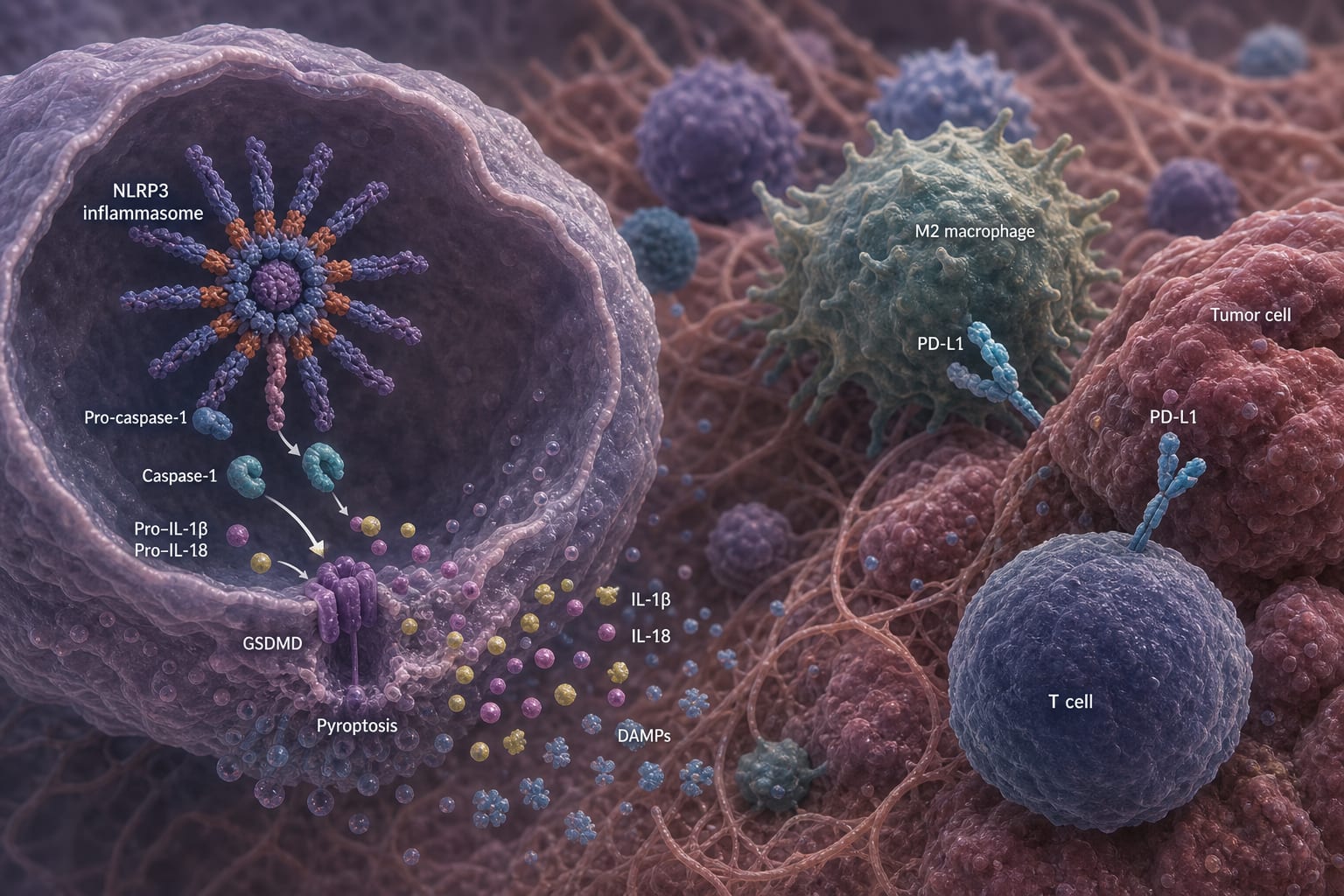
The NLRP3 inflammasome in gynecological cancers: a double-edged sword shaping the immune microenvironment and immunotherapy response - Scorecard - MDSpire
Clinical Scorecard: The Role of the NLRP3 Inflammasome in Gynecological Cancers: Balancing Immune Microenvironment Dynamics and Responses to Immunotherapy
At a Glance
Category
Detail
Condition
Gynecological Cancers
Key Mechanisms
NLRP3 inflammasome's dual role in immune suppression and activation across ovarian, endometrial, and cervical cancers.
Target Population
Patients with ovarian, endometrial, and cervical cancers.
Care Setting
Oncology and immunotherapy clinics.
Key Highlights
NLRP3 drives immune suppression in ovarian cancer while enhancing cisplatin sensitivity.
In endometrial cancer, NLRP3's role varies by molecular subtype, affecting pyroptosis.
Cervical cancer utilizes mechanisms to silence NLRP3 and evade immune responses.
The PD-L1/NLRP3 axis is a significant factor in resistance to anti-PD-1 immunotherapy.
Combination therapies targeting NLRP3 may enhance immunotherapy efficacy.
Guideline-Based Recommendations
Diagnosis
Evaluate NLRP3 expression and activity in gynecological malignancies.
Management
Consider NLRP3 modulators in combination with immune checkpoint inhibitors.
Monitoring & Follow-up
Monitor immune responses and tumor microenvironment changes during treatment.
Risks
Assess the potential for NLRP3 activation to promote tumor progression in certain contexts.
Patient & Prescribing Data
Patients with advanced or recurrent gynecological cancers.
NLRP3-activating nanovaccines and small-molecule agonists may convert cold tumors to immunoresponsive ones.
Clinical Best Practices
Integrate NLRP3 modulation strategies with existing immunotherapy regimens.
Tailor immunotherapeutic approaches based on tumor type and molecular subtype.
An updated clinical practice guideline from the American Society for Radiation Oncology substantially expands and modernizes recommendations for the use of radiation therapy in pancreatic cancer.