Association of APOBEC mutagenesis with stromal and endothelial niche remodeling and PCDH9-linked signaling alterations in colorectal cancer - Scorecard - MDSpire

Association of APOBEC mutagenesis with stromal and endothelial niche remodeling and PCDH9-linked signaling alterations in colorectal cancer

  • By

  • Junting Chen

  • Jiaming Cao

  • Baosen Zhou

  • Lianshuang Zhao

  • Chang Zheng

  • July 16, 2026

Share

Clinical Scorecard: Linking APOBEC-Induced Mutagenesis to Changes in Stromal and Endothelial Microenvironments and Alterations in PCDH9-Related Signaling in Colorectal Cancer
At a Glance

CategoryDetail
ConditionColorectal Cancer
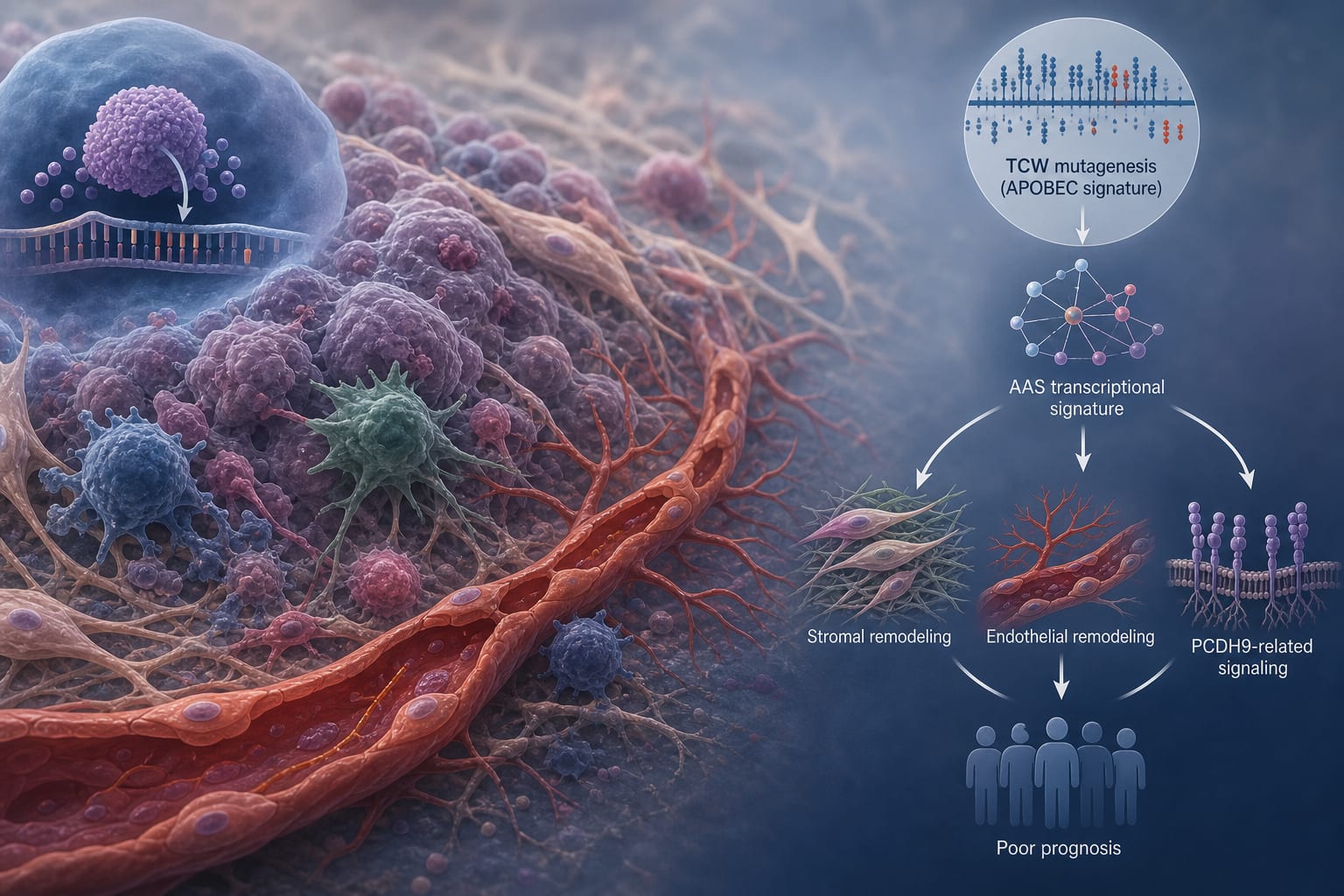
Key MechanismsAPOBEC-induced mutagenesis, stromal-vascular remodeling, PCDH9-related signaling alterations
Target PopulationPatients with primary colorectal cancer
Care SettingMulti-omics analysis and clinical evaluation

Key Highlights

  • APOBEC activation correlates with worse survival in colorectal cancer.
  • High APOBEC activation tumors show increased fibroblast and endothelial signatures.
  • APOBEC3B activation is linked to endothelial transcriptional remodeling.
  • PCDH9 identified as a candidate target linked to multiple signaling pathways.
  • APOBEC-high tumors may be candidates for anti-angiogenic therapy.

Guideline-Based Recommendations

Diagnosis

  • Utilize whole-exome sequencing and transcriptomics for comprehensive evaluation.

Management

  • Consider targeting APOBEC-induced signaling vulnerabilities in treatment strategies.

Monitoring & Follow-up

  • Monitor APOBEC activation levels as a prognostic biomarker.

Risks

  • High APOBEC activity is associated with increased risk of metastasis and treatment resistance.

Patient & Prescribing Data

Patients with primary colorectal cancer undergoing surgical resection.

APOBEC-high tumors may benefit from anti-angiogenic therapies.

Clinical Best Practices

  • Integrate multi-omics data for a comprehensive understanding of tumor biology.
  • Conduct survival analysis and multivariable regression to identify prognostic factors.

Related Resources & Content

    Original Source(s)

    Related Content