Association of the TyG index and its body fat distribution composites with CHD and MACE risk in adults with OSAHS: incremental discrimination and exploratory mediation analysis - Scorecard - MDSpire
Advertisement
Association of the TyG index and its body fat distribution composites with CHD and MACE risk in adults with OSAHS: incremental discrimination and exploratory mediation analysis
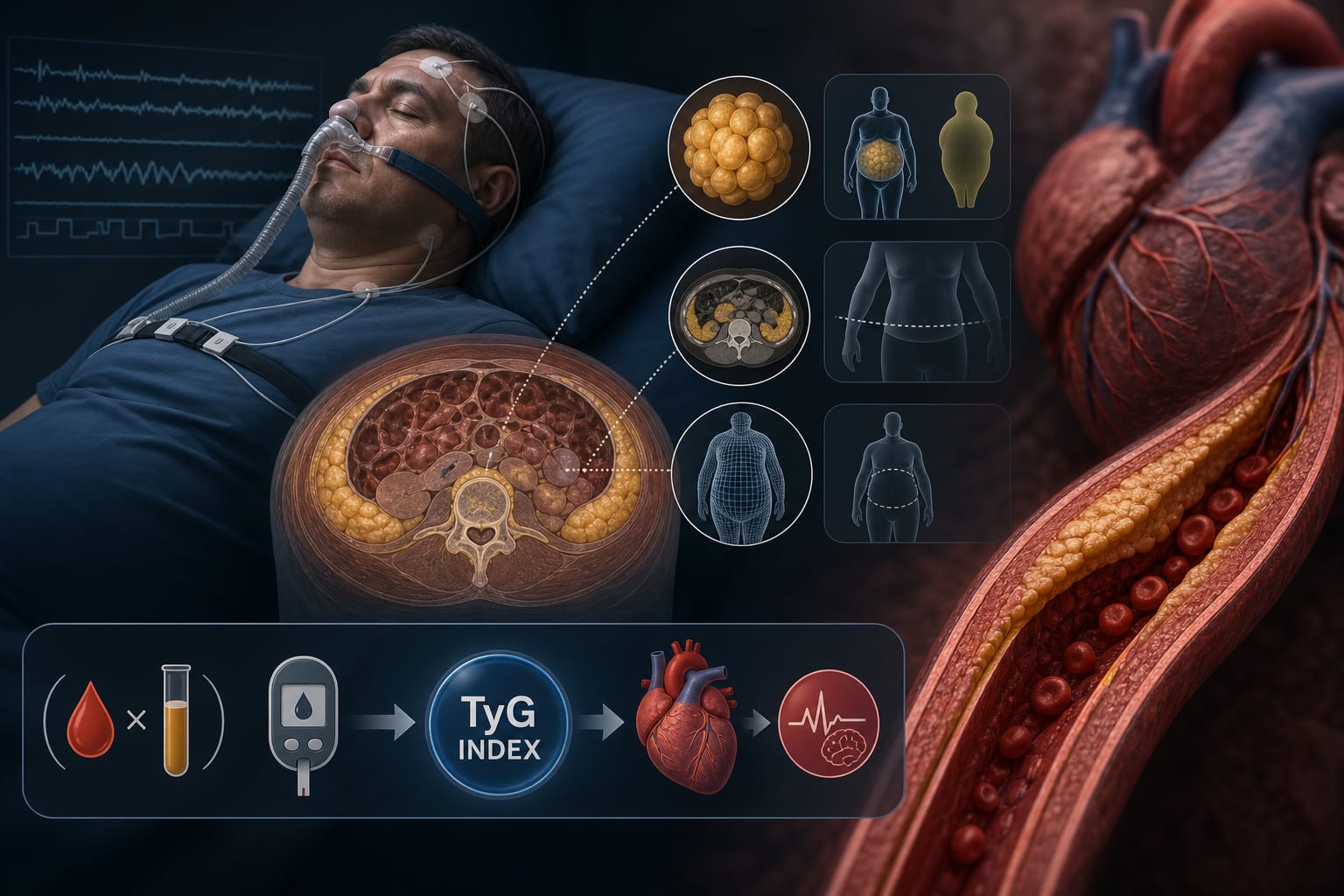
Clinical Scorecard: Relationship Between the TyG Index, Body Fat Distribution Metrics, and the Risk of CHD and MACE in Adults with OSAHS: Incremental Discrimination and Exploratory Mediation Analysis
At a Glance
Category
Detail
Condition
Key Mechanisms
Insulin resistance, metabolic dysfunction, body fat distribution, cardiovascular injury mechanisms including sympathetic activation and oxidative stress, linked to study findings.
Target Population
Care Setting
Key Highlights
TyG-related indices are independently associated with prevalent CHD and should be considered in clinical assessments.
TyG-WWI showed the strongest association with incident MACE, indicating its potential as a key marker.
Adding TyG-WWI to conventional risk factors significantly improved CHD discrimination, suggesting its clinical utility.