Comparison of the association and discriminatory ability of CVAI, LAP, CI, and AVI for type 2 diabetes in Chinese adults aged ≥ 50 years: a sex-specific analysis - Scorecard - MDSpire
Advertisement
Comparison of the association and discriminatory ability of CVAI, LAP, CI, and AVI for type 2 diabetes in Chinese adults aged ≥ 50 years: a sex-specific analysis
Clinical Scorecard: Evaluation of the Relationships and Discriminatory Power of CVAI, LAP, CI, and AVI in Predicting Type 2 Diabetes Among Chinese Adults Aged 50 and Older: A Gender-Specific Study
At a Glance
Category
Detail
Condition
Type 2 Diabetes Mellitus (T2DM)
Key Mechanisms
Visceral adiposity indices (CVAI, LAP, CI, AVI) associated with T2DM risk.
Target Population
Chinese adults aged 50 years and older.
Care Setting
Community-based case-control study.
Key Highlights
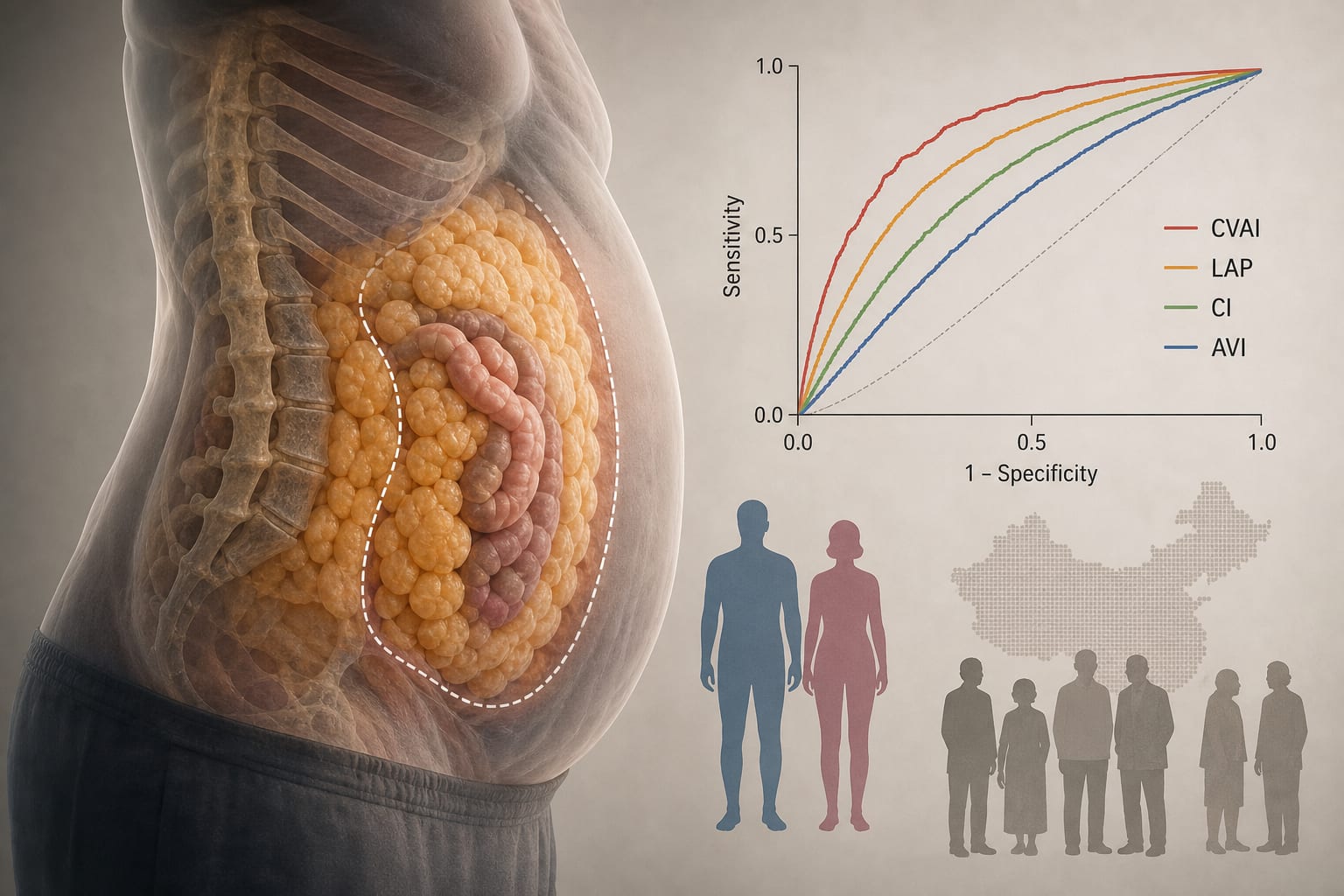
All four indices (CVAI, LAP, CI, AVI) positively associated with prevalent T2DM.
CVAI showed the highest discriminatory ability (AUC 0.634) in the overall population.
Sex differences observed: CVAI and CI stronger in males; LAP stronger in females.
Prospective studies needed to validate findings.
Guideline-Based Recommendations
Diagnosis
Use visceral adiposity indices for assessing T2DM risk in older adults.
Management
Consider sex-specific differences in adiposity indices when evaluating T2DM risk.
Monitoring & Follow-up
Regular assessment of visceral fat indices in older populations.
Risks
Increased T2DM risk associated with higher visceral adiposity.
Patient & Prescribing Data
Adults aged 50 years and older in China.
Focus on visceral fat reduction and metabolic health.
Clinical Best Practices
Incorporate CVAI and LAP in routine assessments for T2DM risk.
Recognize the impact of sex on adiposity and T2DM associations.