Case Study of Polymorphous Low-Grade Neuroepithelial Tumor in a Young Patient
-
By
-
Haitao Wu
-
Youyuan Chen
-
Peng Sun
-
Wenshuai Deng
-
June 5, 2026
Clinical Scorecard: Case Study of Polymorphous Low-Grade Neuroepithelial Tumor in a Young Patient
At a Glance
| Category | Detail |
|---|
| Condition | Polymorphous Low-Grade Neuroepithelial Tumor of the Young (PLNTY) |
| Key Mechanisms | |
| Target Population | |
| Care Setting | |
Key Highlights
- Patient presented with a 6-year history of drug-resistant epilepsy.
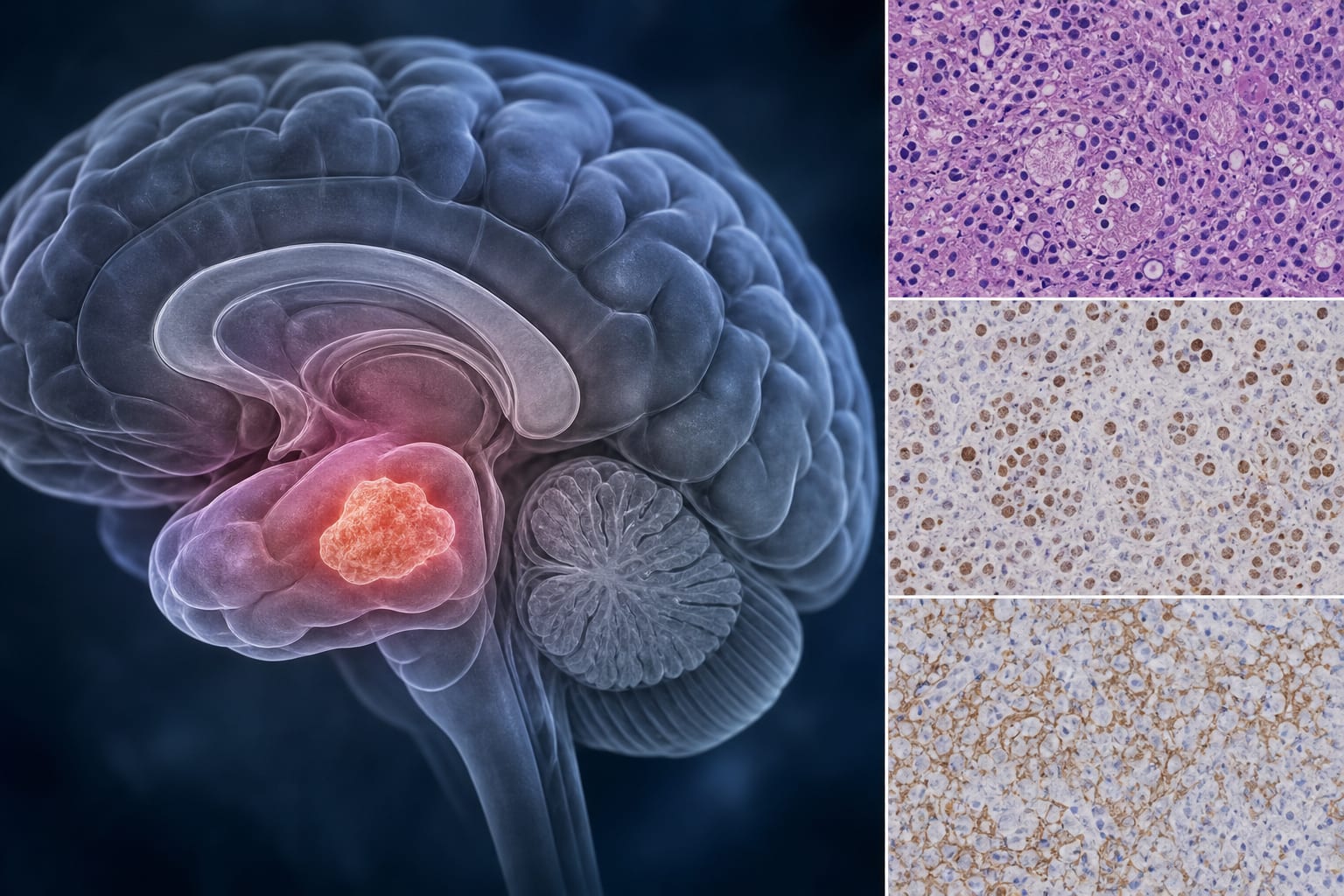
- 30-year-old male; MRI showed an ovoid area of abnormal signal in the left temporal pole.
- Pathological examination confirmed PLNTY, CNS WHO Grade 1.
- Postoperative outcome included complete seizure control.
- Molecular testing revealed BRAF mutation positivity.
Guideline-Based Recommendations
Diagnosis
- Integration of clinical history, imaging (including MRI), pathological morphology, immunohistochemistry, and molecular testing.
Management
Monitoring & Follow-up
Risks
Patient & Prescribing Data
Surgical intervention leads to favorable prognosis and seizure control, with most patients achieving significant reduction in seizure frequency.
Clinical Best Practices
- Consider PLNTY in young patients with drug-resistant epilepsy and atypical imaging findings.
- Utilize comprehensive diagnostic approaches including imaging and molecular testing, emphasizing the role of molecular testing.
Related Resources & Content