Anthropometry, sex, and age at diagnosis affect pulmonary blood volume quantification from computed tomography pulmonary angiography in pulmonary hypertension assessment - Scorecard - MDSpire
Conexiant’s news site is now MDSpire News. Learn more
Advertisement
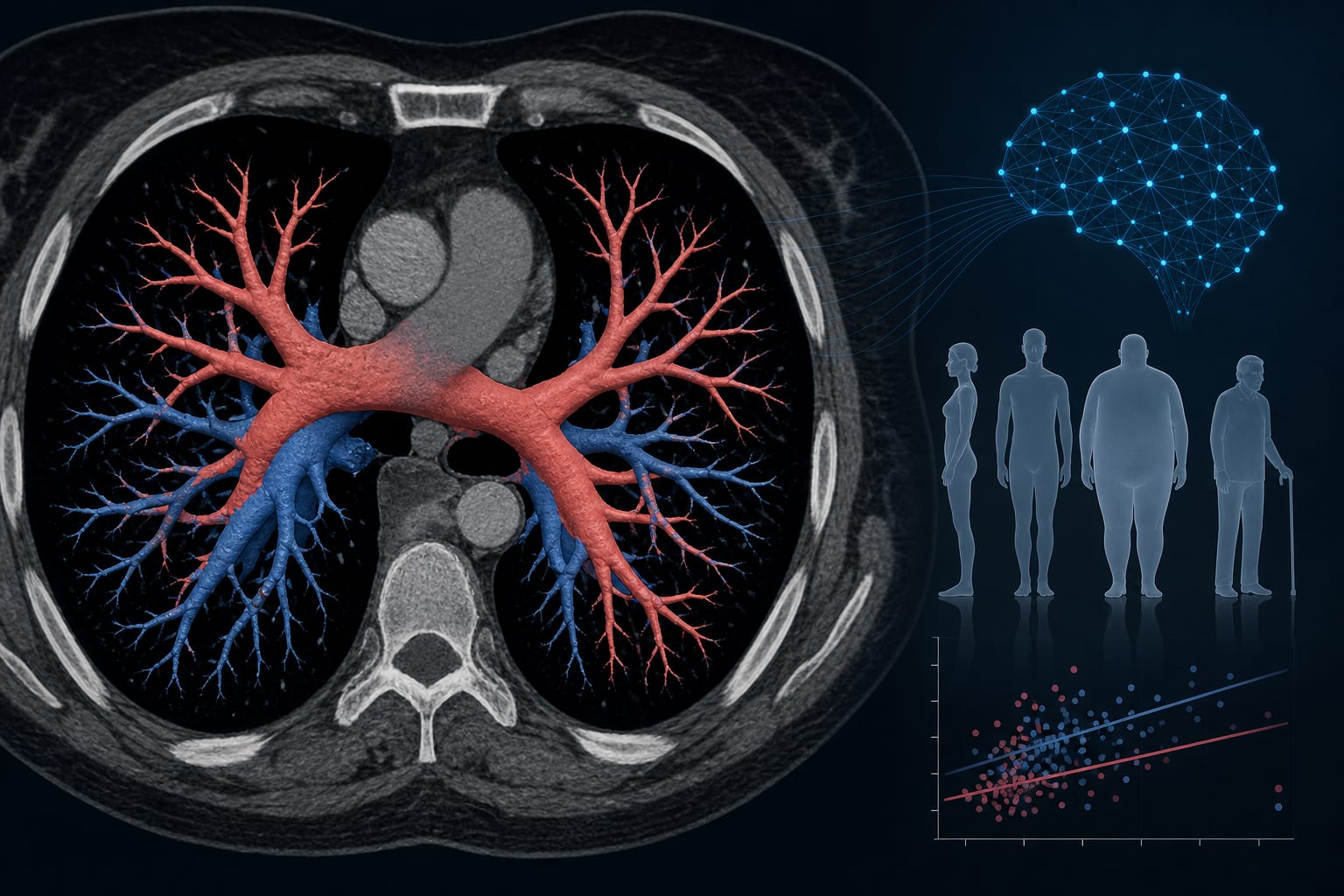
Impact of Anthropometric Factors, Gender, and Age at Diagnosis on Pulmonary Blood Volume Measurement via Computed Tomography Pulmonary Angiography in Evaluating Pulmonary Hypertension
Clinical Scorecard: Impact of Anthropometric Factors, Gender, and Age at Diagnosis on Pulmonary Blood Volume Measurement via Computed Tomography Pulmonary Angiography in Evaluating Pulmonary Hypertension
At a Glance
Category
Detail
Condition
Pulmonary Hypertension
Key Mechanisms
Influence of anthropometrics, sex, and age on pulmonary blood volume (PBV) measurements.
Target Population
Patients diagnosed with pulmonary hypertension, including various subtypes.
Care Setting
Secondary analysis from the Cambridge PH Registry using computed tomography pulmonary angiography (CTPA).
Key Highlights
376 patients analyzed with a median age of 60 years and 57% female.
Pulmonary artery volume correlates with height, weight, BMI, and BSA.
Older age at diagnosis linked to larger pulmonary artery volumes, especially in heavier patients.
PBV normalization to anthropometrics reduces sex-related differences.
Federal prosecutors allege that a Florida physician and research staff fabricated clinical trial records that were submitted into database systems used to evaluate investigational drugs.