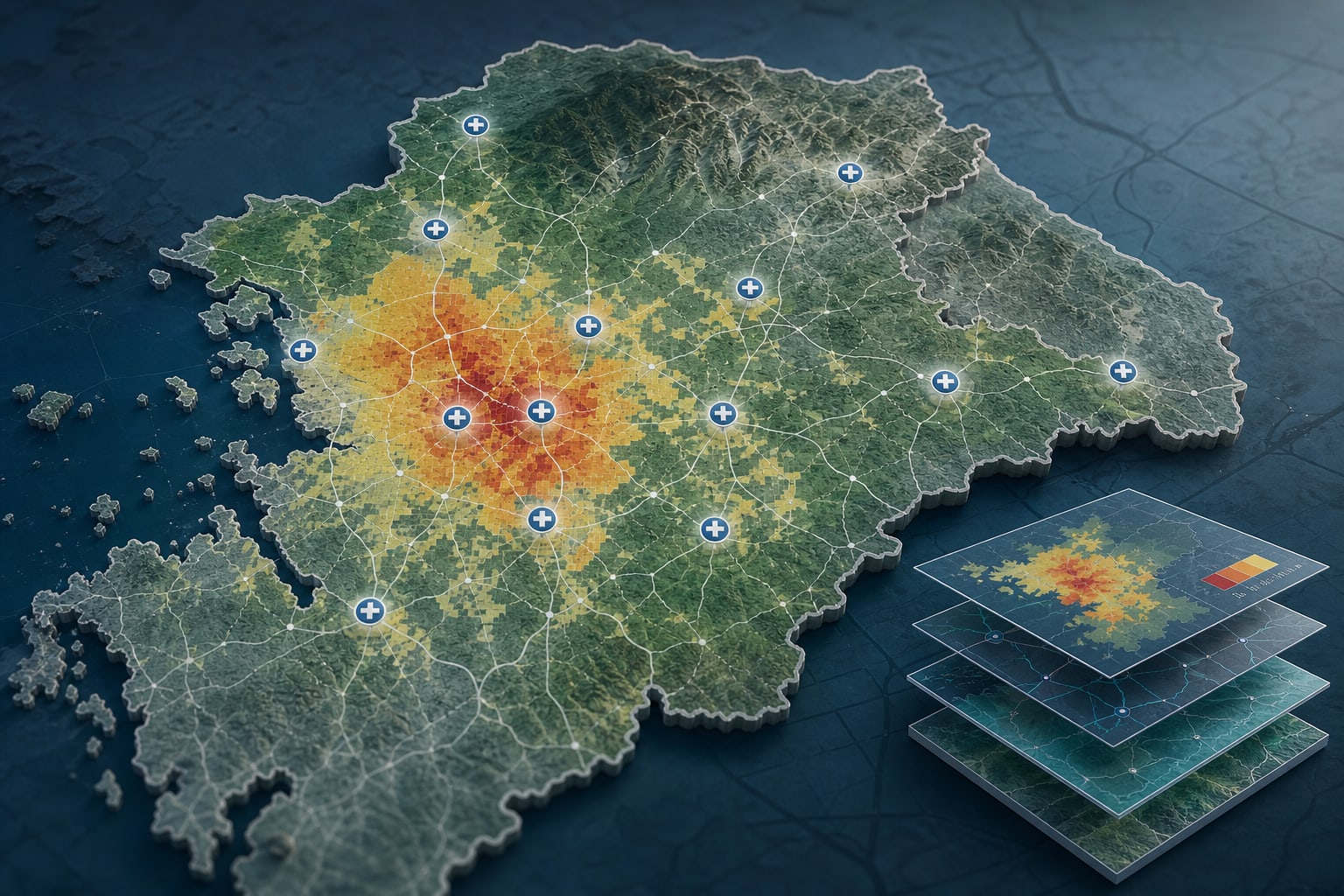
Enhancing Trauma Care Through Geospatial Strategies: Tailored Approaches to a Worldwide Challenge
-
By
-
Michael K. Dalton
-
Molly P. Jarman
-
September 29, 2026
Clinical Scorecard: Enhancing Trauma Care Through Geospatial Strategies: Tailored Approaches to a Worldwide Challenge
At a Glance
| Category | Detail |
|---|
| Condition | Trauma Care System |
| Key Mechanisms | Geospatial modeling and resource allocation for trauma centers |
| Target Population | Critically injured patients in Gyeonggi province, South Korea |
| Care Setting | Trauma care systems and hospital resource management |
Key Highlights
- Timely access to trauma care is crucial to prevent avoidable death and disability.
- Geographic distribution of trauma centers impacts patient access and outcomes.
- South Korea's centralized trauma system allows for more efficient resource allocation compared to the decentralized US system.
- Equity and efficiency are central considerations in trauma system modeling.
- The Needs Based Assessment of Trauma Systems (NBATS) framework aids in assessing regional trauma center needs.
Guideline-Based Recommendations
Diagnosis
Management
- Optimize trauma center distribution using geospatial modeling.
- Consider equity in resource allocation for trauma care.
Monitoring & Follow-up
Risks
- Excessive trauma centers with low patient volume may dilute expertise.
Patient & Prescribing Data
Patients with severe traumatic injuries in Gyeonggi province.
Access to trauma care is influenced by geographic location and emergency medical services response.
Clinical Best Practices
- Incorporate GIS modeling for trauma system optimization.
- Balance the number of trauma centers with patient volume to maintain expertise.
Related Resources & Content