Precision treatment of chalazion based on AI-driven risk stratification: a prospective study of triamcinolone acetonide combined with intense pulsed light therapy - Scorecard - MDSpire
Conexiant’s news site is now MDSpire News. Learn more
Advertisement
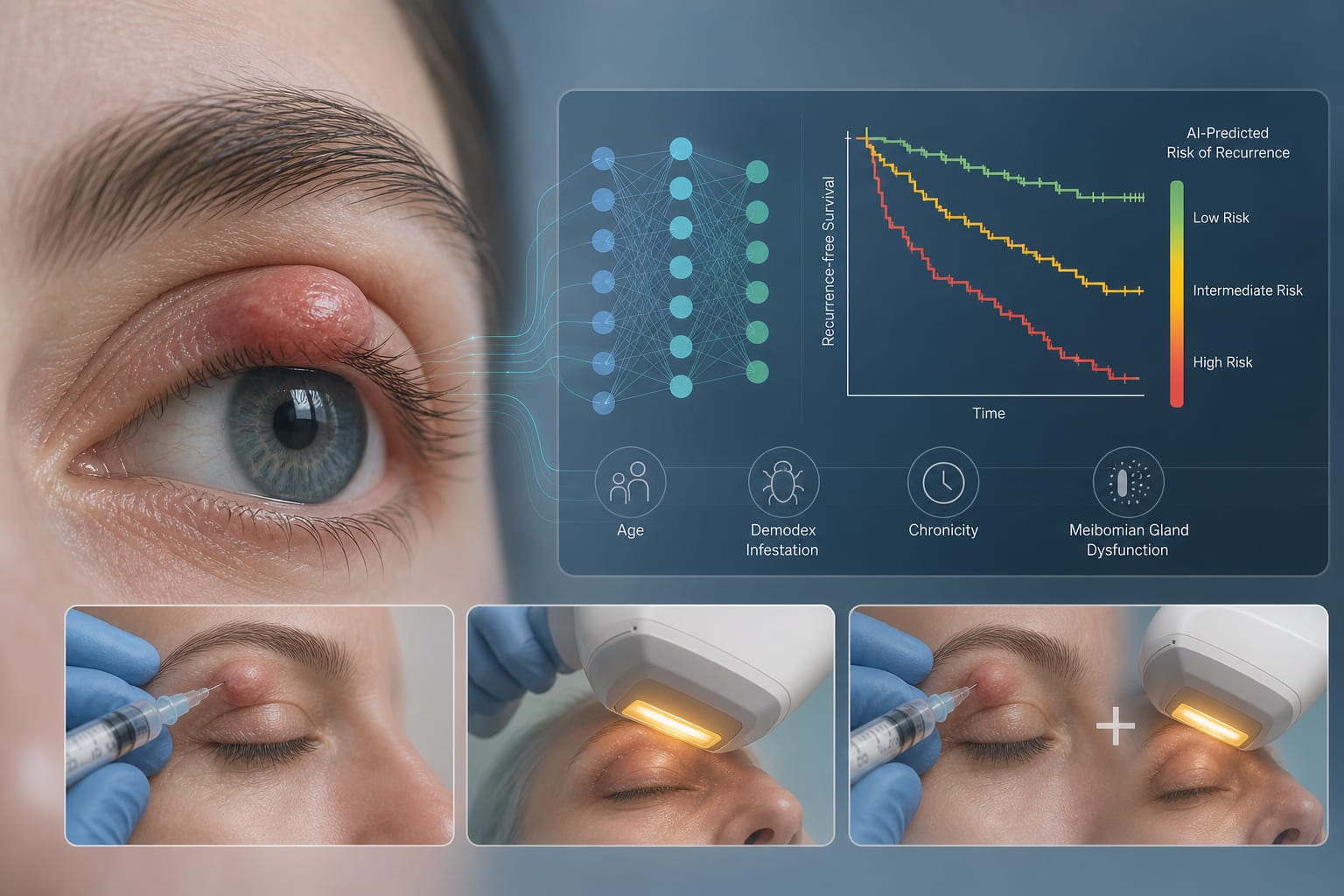
AI-Enhanced Risk Stratification for Targeted Chalazion Management: A Prospective Study on the Efficacy of Triamcinolone Acetonide and Intense Pulsed Light Therapy
Clinical Scorecard: AI-Enhanced Risk Stratification for Targeted Chalazion Management: A Prospective Study on the Efficacy of Triamcinolone Acetonide and Intense Pulsed Light Therapy
At a Glance
Category
Detail
Condition
Key Mechanisms
Localized granulomatous inflammatory response due to meibomian gland duct obstruction.
Target Population
Care Setting
Key Highlights
Combined TA + IPL therapy showed a 95.2% complete resolution rate at 3 months.
Recurrence rates were significantly lower in the TA + IPL group (8.3%) compared to TA (15.4%) and IPL (38.2%).
Demodex infection, age, chronicity, and MGD were identified as independent risk factors for recurrence.
AI-enhanced hybrid model achieved an AUC of 0.822, improving risk prediction.
High-risk patients had recurrence rates of 83.3–91.7% with monotherapy.
Guideline-Based Recommendations
Diagnosis
Assess for Demodex infection, chronicity, and meibomian gland dysfunction.
Management
Consider combined therapy of triamcinolone acetonide and intense pulsed light.
Monitoring & Follow-up
Monitor recurrence rates and adjust treatment based on identified risk factors.
Risks
Potential for recurrence and complications such as conjunctival-tarsal scarring.
Patient & Prescribing Data
Patients with chalazion, especially those with recurrent episodes.
Clinical Best Practices
Utilize AI-enhanced models for risk stratification in chalazion management.
Incorporate assessment of meibomian gland dysfunction in treatment planning.