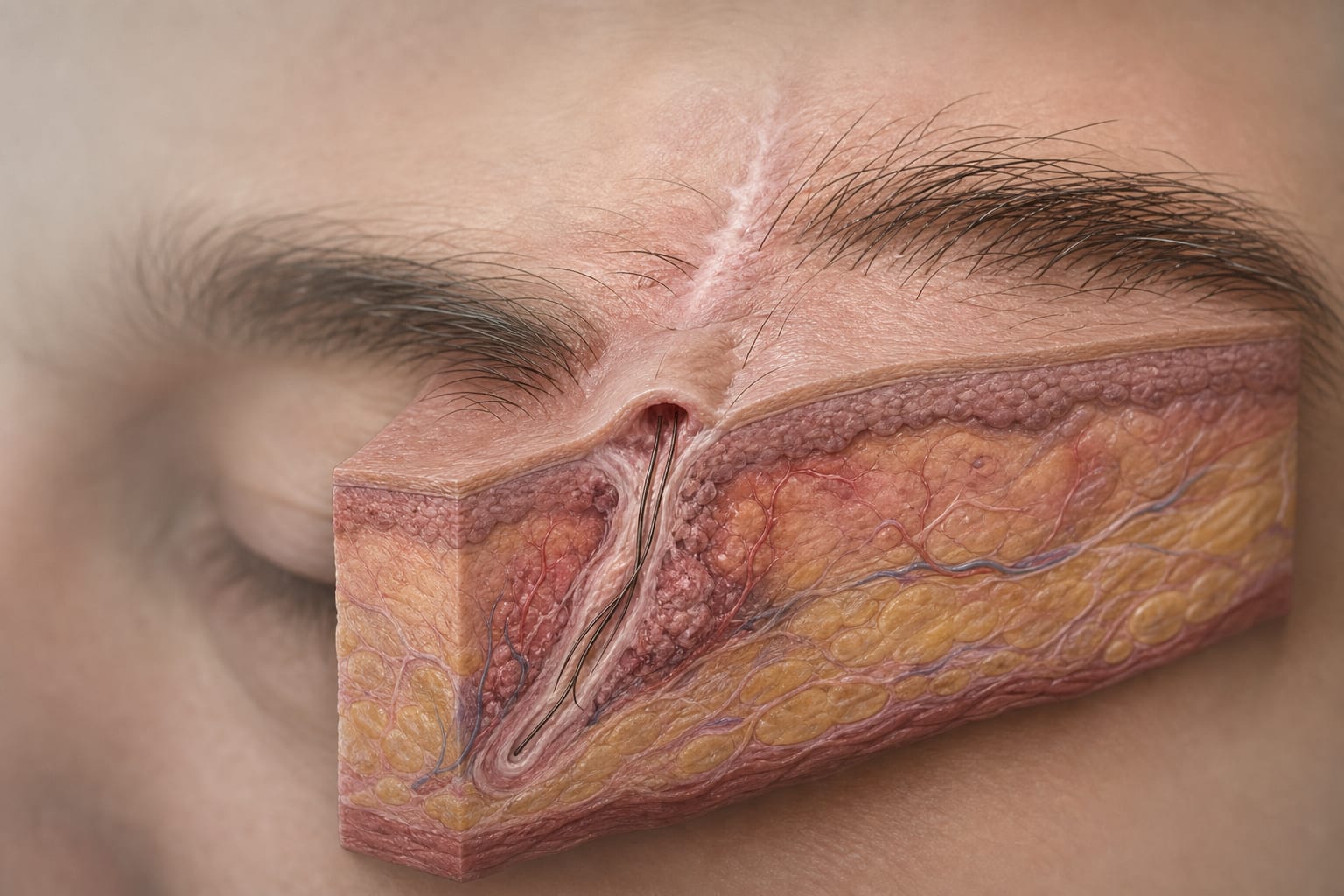
Clinical Case Study: Pilonidal Sinus in the Eyebrow Region with Associated Bridging Scar
-
By
-
Yanpeng Zhu
-
Xuemei Tao
-
Xiaoliang Yang
-
Ruiyun Wang
-
Ke Xue
-
June 24, 2026
Clinical Scorecard: Clinical Case Study: Pilonidal Sinus in the Eyebrow Region with Associated Bridging Scar
At a Glance
| Category | Detail |
|---|
| Condition | Pilonidal sinus |
| Key Mechanisms | Acquired inflammatory disease associated with trauma and subcutaneous hair implantation. |
| Target Population | Adults, particularly males with a history of trauma in the eyebrow region. |
| Care Setting | Surgical intervention for chronic inflammatory facial lesions. |
Key Highlights
- First reported case of pilonidal sinus in the eyebrow region with bridging scar formation.
- Patient had a 29-year history of symptoms following trauma.
- Surgical excision with flap transfer and postoperative injections led to significant improvement.
- Pathology confirmed chronic post-traumatic pilonidal sinus with foreign body giant cell reaction.
- Highlights the need for pilonidal sinus consideration in chronic facial lesions.
Guideline-Based Recommendations
Diagnosis
- Consider pilonidal sinus in the differential diagnosis of chronic facial lesions.
- Confirm diagnosis through histopathological examination post-surgery.
Management
- Surgical excision of the sinus and associated scar tissue.
- Use of adjacent flap transfer for reconstruction.
Monitoring & Follow-up
- Follow-up for scar appearance and recurrence of symptoms.
Risks
- Potential for recurrence and complications related to surgical intervention.
Patient & Prescribing Data
56-year-old male with a history of eyebrow trauma.
Postoperative intralesional injections of triamcinolone acetonide and fluorouracil were administered as prophylaxis.
Clinical Best Practices
- Employ a staged surgical approach for complex facial reconstructions.
- Consider adjuvant therapy to prevent recurrence in chronic cases.
Related Resources & Content