Effects of tirzepatide therapy on body weight and body composition in adults with overweight and obesity
-
By
-
Haley Corso
-
Austin J. Graybeal
-
Emily Hoelscher
-
Sydney Roberson
-
Briana Curran
-
Catherine Johnson
-
Kelly E. Johnson
-
July 8, 2026
-
Clinical Scorecard: Impact of Tirzepatide Treatment on Weight and Body Composition in Overweight and Obese Adults
At a Glance
| Category | Detail |
|---|
| Condition | Obesity |
| Key Mechanisms | GLP-1 receptor agonist therapy promoting satiety, delaying gastric emptying, and enhancing insulin secretion. |
| Target Population | Adults with obesity |
| Care Setting | Clinical obesity medicine program |
Key Highlights
- Significant reductions in body weight (−31.1 kg; −27.8%) and BMI (−10.4 kg/m²; −27.8%) observed.
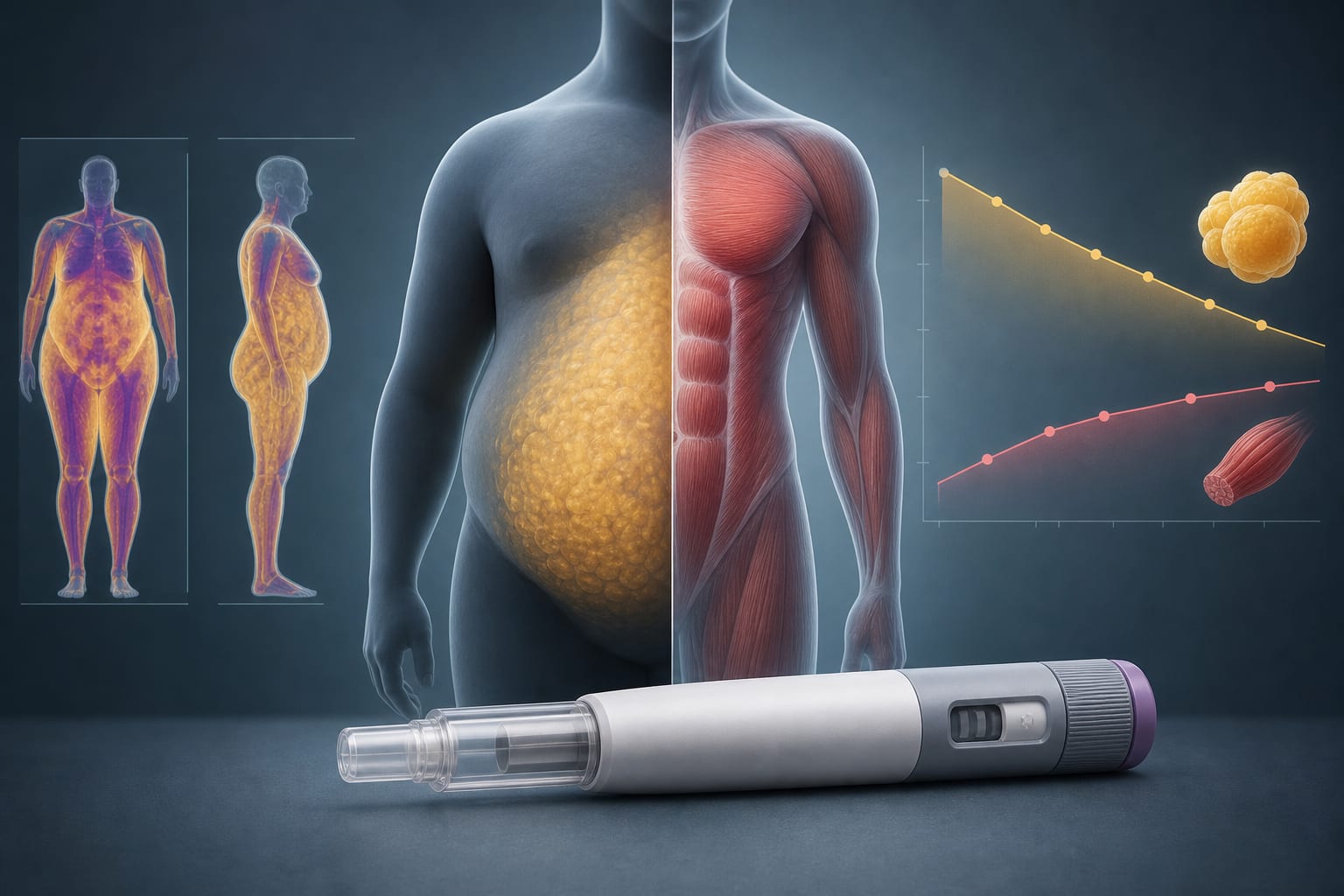
- Weight loss primarily attributed to fat mass, comprising 85.7% of total weight loss.
- Females experienced greater percentage reductions in fat mass and total body water compared to males.
- Participants with higher baseline BMI showed greater percentage reductions in weight and body fat percentage.
Guideline-Based Recommendations
Diagnosis
- Assessment of obesity through BMI and body composition metrics.
Management
- Utilization of GLP-1 receptor agonists like tirzepatide in conjunction with lifestyle modifications.
Monitoring & Follow-up
- Regular evaluation of body composition, including fat mass and lean mass.
Risks
- Potential for excessive reductions in lean tissue affecting metabolic health.
Patient & Prescribing Data
Adults with obesity receiving tirzepatide therapy.
Tirzepatide initiated at 2.5 mg or 5 mg once weekly, with dose escalation up to 15 mg based on tolerance.
Clinical Best Practices
- Incorporate bioelectrical impedance analysis for body composition assessment.
- Monitor changes in fat mass and lean mass to inform treatment adjustments.
Related Resources & Content