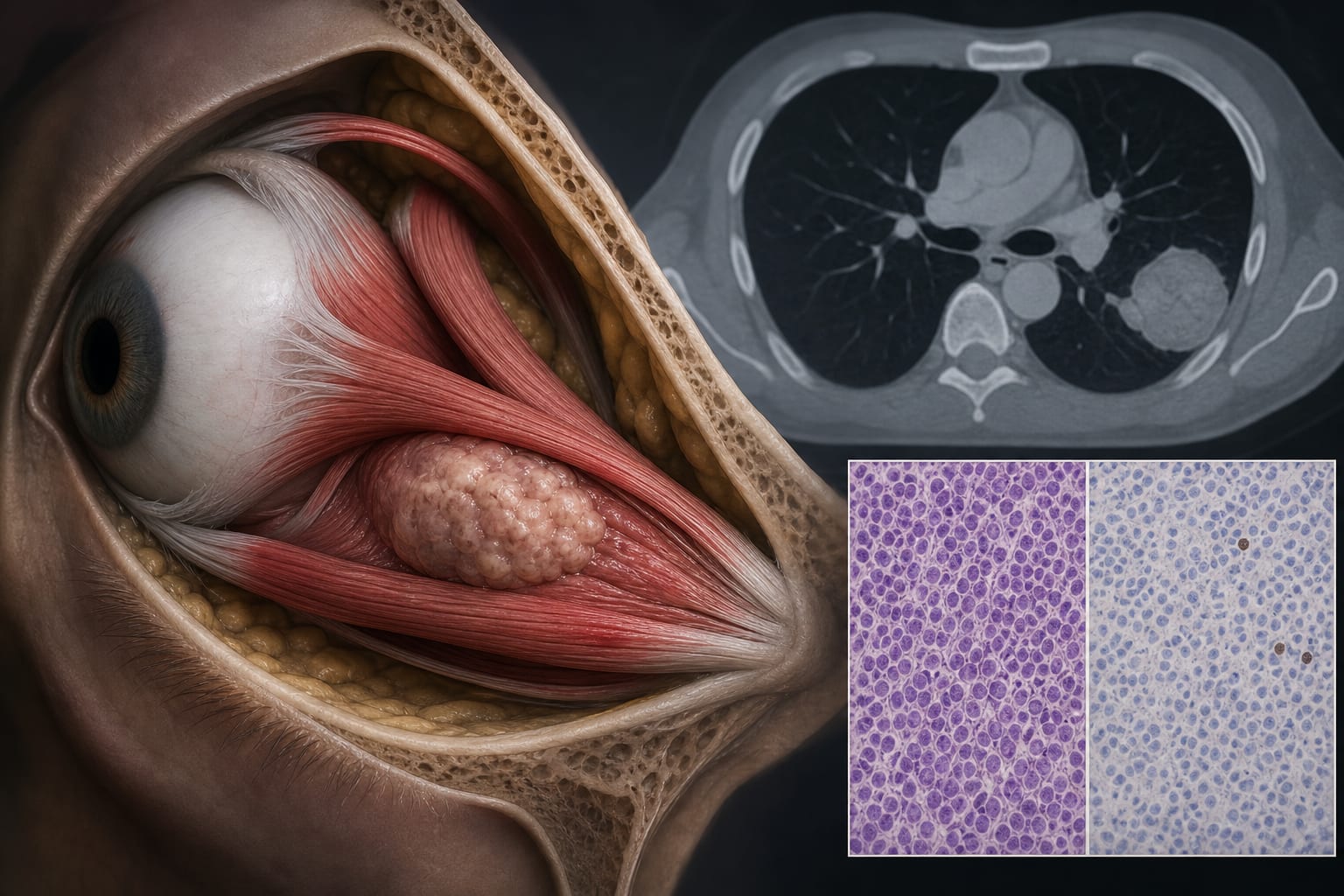
Case Report: Thoracic SMARCA4-deficient undifferentiated tumor with extraocular muscle metastasis: a rare case hidden in diplopia
By
Bingying Liu
Xuan Wang
Yongqing Liu
Jue Wang
Wanzhen Jiao
July 9, 2026
Clinical Scorecard: Case Study: Uncommon Thoracic SMARCA4-Deficient Undifferentiated Tumor with Metastasis to Extraocular Muscles Presenting as Diplopia
At a Glance
Category Detail
Condition Thoracic SMARCA4-deficient undifferentiated tumor (SMARCA4-UT) Key Mechanisms Characterized by loss of SMARCA4 (BRG1) expression and aggressive malignancy with early metastasis. Target Population Middle-aged male smokers, particularly those with a history of significant tobacco use. Care Setting Oncology and ophthalmology settings for diagnosis and management.
Key Highlights
First reported case of SMARCA4-UT presenting as isolated metastasis to the inferior rectus muscle. Patient presented with binocular diplopia and ocular pain, with imaging revealing a nodular lesion. Histopathology confirmed SMARCA4-UT with complete loss of BRG1 expression. Systemic evaluation revealed primary lung lesion with mediastinal lymphadenopathy. Patient died shortly after chemotherapy and immunotherapy due to brain metastases. Guideline-Based Recommendations
Diagnosis
Consider SMARCA4-UT in differential diagnosis for atypical orbital lesions. Early tissue diagnosis is critical when inflammatory conditions do not respond to therapy. Management
Surgical excision of the tumor followed by systemic therapy may be necessary. Monitoring & Follow-up
Monitor for progression of disease and response to treatment, particularly in cases with atypical presentations. Risks
High risk of metastasis and aggressive disease course. Patient & Prescribing Data
Patients with thoracic SMARCA4-UT, particularly those presenting with unusual metastatic sites.
Systemic steroid therapy may not be effective in managing symptoms related to SMARCA4-UT.
Clinical Best Practices
Utilize imaging studies to assess for metastasis in patients with unexplained ocular symptoms. Involve multidisciplinary teams for comprehensive management of complex cases. Related Resources & Content