Research progress on addictive features and reward circuit mechanisms in non-suicidal self-injury and the feasibility of precision neuromodulation - Scorecard - MDSpire
Advertisement
Research progress on addictive features and reward circuit mechanisms in non-suicidal self-injury and the feasibility of precision neuromodulation
Clinical Scorecard: Advancements in Understanding Addictive Traits and Reward Pathway Mechanisms in Non-Suicidal Self-Injury: Evaluating the Potential for Precision Neuromodulation
At a Glance
Category
Detail
Condition
Non-Suicidal Self-Injury (NSSI)
Key Mechanisms
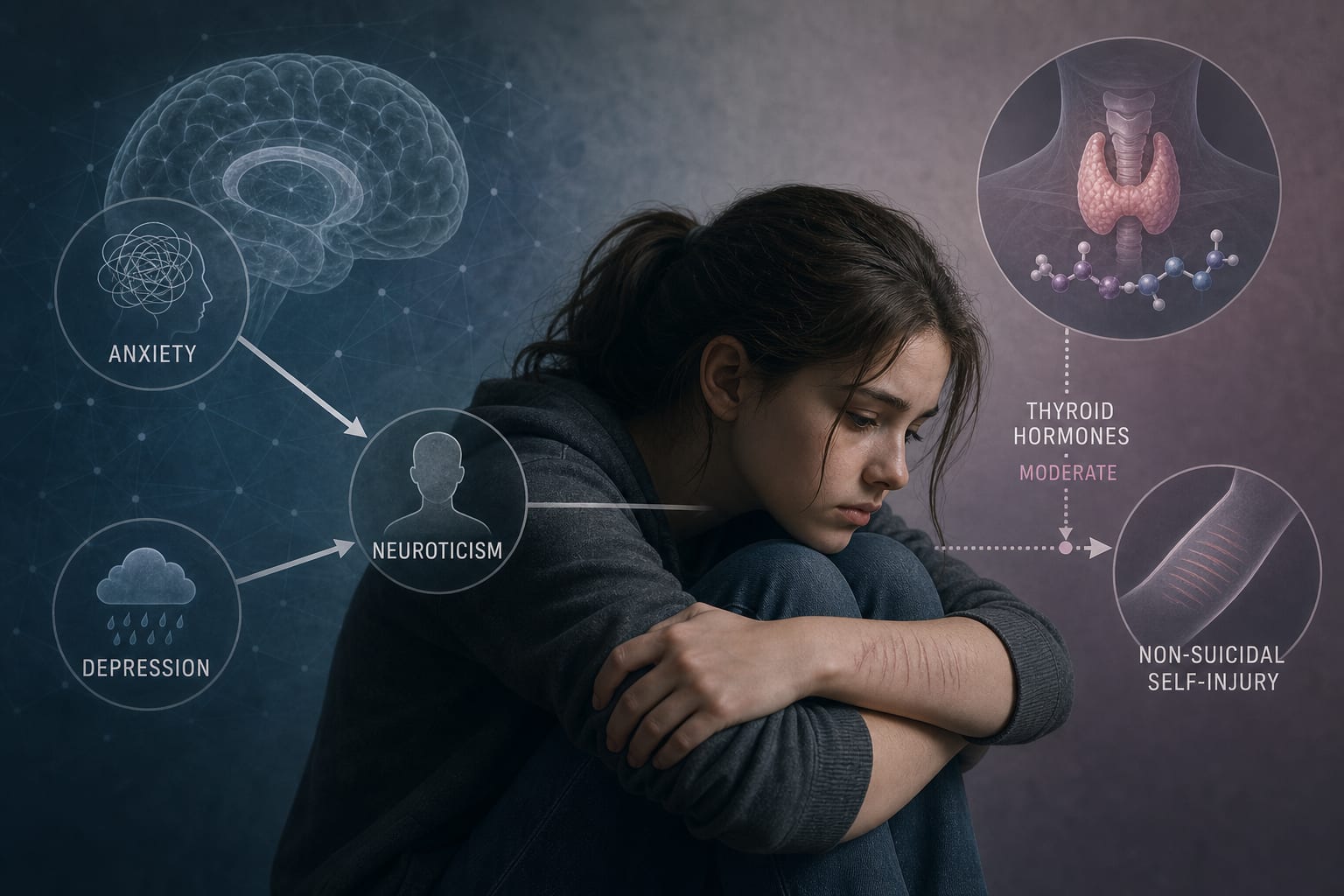
Dysregulation of the brain’s reward circuitry, particularly the ventral striatum and prefrontal cortex.
Target Population
Adolescents with NSSI, particularly those with borderline personality disorder and depressive disorders.
Care Setting
Clinical settings focusing on mental health and neuromodulation therapies.
Key Highlights
NSSI has a 12-month prevalence of 16.2% among adolescents globally.
NSSI is the strongest predictor of suicide attempts.
Approximately 45.2% of individuals with NSSI exhibit addiction-like behavioral patterns.
NSSI behaviors may mirror reinforcement patterns observed in addiction.
Stanford Accelerated Intelligent Neuromodulation Therapy (SAINT) is proposed as a precision treatment for NSSI.
Guideline-Based Recommendations
Diagnosis
Assess for self-injurious behaviors and associated psychiatric comorbidities.
Management
Consider precision neuromodulation therapies like SAINT for treatment-resistant NSSI.
Monitoring & Follow-up
Monitor for escalation in self-injury frequency and severity.
Risks
Heightened risks of more frequent and severe self-injury and increased suicidal ideation.
Patient & Prescribing Data
Adolescents with NSSI, particularly those with comorbid mental health disorders.
Emerging evidence supports the use of neuromodulation therapies targeting reward network deficits.
Clinical Best Practices
Integrate assessment of addictive traits in NSSI patients.
Utilize a multidisciplinary approach for managing NSSI.
Educate patients about the potential risks associated with NSSI behaviors.