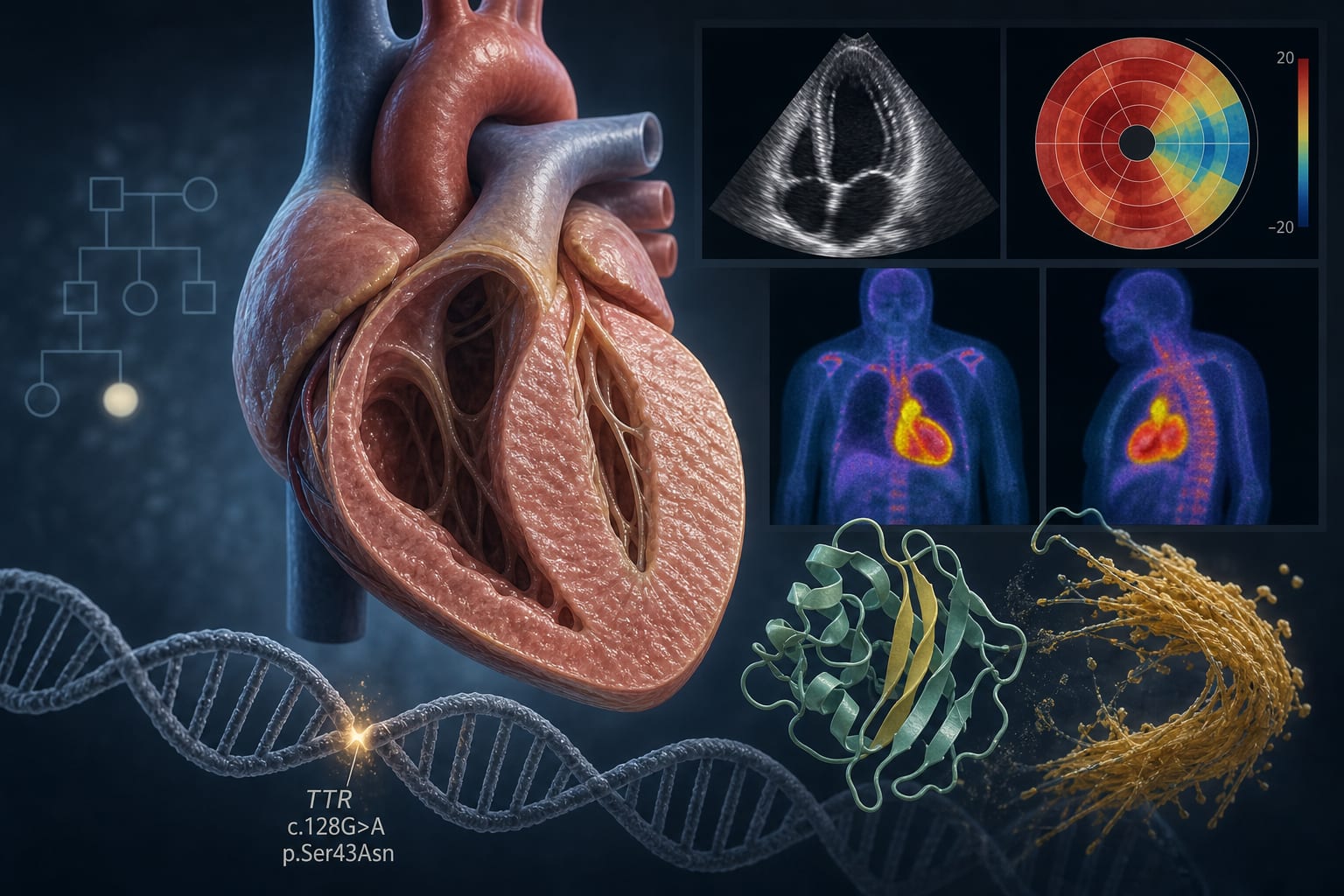
Clinical Scorecard: Familial Transthyretin Amyloid Cardiomyopathy Associated with the Uncommon TTR p.Ser43Asn Variant in a Chinese Family: A Case Study
At a Glance
Category
Detail
Condition
Key Mechanisms
Infiltrative cardiomyopathy caused by misfolded transthyretin protein aggregates. [Source needed]
Target Population
Care Setting
Key Highlights
Rare TTR c.128G > A (p.Ser43Asn) variant identified in a Chinese family. [Source needed]
Proband presented with exertional chest tightness and dyspnea. [Source needed]
Echocardiography showed concentric left ventricular wall thickening and reduced systolic function. [Source needed]
Genetic testing confirmed the presence of the TTR variant. [Source needed]
Tafamidis was initiated after diagnosis. [Source needed]
Guideline-Based Recommendations
Diagnosis
Utilize echocardiography and technetium-99 m pyrophosphate scintigraphy for diagnosis. [Source needed]
Consider genetic testing for TTR variants in suspected cases. [Source needed]
Management
Initiate tafamidis for patients diagnosed with ATTR–CM. [Source needed]
Monitoring & Follow-up
Regular follow-up echocardiography to assess cardiac function and structural abnormalities. [Source needed]
Risks
Potential for progression of cardiac amyloidosis if not diagnosed and treated timely. [Source needed]
Patient & Prescribing Data
Tafamidis has been shown to delay disease progression in ATTR–CM. [Source needed]
Clinical Best Practices
Early identification of TTR variants in patients with unexplained heart failure. [Source needed]
Use of non-invasive imaging techniques for diagnosis. [Source needed]
Consideration of family history in the assessment of hereditary forms of ATTR–CM. [Source needed]